


LED Strip Lights
LED strip lights in this collection are rigid linear fixtures for garages, corridors, workshops, and other utility spaces—not flexible LED tape. Choose from 2-, 4-, and 8-foot options, including integrated strip fixtures and wraparound designs; mounting kits appear separately. Start with fixture length, required light output, and mounting method, then confirm voltage and controls. Selectable wattage or color temperature is available on certain models, not the entire range.
Showing 121–140 of 193 results

EnVision LED-RST-8FT-3M60W-4CCT – 8' Strip

EnVision LED-RST-4FT-3M80W-4CCT-BMS-EMB – 2' Strip w/ Microwave Sensor + EMB

EnVision LED-RST-4FT-3M80W-4CCT-EMB – 2' Strip w/ EMB

EnVision LED-RST-4FT-3M80W-4CCT-BMS – 2' Strip w/ Microwave Sensor

EnVision LED-RST-4FT-3M80W-4CCT – 2' Strip

EnVision LED-RST-4FT-3M40W-4CCT-BMS-EMB – 2' Strip w/ Microwave Sensor + EMB

EnVision LED-RST-4FT-3M40W-4CCT-EMB – 2' Strip w/ EMB

EnVision LED-RST-4FT-3M40W-4CCT-BMS – 2' Strip w/ Microwave Sensor

EnVision LED-RST-4FT-3M40W-4CCT – 2' Strip

EnVision LED-RST-2FT-20W-4CCT-BMS-EMB – 2' Strip w/ Microwave Sensor + EMB

EnVision LED-RST-2FT-20W-4CCT-EMB – 2' Strip w/ EMB

EnVision LED-RST-2FT-20W-4CCT-BMS – 2' Strip w/ Microwave Sensor
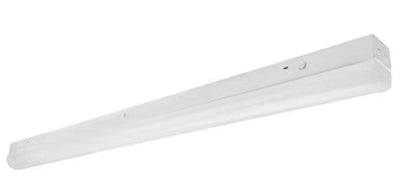
EnVision LED-RST-2FT-20W-4CCT – 2' Strip
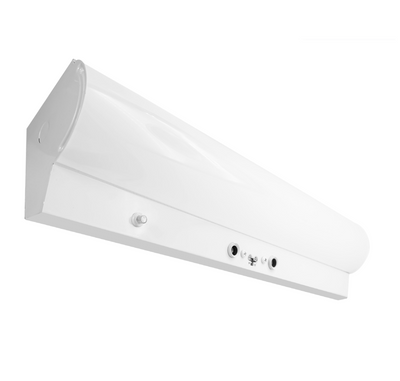
EnVision LED-RSCN-4FT-3P50-5CCT-BMS-EMB – 4' Corner Strip
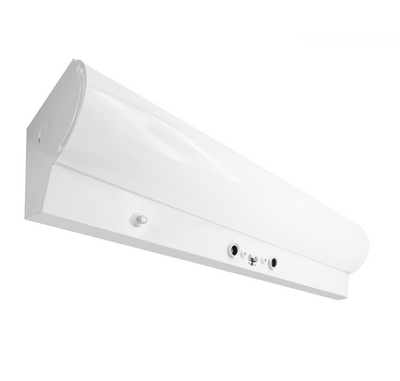
EnVision LED-RSCN-4FT-3P50-5CCT-EMB – 4' Corner Strip
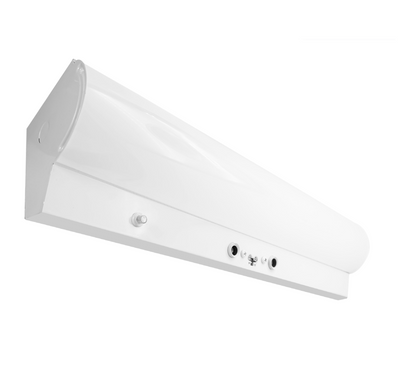
EnVision LED-RSCN-4FT-3P50-5CCT-BMS – 4' Corner Strip

EnVision LED-RSCN-4FT-3P50-5CCT – 4' Corner Strip
EnVision LED-RSCN-2FT-3P25-5CCT-BMS-EMB – 2' Corner Strip

EnVision LED-RSCN-2FT-3P25-5CCT-EMB – 2' Corner Strip
EnVision LED-RSCN-2FT-3P25-5CCT-BMS – 2' Corner Strip
About LED Strip Lights
How to Choose LED Strip Lights for Garages and Commercial Spaces
LED strip lights provide broad, practical illumination for garages, workshops, utility rooms, hallways, and commercial service areas. These rigid linear fixtures are designed for ceiling or approved suspended installations, unlike flexible LED tape used for accent lighting. The right choice depends on the length of the space, required brightness, and mounting conditions. Before ordering, establish the fixture layout and electrical supply. Then compare light output, selectable settings, and control compatibility to find a fixture that fits the installation rather than simply replacing one length with another.
Quick LED Strip Light Selection Guide
- Small utility room: Start with a compact 2-foot fixture and the required lumen output.
- Garage or workshop: Compare 4-foot linear strips with surface or suspended mounting.
- Long service corridor: Consider 8-foot fixtures or repeated shorter units.
- Wet or frequently washed area: Review LED vapor tight fixtures.
- Hidden cove or cabinet lighting: Choose flexible LED tape lights instead.
LED Strip Light Fixtures vs. LED Tape: Two Different Lighting Systems
The term strip light describes two products that should not be confused. Commercial LED strip fixtures are rigid luminaires with a housing and an integrated lighting system. They're typically connected to building power and mounted to a ceiling or suitable structure.
Flexible LED tape, by contrast, is designed to follow architectural details and generally operates from a compatible low-voltage power supply. It suits shelves, cabinetry, coves, and other concealed installations.
For example, a 20-foot workshop needs fixtures that illuminate the work area. A concealed shelf detail needs a flexible lighting system that follows its shape. Where the fixture itself is part of the architectural design, explore architectural linear lighting for additional mounting and distribution options.
2-Foot vs. 4-Foot vs. 8-Foot LED Strip Lights
Fixture length determines how the lighting fits the available ceiling space. Two-foot models suit shorter runs and compact utility areas. Four-foot LED strip lights are a common choice for workshops, storage rooms, and corridor lighting, while eight-foot models can simplify longer installations.
Consider a 24-foot service corridor. Three 8-foot fixtures may appear to fill its length, but that doesn't prove they will provide the required illumination or uniformity. Mounting positions, spacing, and light distribution still matter.
Lumera's assortment includes Euri Lighting 8-foot models as well as shorter commercial strips. Choose the length that works with the actual layout, then determine fixture quantity using the required illumination level and manufacturer photometric data.
Linear Strip Lights vs. Wraparound and Shop Light Fixtures
Not every elongated LED fixture has the same housing or optical design. Narrow linear strips emphasize a relatively slim profile and broad illumination. Wraparound fixtures use a diffuser that extends around the light source, softening the appearance of the illuminated housing.
A garage with exposed framing may suit a straightforward strip or shop light. A finished corridor where occupants regularly see the fixture may benefit from the more enclosed appearance of a wraparound design.
For a specific example, Lumera lists the Westgate LSN 4-foot strip fixture. Its manufacturer specifies 40W, up to 5,200 lumens, and selectable 3500K, 4000K, or 5000K light color.
Some products in this collection are wire guards or hanging accessories rather than complete fixtures. Check the product type and included components before purchasing.
LED Strip Light Brightness: Lumens, Selectable Wattage, and CCT
Wattage measures electrical consumption; lumens measure light output. When selecting commercial LED strip lights, use the required illumination level and distribution to determine brightness rather than assuming every 40W fixture performs alike.
Selected products also offer field-selectable wattage or correlated color temperature (CCT). For example, Euri Lighting's ELS8-90W203sw 8-foot model offers 60W, 75W, and 90W settings, with manufacturer-specified output ranging from 7,800 to 11,790 lumens.
Important specifications include:
- Delivered lumens: Determines the light output available from the fixture.
- Selectable wattage: Allows supported models to be configured for different output levels.
- Color temperature: Common commercial choices include 3500K, 4000K, and 5000K.
- CRI: Helps assess color appearance under the installed light.
- Input voltage: Must match the actual electrical supply.
- Dimming: Requires the control method specified by the manufacturer.
For projects using selectable fixtures, document the chosen settings. A replacement with a different wattage or CCT setting can create a visible mismatch across an otherwise consistent row.
Dry, Damp, and Wet Locations: Choose the Correct Strip Light Rating
Installation conditions can rule out an otherwise suitable fixture. A dry-location strip may work in a conditioned storage room but be unsuitable for an exposed or frequently washed area.
Some commercial strip fixtures have damp-location ratings, while others are limited to dry indoor conditions. A damp-rated fixture isn't automatically approved for direct water exposure.
For example, Westgate's LSN-4FT-40W-MCTP-D is specified as IP20 for indoor use. It should not be treated as equivalent to an IP65 or IP66 sealed fixture.
If a workshop requires routine hose-down cleaning, start with the required water-exposure conditions and choose a luminaire rated for that environment.
Also distinguish moisture resistance from hazardous-location certification. An ordinary sealed fixture isn't automatically suitable where flammable gases, vapors, or combustible dust create a classified electrical location.
Surface-Mount vs. Suspended LED Strip Lights
Commercial strip fixtures are commonly installed directly against a suitable ceiling or suspended below an open structure. The correct method depends on the building, desired mounting height, and manufacturer's approved hardware.
For example, a utility room with a finished ceiling may use direct surface mounting. A workshop with exposed structural members may allow fixtures to be suspended at a more useful working height.
Some product families support chain or aircraft-cable suspension, but compatible hanging hardware isn't necessarily included. Lumera lists separate hanging kits for particular strip-light systems.
Where the mounting arrangement requires additional support hardware, review suitable electrical straps and supports.
Continuous-row installation requires separate attention. Even when fixtures can be mounted end to end, they aren't necessarily approved for electrical through-wiring or unlimited daisy-chaining. Check the manufacturer's connection method, allowable load, and wiring instructions before planning a shared feed.
LED Strip Light Dimming, Occupancy Sensors, and Emergency Options
Many commercial LED strips use 0-10V dimming, which requires a compatible driver and control arrangement. A standard phase-cut wall dimmer should not be substituted for a 0-10V controller unless the fixture is specifically designed to accept that method.
For compatible drivers, review 0-10V lighting dimmers and verify the electrical requirements before installation.
Storage areas with intermittent use may also benefit from appropriately configured occupancy and motion sensors.
Some commercial strip-light configurations offer factory-installed sensor or emergency battery options. These must be confirmed by the exact ordering code; an accessory shown alongside a fixture doesn't mean it is included.
Where emergency illumination is required, check the applicable emergency-lighting performance and installation requirements. Ordinary strip lighting doesn't automatically satisfy emergency egress specifications.
LED Strip Lights vs. Troffers and High Bay Lighting
Choose the fixture format according to the ceiling and the lighting task. A rigid strip fixture is useful in open utility ceilings, garages, and service corridors. A recessed fixture designed for a suspended ceiling grid serves a different installation.
For a conventional 2-by-4-foot commercial grid, compare LED troffer lights rather than trying to suspend an ordinary strip inside the ceiling opening.
Taller industrial spaces may require higher-output LED high bay fixtures with optics suited to the mounting height and work area.
For an existing fluorescent strip housing, another option is retaining the fixture with an approved retrofit method. Compatible LED tube lamps may support that approach, but lamp type, ballast compatibility, and any required rewiring must be checked before ordering.
Line-voltage fixture replacement and wiring alterations should be completed by a qualified electrician in accordance with the manufacturer's instructions and locally adopted electrical code.
Ordering LED Strip Lights for Commercial Projects
For a facility relight, record fixture lengths, quantities, voltage, required lumens, mounting conditions, and controls before purchasing. Lumera Electric offers business trade account options for eligible buyers and advertises free shipping on orders over $2,000. Review the applicable shipping terms when planning larger fixture orders.
Request a Quote for LED Strip Lighting Projects
For multi-room renovations, warehouse service areas, or larger lighting replacements, request a project quote with your fixture schedule.
Have these details ready:
- Fixture length, model, and quantity
- Required delivered lumens and CCT
- Supply voltage and dimming method
- Surface or suspended mounting
- Dry, damp, or wet-location requirements
LED Strip Lights FAQs
Are LED strip lights the same as LED tape lights?
No. LED strip light fixtures are rigid luminaires used for general illumination in utility and commercial spaces. LED tape is a flexible lighting circuit commonly used for concealed architectural details and low-voltage accent lighting. They require different mounting and electrical arrangements. For coves, shelving, or cabinetry, explore Lumera's tape, rope, and ribbon lighting options.
Should I choose a 4-foot or 8-foot LED strip light?
A 4-foot strip is often easier to distribute across smaller rooms and irregular ceiling layouts. An 8-foot fixture can simplify longer straight runs and reduce the number of individual mounting positions. Neither is automatically brighter or more efficient. Compare delivered lumens, optical distribution, fixture spacing, and installation access before choosing the length.
Can several LED strip lights be connected end to end?
Yes, but only when the fixture system is approved for the intended connection arrangement. Mechanical end-to-end mounting doesn't automatically permit electrical through-wiring. Some systems use connectors or approved pass-through conductors, while others require individual supply connections. Check the manufacturer's maximum connected load, wiring instructions, and required installation hardware before laying out a continuous row.
Are LED strip light fixtures dimmable?
Some are. Many commercial models support 0-10V dimming, while other fixtures use different controls or offer switching only. The driver and controller must support the same method. If your project involves multiple lighting zones, review compatible commercial lighting controls before the wiring design is finalized.
Can LED strip lights be installed in damp or wet locations?
Only when the specific fixture is approved for the installation conditions. A damp-rated strip can be appropriate where moisture is present without direct water exposure. Wet locations and washdown areas require additional protection. For environments exposed to spray, cleaning water, or heavy dust, compare suitable sealed vapor-tight lighting with the required environmental rating.
Can an LED strip fixture replace an old fluorescent strip?
Yes, when the new fixture provides suitable mounting, electrical compatibility, and required illumination. A complete LED strip fixture usually replaces the old housing and lighting components together. Alternatively, an approved LED tube retrofit may retain the existing housing. Evaluate the fixture's condition and the permitted retrofit method before choosing between replacement and conversion.