


Motors
Electric motors should be selected by the equipment they drive and the electrical service they must match. Start with horsepower, voltage and phase, then compare RPM, frame size, mounting and enclosure requirements. For replacement work, use the existing motor nameplate as the starting point and verify shaft dimensions, rotation, service factor and duty before ordering. A motor that matches horsepower alone can still be mechanically or electrically incompatible with the equipment.


Showing 1–20 of 73 results
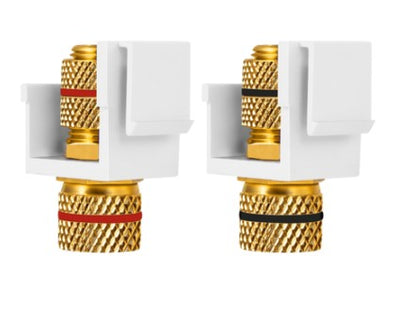
Enerlites Banana Jacks 1 Set Blk/Red 6109-BKRD
Enerlites Cat6 Female To Female Coupler White 6110-W
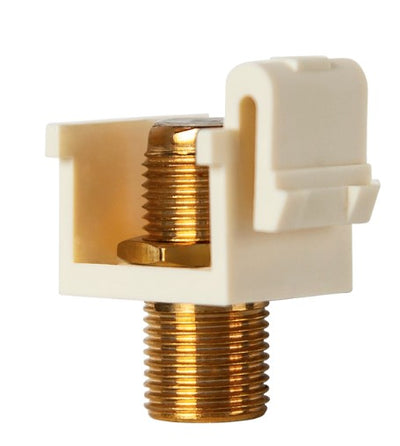
Enerlites Decorator Adapter 1-Gang Gold F-Type Coupler F To F Light Almond 6101-LA
Enerlites Cat6 Female To Female Coupler Bl 6110-BL
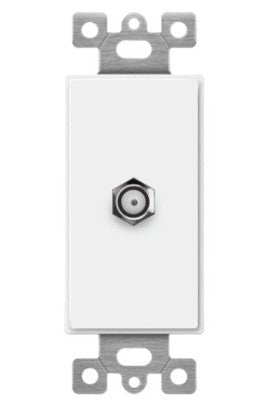
Enerlites V&A Slv F-Type Conf To F Light Almond 6505-LA
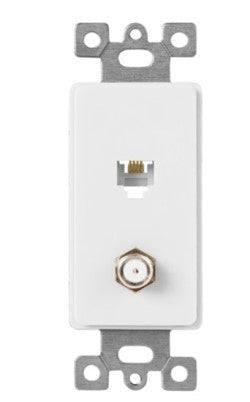
Enerlites V&A Rj11 4-Pos / 4-Cond & F-Type Conf To F Light Almond 6507-LA
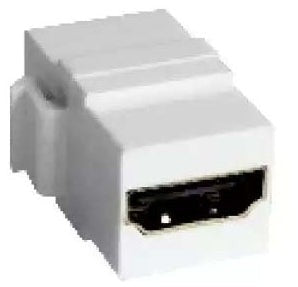
Orbit Keystone Jackholder Hdmi White KJHW

EnVision S-AUD-PIR-SL – Audio Jack SILVAIR

AML-DMX-N-DINADR1 3072ch, Cloud, USB, Ethernet, Dali, Audio, 2000 scenes, 20 zones

Enerlites Phone/Cable 0.406" Dia. Hole 1-Gang

Enerlites V&A Slv F-Type Conf To F

Enerlites V&A Rj11 4-Pos / 4-Cond & F-Type Conf To F

Enerlites Decorator Adapter 1-Gang F-Type Coupler F To F

Enerlites Hdmi Keyssone 6107

Intermatic 125 VAC 60 Hz Timer Motor WG1570-10D
Intermatic 208/277 V 60 HZ Timer Motor WG1603-11D

Intermatic 4-Circuit Pump Motor Controller PE103
Intermatic WG1600-11 WG1600-11
Intermatic MOTOR-BOXED,125V 60HZ WG190-15D
Intermatic MOTOR-BOXED,125V 60HZ WG720-10D
About Motors
How to Choose Electric Motors: Match the Motor to the Load and Power Supply
Choosing an electric motor starts with the equipment it has to drive. Horsepower is important, but it is only one part of the specification. Voltage, phase, RPM, frame size, mounting style, shaft dimensions, enclosure, duty, and control method can all determine whether a motor will actually work in the application. For replacement work, photograph or record the complete existing motor nameplate before removing the unit.
- Replacing an existing motor: match the nameplate and mechanical dimensions before considering alternatives.
- Selecting for new equipment: establish the required load, speed, power supply, mounting, and environment first.
- Changing operating speed: confirm whether the motor and application are suitable for variable-frequency control.
- Installing in dust, moisture, or other demanding conditions: choose the enclosure from the actual environment.
- Replacing a three-phase motor: verify that voltage, phase, starter, overload protection, and rotation all match.
Replacing a Motor: Start With the Nameplate
The old motor nameplate is the fastest way to avoid an expensive mismatch. Record the horsepower, rated voltage, phase, frequency, full-load current, RPM, frame designation, service factor, enclosure, and any thermal-protection information. Then inspect the physical installation for shaft size, mounting holes, base style, and available clearance.
A 2 HP replacement, for example, is not automatically interchangeable with every other 2 HP motor. One model may operate at a different speed, use a different frame, require three-phase power, or place the shaft at a different mounting height.
Decision rule: for a direct replacement, match the electrical and mechanical specifications before considering features such as brand or efficiency. If the original equipment documentation specifies a particular motor configuration, use that requirement as the controlling reference.
Horsepower and Service Factor: Don't Size From HP Alone
Horsepower describes the motor's rated mechanical output, but the correct HP still depends on the load. Installing a motor that is too small can cause overheating or overload trips; simply installing a much larger motor isn't automatically the right fix because the driven equipment, starter, protection, shaft, and mechanical system were designed around a particular operating range.
Service factor is also easy to misuse. A motor marked with a service factor above 1.0 may have some capacity above its nameplate horsepower under specified conditions, but that shouldn't be treated as free continuous horsepower for redesigning the machine.
Imagine equipment originally specified for a 5 HP motor that begins overloading because a bearing or pump is binding. Moving directly to a larger motor may hide the mechanical problem rather than solve it.
Decision rule: match the motor to the actual load requirement and investigate abnormal load conditions before increasing horsepower.
Voltage and Phase Must Match the Electrical System
A motor has to match the power available at the installation. Single-phase and three-phase motors are not interchangeable simply because their horsepower and RPM are similar. Likewise, a motor's allowable voltage must agree with the supply and with the connection diagram provided by the manufacturer.
For example, a three-phase 460V motor cannot simply be connected to a 240V single-phase branch circuit. Some motors support more than one nameplate voltage through specific winding connections, but those connections must be made exactly as documented for that motor.
Decision rule: confirm voltage, phase, frequency, and full-load current before selecting the branch-circuit and control equipment. Lumera's circuit breaker selection should then be based on the electrical system and applicable motor-circuit requirements rather than horsepower alone.
RPM Matters as Much as Horsepower on a Replacement Motor
The driven equipment may depend on a specific shaft speed. Pumps, fans, blowers, conveyors, and belt-driven machines can behave very differently when motor RPM changes, even if the replacement has the same horsepower.
A motor operating near 1,750 RPM, for instance, is not a direct substitute for one operating near 3,450 RPM simply because both are 1 HP. On a direct-driven machine the equipment speed changes immediately; on a belt drive, pulley ratios also affect the final driven speed.
Decision rule: for a direct replacement, stay within the speed class specified by the equipment manufacturer unless the complete drive system is being intentionally redesigned.
NEMA Frame, Shaft and Mounting Determine Physical Fit
Frame size helps define the physical interface between the motor and the equipment. On standardized NEMA-frame motors, the frame designation relates to dimensions such as shaft height and mounting geometry, but mounting configuration still needs attention. A rigid-base motor and a C-face motor can share electrical characteristics while mounting to equipment in completely different ways.
Suppose an existing motor uses a 56-frame base but the replacement has the correct voltage, HP, and RPM with a different flange or shaft configuration. Electrically it may look correct while mechanically it still won't bolt into the machine.
Decision rule: record the frame, shaft diameter and length, mounting pattern, and any face or flange requirement before ordering a replacement. Do not rely on overall motor appearance.
ODP vs. TEFC Motor Enclosures: Match the Environment
The enclosure determines how the motor is protected from its surroundings. Open drip-proof, or ODP, motors are generally associated with cleaner, drier installations where ventilation through the motor isn't a problem. Totally enclosed fan cooled, or TEFC, designs limit the direct exchange of outside air through the motor and are commonly chosen for more demanding dust or moisture conditions.
TEFC does not mean waterproof, submersible, or suitable for a classified hazardous location. Those applications require the exact environmental and listing requirements to be confirmed for the motor.
For example, a motor operating inside a clean mechanical room faces very different conditions from one mounted near airborne dust or washdown activity.
Decision rule: choose the enclosure from the worst normal environmental condition the motor will experience, not simply from what was cheapest or available on the previous installation.
AC vs. DC Motors: Don't Change Motor Type Without Reviewing the Control System
AC and DC motors use different power and control arrangements. Even within AC systems, an induction motor connected directly across the line behaves differently from a motor whose speed is controlled by a variable frequency drive. A replacement decision therefore needs to account for both the motor and the equipment controlling it.
Lumera's AC vs. DC motor guide explains the basic differences in construction, speed control, torque behavior, and maintenance.
Decision rule: if the project changes from AC to DC, fixed-speed to variable-speed, or one motor technology to another, treat it as a system redesign rather than a simple motor replacement.
Using a VFD With an Electric Motor
A variable frequency drive changes the frequency and voltage supplied to a compatible AC motor so its operating speed can be adjusted. That makes VFDs useful for applications such as pumps, fans, conveyors, and other loads where variable speed is part of the equipment design. It does not mean every AC motor should automatically be connected to a drive.
For a 10 HP three-phase application, for example, the motor, VFD, supply voltage, motor current, operating speed range, and load characteristics all need to work together. Long motor leads and low-speed operation can introduce additional design considerations.
Decision rule: when variable speed is required, confirm that the motor is suitable for drive operation and size the drive from the manufacturer's motor and application data. Lumera's VFD guide covers the operating principle and major sizing considerations.
Motor Starters, Overload Protection and Circuit Protection Do Different Jobs
Motor control and protection shouldn't be reduced to choosing a breaker with the same amp number found on the motor nameplate. A branch-circuit overcurrent device, motor overload protection, contactor or starter, and disconnecting means can perform different functions within the motor circuit.
A magnetic starter, for example, combines switching through a contactor with overload protection selected for the motor. The upstream breaker or fuse serves a different protection role. Lumera's guidance on magnetic motor starters explains this distinction in more detail.
Decision rule: size the motor circuit as a complete system using the motor nameplate, equipment instructions, applicable electrical requirements, and the ratings of every control and protection component.
What to Check Before Ordering an Electric Motor
For a replacement or new equipment schedule, record these specifications before selecting the motor:
- Horsepower or kW: required mechanical output.
- Voltage: motor rating matched to the available supply.
- Phase: single-phase or three-phase.
- Frequency: confirm the required Hz rating.
- RPM: rated operating speed under load.
- Full-load amps: required for controls and protection calculations.
- Frame size: standardized mechanical dimensions where applicable.
- Mounting: base, face, flange, or application-specific mounting.
- Shaft: diameter, length, keyway, and any special geometry.
- Rotation: required direction and whether reversal is permitted.
- Enclosure: appropriate for the operating environment.
- Duty and service factor: matched to how the equipment actually operates.
- Control method: across-the-line, starter, VFD, or another equipment-specific system.
Motor replacement and installation involve line voltage, starting current, rotating equipment, and mechanical alignment. Electrical protection, wiring, controls, grounding, mounting, and startup should be verified by qualified personnel using the motor and equipment manufacturer's documentation.
Electric Motor FAQs
How do I find the correct replacement motor?
Start with the complete nameplate on the existing motor. Match horsepower, voltage, phase, RPM, frame size, enclosure, and duty, then verify the shaft and mounting dimensions against the equipment. Matching only horsepower is not enough. Grainger's motor replacement guidance likewise identifies these nameplate and application details as key selection information.
Can I replace a motor with a higher-horsepower motor?
Not automatically. A larger motor can change starting current, circuit requirements, controls, mechanical loading, and the stresses placed on the driven equipment. If the existing motor is overloaded, determine why before increasing HP. Use a larger motor only when the equipment design and electrical system are intended for the change.
Can a three-phase motor run on single-phase power?
Not by connecting it directly as though it were a single-phase motor. A three-phase motor requires an appropriate three-phase supply or a properly engineered conversion or drive arrangement suited to the motor and application. Confirm the complete electrical design before selecting the motor rather than assuming voltage alone determines compatibility.
What does the frame number on an electric motor mean?
A NEMA frame designation identifies standardized mechanical dimensions associated with the motor, including important mounting and shaft relationships. It helps make replacement motors mechanically comparable, but the exact mount, shaft, face or flange, and application still need to be checked. Two motors with similar electrical ratings can have different mechanical configurations.
What is the difference between ODP and TEFC motors?
ODP motors allow ventilation through openings in the motor and are generally associated with cleaner, dry environments. TEFC motors use a totally enclosed housing with external cooling and are better suited to many dusty or damp industrial conditions. TEFC does not mean waterproof or hazardous-location rated, so more demanding environments require the exact motor rating to be verified.
Can any AC motor be used with a VFD?
No. The motor needs to be suitable for the intended variable-frequency operation, and the VFD must match the supply, motor voltage, current, phase, and application. Operating range, cooling at low speed, insulation stress, and load characteristics can also matter. Check both the motor and drive documentation before pairing them.