


String Lights
LED string lights create decorative and ambient illumination across residential, hospitality, and event spaces. Start with the required run length and mounting layout, then compare light color or effects, power requirements, and control options. For exterior installations, the exact string, plugs, connections, and supporting hardware must be suitable for the location. For larger layouts or repeated runs, map the lengths and power points before requesting project pricing.
Showing 1–20 of 24 results

Damar 37127A LED RGBW SMART LIGHT STRAND

Westgate 12W 3000K-6000K LED String Light STG-4830-LANT-RGBIC-BT

Westgate 12W 3000K-6000K LED String Light STG-2415-LANT-RGBIC-BT
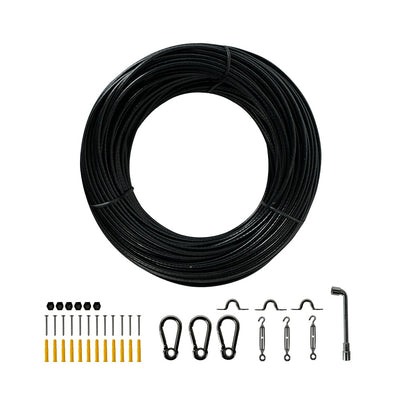
ABBA Lighting SLGC111 String Light Guide Cable

ABBA Lighting SLGC55 String Light Guide Cable

Westgate 12W LED Fixture STG-5315-RGB-BT

Westgate 1W (per bulb), 12W (total) 75LM (per bulb) 2700K LED String Light Set STG-2412-27K
Commercial Suspended Light String E26 100ft Reel with 24" Spacing
330 ft E12 Base Light String with 12" Spacing
Commercial Suspended Light String E26 330ft Reel with 24" Spacing
Commercial Non-Suspended Light String E26 330ft Reel with 24' Spacing
Classic Style Shades for LS/LS2 Suspended & Non-suspended Light String
330 ft E17 Base Light String with 15" Spacing

LS-CABLE-500 Catenary Cable 500ft Reel
Commercial Non-Suspended Light String E26 100ft Reel with 24" Spacing

LS-LOCK-4 Catenary Cable Locks (4)

LS-CABLE-110 Catenary Cable 110ft Kit
Commercial Non-suspended Light String E26 48ft with 24" Spacing
Festoon Cable Mounting Clips
Deluxe Style Shades for LS/LS2 Suspended & Non-suspended Light String
About String Lights
How to Choose LED String Lights for the Space and Installation
LED string lights are easiest to specify when the layout is planned before the product is chosen. Start with the total illuminated run, where the string will be supported, how closely the light points should be spaced, and where power is available. Then compare color or lighting effects, control requirements, and location suitability. A longer string or brighter source will not correct a layout with poor support, inconvenient power access, or equipment that is not rated for the installation environment.
- Planning a broader exterior lighting scheme? Start with Lumera’s outdoor lighting categories.
- Need low-level permanent illumination through planting or pathways? Compare landscape lighting.
- Need concealed continuous accent light rather than visible suspended points? Review LED tape light.
Measure the Full String-Light Run Before Ordering
String-light length should be based on the actual path the cable will follow, not the straight-line distance between two points. A run crossing a patio can include drops, turns, attachment points, and intentional sag between supports, all of which increase the required length.
For example, two mounting points that are 20 ft apart may need more than 20 ft of string once the desired hanging profile is included. Decision rule: lay out every support point first, measure the complete cable path, and then compare that requirement with the usable length of the specific string. Do not rely only on the nominal size of the space.
Choose Light Spacing and Output for the Effect You Want
String lights are generally selected for atmosphere and visual rhythm rather than the same uniform illumination expected from a ceiling or area fixture. The distance between light points, individual source output, mounting height, and surrounding surfaces all affect how bright the installation feels.
A 30-ft dining area with closely spaced points creates a different visual effect from the same length with wider spacing. If the string lights are expected to provide usable task illumination as well as decoration, check the actual output rather than assuming decorative coverage will be enough. Where the project needs stronger permanent ambient or area lighting, treat string lights as a supplemental layer rather than the only source.
Match Color Temperature or Color Effects to the Application
Color changes the character of a string-light installation as much as physical spacing does. Warm white tends to create a softer decorative appearance, while cooler white reads more neutral or crisp. RGB or other color-changing systems add effects but also introduce control and compatibility requirements that fixed-white products do not have.
A hospitality terrace using one consistent white appearance has a different control need from an event space that changes colors for different uses. Decision rule: decide whether the installation needs fixed white, adjustable white, or color effects before choosing the string so the control system does not become an afterthought.
Plan Support Points Instead of Letting the Electrical Cord Carry the Load
The electrical cable should not be treated as structural support unless the exact product instructions permit that installation method. Long suspended runs can place mechanical stress on conductors, plugs, sockets, and attachment points, especially when the string crosses an open area.
Consider a 40-ft span over a patio. If the product requires separate support, use an appropriate messenger wire, cable, hooks, or other mounting method specified for the installation rather than pulling the string tight between two points. Follow the manufacturer’s maximum span, support, and attachment instructions for the exact product instead of applying one universal spacing rule to every string-light system.
Outdoor String Lights Need the Correct Location Rating
A string light used outdoors must be identified for the conditions it will actually face. A covered location can still experience moisture and condensation, while an exposed run may encounter rain, wind, sunlight, and changing temperatures. The light string, plugs, connectors, power supply, and any extension components all need to be appropriate for that environment.
Decision rule: if any part of the installation is outdoors or exposed to moisture, verify the exact product’s stated location rating before installation. Outdoor receptacles and connections may also require appropriate ground-fault and weather protection under the rules adopted for the site. Lumera’s installation and code disclaimer explains why project-specific electrical requirements must be confirmed locally.
Check Power, Maximum Connected Length, and Extension Limits
Some string-light systems can be connected end to end, but the number of strings or total connected wattage is product-specific. The plug, conductors, internal electronics, and power supply are designed around defined electrical limits. Exceeding them can create an overloaded system even when every individual string operates normally on its own.
If a project uses several 24-ft or 48-ft sections from one power point, calculate the total connected load and compare it with the manufacturer’s maximum linkable length or quantity. Don’t assume identical connectors mean unlimited daisy-chaining. When several zones need different operating schedules, Lumera’s lighting timers can provide a separate control path when their load ratings and wiring requirements match the system.
Decide How the String Lights Will Be Controlled
Simple installations may only need on/off control. Other projects benefit from scheduling, dimming, app control, or color-changing functions, but these capabilities must be supported by the actual string-light system. A product described as LED does not automatically mean it is dimmable or compatible with a standard wall control.
For a restaurant patio that should turn on at a set time each evening, scheduling may matter more than manual dimming. For a residential seating area, output adjustment may be the priority. Establish the operating behavior first, then choose controls that the string-light manufacturer identifies as compatible.
Ordering String Lights for a Larger Project
For multiple patios, hospitality areas, events, or repeated decorative runs, organize the order by required length, quantity, light color or effect, input voltage, control method, and indoor or outdoor conditions. Keep accessories and extension components tied to the exact string system instead of assuming parts are interchangeable. Businesses purchasing lighting repeatedly can also review Lumera Electric’s trade account options.
Request a String Lighting Project Quote
For larger quantities or installations with several runs, request a project quote after the layout and power requirements have been mapped.
Have these details ready:
- Total length of each planned run
- Number and location of support points
- Required quantity
- Fixed white, adjustable white, or color effects
- Available power and input voltage
- Indoor, covered outdoor, or exposed location
- On/off, timer, dimming, or other control requirements
- Any required extensions or connection accessories
For projects with several zones, you can also submit your string-light schedule so each run stays matched to the correct length, location, and control requirement.
String Light FAQs
Can LED string lights be used outdoors?
Only when the specific string and its connection components are rated for the outdoor conditions where they will be installed. An indoor product should not be assumed suitable outdoors because it uses LEDs or has a molded plug. Check the manufacturer’s damp- or wet-location information, supported connection method, and installation instructions for the exact model.
How long should my string lights be?
Measure the actual cable path rather than the straight distance across the space. Include turns, drops, attachment points, desired sag, and the distance to the power source. If several sections will connect together, also check the manufacturer’s maximum connected length or quantity before ordering the complete run.
Can LED string lights be dimmed?
Only if the specific string-light system supports dimming and the control is compatible with its LED electronics or driver. A generic LED dimmer should not be assumed compatible. Lumera’s dimmer switch guide explains the major control methods, while the dimmer compatibility guide explains why model-specific matching matters.
Can string lights be connected end to end?
Some systems permit end-to-end connection, but the allowable number of sections and total electrical load are defined by the manufacturer. Connector shape alone does not prove that multiple strings can be linked indefinitely. Check the maximum connected quantity or wattage for the exact product before building one long run from a single power point.
What is the difference between string lights and LED tape light?
String lights create visible individual points of light along a cable, while LED tape produces a more continuous linear effect and is usually concealed within or along architectural details. If the project needs an uninterrupted glow under shelves, coves, or millwork rather than exposed decorative points, tape lighting is generally the more suitable lighting method.