


Fan Only
Fan-only bathroom exhaust fans provide dedicated ventilation where room lighting is handled separately. Choose airflow by room size and ventilation requirements, then compare sound level, duct size, housing dimensions, and mounting configuration. Selectable-airflow models can simplify projects with different room requirements, while sensor-equipped fans can automate ventilation where supported. Before ordering, confirm the actual duct route, available ceiling or wall space, control method, and whether the exact fan is approved for the intended installation location.
Showing 1–20 of 101 results
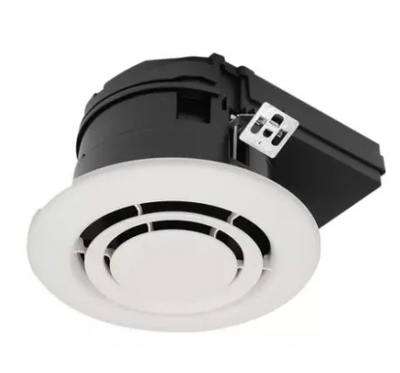
Panasonic FV-01VCN1 WhisperAir Repair Ceiling Mounted 9 CFM Quiet Spot Air Purifier

Orbit Ventilation Fan Deluxe Grille ODG

Orbit Ventilation Fan Deluxe Housing ODH

Orbit 80 Cfm Deluxe Fan, 0.7 Sone, Humidity Sensor OD80H

AirZone Fans SES80HLED Ventilation Fan Light Kit 80 CFM 1.1 Sones

AirZone Fans SE110X Fan and Heat 110 CFM 0.7 Sones

AirZone Fans SES80LED Ventilation Fan Light Kit 80 CFM 1.1 Sones

AirZone Fans SQ-LED-LK Ventilation Fan Light Kit

AirZone Fans SES-LED-LK Ventilation Fan Light Kit

AirZone Fans SNPLEDLK Ventilation Fan Light Kit

Orbit 110 Cfm Deluxe Fan Light, 0.6 Sone, Humidity Sensor OD110LH

Orbit 120 Cfm Deluxe Ventilation Fan with Flour. Light, 1.5 Sone OD120L

Orbit 90 Cfm Deluxe Ventilation Fan with Flour. Light, 0.7 Sone OD90L

Orbit 90 Cfm Economy Plus Ventilation Fan, 1.5 Sone OEP90

Orbit 70 Cfm Standard Plus Fan Light, 3.5 Sones OSP70L

Orbit Ventilation Fan Economy Plus Housing OEPH

Orbit 70 Cfm Standard Ventilation Fan, 4 Sones OS70

Orbit Fan Light Grille Module (LED) OFLGML
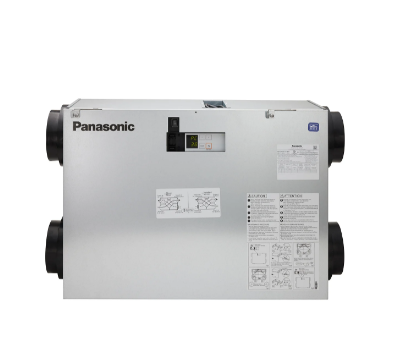
Panasonic FV-14ES1 Intelli-Balance® Elite 140 Temperate Climate Energy Recovery Ventilator (ERV), 30-140 CFM for exhaust and supply, occupant-controlled boost function

Panasonic FV-SCVE2 BalancedHome™ & Intelli-Balance® Elite/Elite Plus+ Series ERV Wall Control for use with all BalancedHome ERV models & Intelli-Balance® Elite Plus+ 150 & 120; Elite 140 & 110 ERV models ; Occupant-controllable power on/off
About Fan Only
How to Choose a Fan-Only Bathroom Exhaust Fan
A fan-only exhaust fan is the right starting point when ventilation is required but lighting is already handled by separate fixtures. Start with the airflow the room needs, then compare sound level, duct connection, housing dimensions, mounting orientation, controls, and the actual resistance of the duct system. The CFM printed on the product is important, but the fan also has to deliver useful airflow through the installed duct route.
- Bathroom already has adequate lighting: choose a fan-only model instead of combining two functions in one housing.
- Need ventilation and overhead lighting from the same ceiling location: compare fan + light exhaust units.
- Need automatic shutoff after use: plan a compatible control from time switches and timers.
- Long duct run or remote blower location: compare inline duct fans.
Start With the Required CFM
CFM, or cubic feet per minute, describes airflow. For intermittent bathroom ventilation, Home Ventilating Institute guidance uses approximately 1 CFM per square foot for bathrooms up to 100 square feet, with a minimum recommendation of 50 CFM for smaller bathrooms. Larger bathrooms are typically evaluated by the fixtures in the room.
An 8-by-10-foot bathroom, for example, is 80 square feet, making roughly 80 CFM a useful starting point before duct resistance and project-specific requirements are considered.
Decision rule: establish the ventilation requirement before comparing fan models. Don't choose a higher CFM simply because it is available, and don't choose a smaller fan because it fits the existing ceiling opening more easily.
Larger Bathrooms Need a Different Sizing Approach
Once a bathroom exceeds 100 square feet, floor area alone becomes less useful as a sizing method. HVI guidance instead considers individual fixtures, such as the toilet, shower, bathtub, and jetted tub. An enclosed toilet room may also need its own ventilation.
This matters in primary bathrooms where a large total floor area can include several separate moisture and odor sources. One fan located far from the shower may not capture moisture as effectively as a layout that places exhaust closer to the source.
Decision rule: for larger or divided bathrooms, look at both total required airflow and where that airflow is being collected.
Compare Sones After the Fan Meets the Airflow Requirement
Sones describe perceived fan sound. Lower sone values indicate quieter operation when products are compared at equivalent rating conditions. Sound can be especially important in bathrooms next to bedrooms, offices, or other quiet spaces.
Don't let sound rating replace airflow sizing. A very quiet fan that can't move enough air through the installed duct is still the wrong fan. Likewise, poor duct design can create additional airflow noise even when the fan itself carries a low published sone rating.
Decision rule: narrow the products by required airflow first, then use sone rating to compare otherwise suitable fans.
Duct Size and Static Pressure Affect Real Airflow
The duct system is part of the fan's performance. Long runs, multiple elbows, undersized duct, restrictive exterior caps, and compressed flexible duct add resistance. As static pressure increases, the fan may deliver less airflow than its headline rating suggests.
Two bathrooms using the same fan can therefore perform differently if one has a short, direct exhaust path and the other has a long route with several bends.
Check the manufacturer's recommended duct size and performance data at the expected static pressure. Reducing a larger fan connection to reuse a smaller existing duct can increase resistance and limit the benefit of installing the new fan.
Decision rule: select the fan and duct path as one ventilation system rather than treating the duct as a fixed detail that doesn't affect fan sizing.
Selectable Airflow Can Simplify Repeated Installations
Some current Lumera fan-only models provide selectable airflow settings, allowing one fan platform to be configured for more than one supported CFM level. This can be useful in projects with several bathroom sizes or where final airflow needs are determined during installation.
Selectable airflow doesn't eliminate the sizing process. The installer still needs to choose the correct setting for the room and verify that the connected duct allows the fan to perform as intended.
Decision rule: use selectable CFM for flexibility, not as a substitute for calculating the required ventilation. Record the final setting on repeated installations so similar rooms aren't commissioned inconsistently.
Humidity, Motion and Timer Controls Solve Different Problems
Fan-only models can be controlled in several ways. Some products use a standard wall switch, while specific models include humidity or motion sensing. A separate timer can keep the fan operating for a defined period after the room is used.
Humidity sensing responds to moisture conditions. Motion sensing responds to occupancy or movement. A timer responds to elapsed time. Those functions shouldn't be treated as interchangeable simply because each can automate fan operation.
If the project needs a separate wall device, compare compatible fan controls only after the fan's electrical and control requirements are known.
Decision rule: decide what should trigger ventilation—manual operation, humidity, occupancy, or time—then choose a fan and control strategy that support that behavior.
Housing Dimensions Matter in Retrofit Work
Replacement projects need more than a matching grille size. Measure the existing ceiling opening, available cavity depth, joist or framing location, duct position, electrical connection, and access above the ceiling where available.
A new fan can have the correct CFM and still create unnecessary repair work if its housing doesn't fit the existing cavity. Remodel-friendly mounting features can simplify some installations, but the exact product instructions should determine how the housing is supported and inserted.
Decision rule: measure the housing space and duct location before ordering a replacement fan. Don't select from visible grille dimensions alone.
Ceiling vs. Wall Mounting Must Be Approved by the Fan
Many bathroom exhaust fans are designed primarily for ceiling installation, while specific models also permit wall mounting. The discharge orientation, internal damper, motor assembly, and mounting hardware can affect which positions are supported.
Lumera currently carries fan-only products with different mounting configurations, so the installation orientation should be checked at SKU level.
Decision rule: if the project requires wall mounting, confirm that the exact fan is approved for it. Don't rotate a ceiling-only fan into a wall simply because the housing physically fits.
Shower and Tub Locations Need Model-Specific Approval
Placing a fan close to a shower can improve moisture capture, but electrical equipment installed over or near wet areas needs the appropriate product approval and installation conditions. HVI recommends locating suitable fans near moisture sources, while the exact manufacturer documentation determines whether a particular model can be installed over a tub or shower.
Decision rule: verify wet-area suitability on the exact fan before selecting the mounting location. Don't infer approval from the grille material or the fact that the product is sold as a bathroom fan.
Exhaust the Air Outdoors
The purpose of the fan is to remove moisture and stale air from the building, not move it into another concealed space. Bathroom exhaust should be routed to an appropriate exterior termination rather than discharged into an attic, ceiling cavity, or crawlspace.
The termination should also be considered when evaluating duct resistance. Restrictive caps and poorly operating dampers can reduce airflow even when the fan and duct diameter are otherwise suitable.
Decision rule: plan the complete path from intake grille to exterior termination before finalizing the fan.
What to Confirm Before Ordering a Fan-Only Exhaust Fan
- Required airflow: determine the CFM needed for the room and ventilation strategy.
- Sound level: compare sones after airflow requirements are met.
- Duct size: match the fan connection and planned exhaust route.
- Duct resistance: account for length, elbows, reductions, dampers, and exterior termination.
- Housing dimensions: verify ceiling or wall cavity depth and opening size.
- Mounting orientation: confirm ceiling, wall, or other approved installation positions.
- Airflow settings: verify fixed or selectable CFM on the exact model.
- Controls: determine whether operation will be manual, timed, humidity-based, or occupancy-based.
- Location approval: confirm suitability for installation near or over tubs and showers where applicable.
- Service access: make sure the fan and duct connection can be inspected or maintained after installation.
Bathroom exhaust fans combine electrical wiring, ductwork, and building-envelope penetrations. Installation should follow the exact fan manufacturer's instructions and applicable electrical and mechanical requirements. Verify airflow settings, duct connection, mounting, controls, and exterior termination before the installation is considered complete.
Fan-Only Bathroom Exhaust Fan FAQs
How many CFM do I need for a bathroom exhaust fan?
For intermittent ventilation, HVI recommends approximately 1 CFM per square foot for bathrooms up to 100 square feet, with a minimum of 50 CFM for smaller bathrooms. Bathrooms over 100 square feet are generally sized by the individual plumbing fixtures. Duct resistance and project requirements should also be considered.
What does the sone rating mean on a bathroom fan?
Sones describe perceived sound. Lower values indicate quieter operation when products are compared under equivalent rating conditions. Use the sone rating after confirming the fan can provide the required airflow through the planned duct system.
When should I choose fan-only instead of fan + light?
Choose fan-only when the bathroom already has separate general or task lighting or when ventilation and lighting should be specified independently. Choose a combination unit when one ceiling location needs to provide both functions.
Is a higher-CFM bathroom fan always better?
No. The fan should be sized to the room and ventilation requirement. Higher airflow can be useful where required, but oversizing doesn't correct poor duct design and may add unnecessary sound or airflow. Start with the room requirement and verify performance through the actual duct system.
Can I install a bathroom exhaust fan over a shower?
Only when the exact fan is approved for the intended wet-area installation and all required electrical conditions are met. Check the manufacturer's installation instructions before locating the fan over or near a shower or tub.
Should a bathroom exhaust fan vent into the attic?
No. Bathroom exhaust should terminate outdoors rather than releasing humid air into an attic, ceiling cavity, or crawlspace. Plan the exterior termination and duct route as part of the fan installation.