


Fan Speed Controls & Fan Timers
Fan speed controls in this collection include three- and four-speed wall devices for compatible AC ceiling fans, combined fan-and-light controls, and selected wireless accessories. These products adjust airflow or manage fan and light operation from a wall control. Countdown timers serve a different purpose and are available in Lumera's separate timer category. Choose by motor type and amp rating first, then verify available wiring and light-load compatibility. A fan-speed controller is not interchangeable with an ordinary lighting dimmer.
Showing 1–20 of 78 results

Lutron Sunnata 4-Speed Fan Control 1.5 A ST-FSQ-N

Lutron Diva 3-Speed Fan Control 1.5 A, DVSCFSQ-F

Lutron Diva Fan and Light Control 1.5 A DVFSQ-LFH

Lutron Ariadni Fan and Light Control 1.5 A AY2-LFSQH

Lutron Pico Wireless Remote PJ2-3BRL-F01 Series 1

Lutron Diva Fan and Light Control 1.5 A DVFSQ-LF

Lutron Ariadni Fan and Light Control 1.5 A AY2-LFSQ

Lutron Skylark Fan and Light Control 1.5 A SFSQ-LF

Lutron Skylark Fan and Light Control 1.5 A SFSQ-LFH

Lutron Diva Fan and Light Control 1.5 A DVSCFSQ-LF Series 2

Lutron Maestro Fan Control 2 A RRD-2ANF

Lutron Maestro Fan Control RK-F

Lutron Diva Fan and Light Control 1.5 A DVSCFSQ-LF Series 1
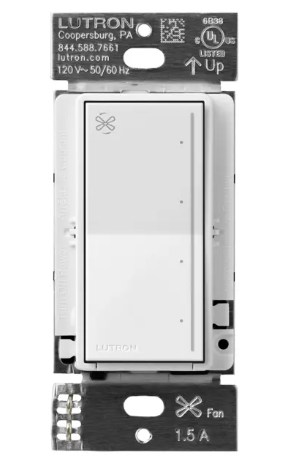
Lutron Sunnata 4-Speed Fan Control 1.5 A RRST-ANF

Enerlites 3 Speed Fan Control Switch - Slide 17000-F3-LA

Lutron Diva 3-Speed Fan Control 1.5 A, (DVFSQ-FH-AL)

Lutron Maestro LED+ Dimmer Switch 1.5 A, (MACL-LFQ-BL)

Lutron Skylark Dimmer Switch 1.5 A, (S2-LFSQH-AL)
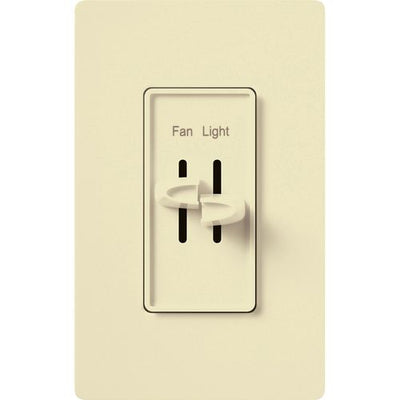
Lutron Skylark Dimmer Switch 1.5 A, (S2-LFSQ-AL)

Lutron Skylark Dimmer Switch 2.5 A, (S2-LF-BL)
About Fan Speed Controls & Fan Timers
How to Choose Fan Speed Controls and Fan Timers
Fan speed controls and fan timers serve different operating needs. A speed control adjusts airflow from a compatible ceiling fan, while a timer switches a suitable ventilation fan off after a selected interval. Combination fan-and-light controls offer another option when both loads need to be operated from one wall location. The right device depends on motor type, electrical load, wiring, and desired operation. Before selecting a finish or control style, identify the fan model and determine whether the project requires adjustable speed, independent light control, or automatic shutoff.
Quick Fan Control Selection Guide
- AC ceiling fan requiring three speeds: Compare compatible three-speed wall controls.
- AC ceiling fan requiring four speeds: Check four-speed controllers and their motor ratings.
- Ceiling fan with a light: Consider a combination control when the wiring supports separate operation.
- Bathroom fan requiring automatic shutoff: Review countdown timers and time switches.
- Fan with a proprietary receiver: Check the manufacturer's system before selecting a wireless remote.
Fan Speed Controls vs. Fan Timers: Choose the Right Function
A fan speed control changes the operating speed of a motor designed to work with that control. Three-speed and four-speed devices provide preset airflow levels, while certain compatible motors support continuously variable adjustment.
A fan timer performs a different task. A countdown timer switches the connected fan on for a selected period and then turns it off. Programmable timers operate according to a set schedule.
For example, a bedroom ceiling fan may benefit from selectable speeds throughout the night. A bathroom exhaust fan may need to continue running after a shower and then shut off automatically.
Lumera lists the Lutron Maestro MA-T51MN timer, which supports selectable countdown intervals from 5 to 60 minutes and is rated for compatible fan loads up to 3A. This particular timer requires a neutral connection.
Selection rule: Choose speed control for airflow adjustment and a compatible timer for automatic operation. A countdown timer is not inherently a variable-speed controller.
3-Speed vs. 4-Speed Fan Controls: Which Should You Choose?
Three-speed fan controllers commonly provide low, medium, and high settings. Four-speed models add an additional adjustment level, which can provide more control over airflow when the motor and controller are compatible.
For example, Lumera carries the Enerlites 17000-F3 three-speed slide control and Lutron Sunnata ST-FSQ-N four-speed fan control.
The Sunnata ST-FSQ-N is rated for a single compatible AC ceiling fan up to 1.5A at 120V and requires a neutral conductor at the wall box.
More speed settings do not automatically make a controller suitable for more powerful motors. Fan compatibility and electrical ratings must be established before choosing the number of speeds.
Fan Speed Control Amp Ratings: Match the Motor Load
Fan-speed controls are commonly rated by the current they can safely handle. Lumera lists residential fan controllers rated at 1.5A, along with selected higher-rated models intended for different motor-control applications.
The correct rating depends on the fan motor's electrical requirements. Read the fan nameplate and installation instructions rather than selecting a controller based only on blade diameter or room size.
For example, a fan drawing 1.2A should be paired with a controller whose specified motor rating and compatibility requirements permit that load. A device rated at 1.5A is not automatically compatible with every 1.2A motor.
Some controls are approved for only one ceiling paddle fan, even when the combined current of multiple fans would fall below the printed amp rating. Other control families permit multiple compatible motors.
Selection rule: Confirm the motor type, number of permitted fans, current rating, and any minimum-load restrictions using the manufacturer's instructions.
AC vs. DC Ceiling Fan Motors: Wall Control Compatibility
Traditional wall-mounted fan-speed controllers are generally designed for specified AC ceiling fan motors. Many DC ceiling fans use electronic motor drivers and dedicated receivers or remotes instead.
For example, Lutron's conventional Maestro fan-speed controls are intended for compatible multi-speed AC fans and are not designed for DC-motor fans or fans using incompatible canopy modules.
Connecting an unsupported wall-speed controller to a DC fan can interfere with the motor electronics or damage equipment.
However, speed control and simple on/off switching should not be confused. Certain properly rated countdown timers can switch compatible DC exhaust fans without attempting to regulate their speed.
Selection rule: Identify the motor before choosing the wall device. If the fan requires a proprietary controller, use the manufacturer's approved control system.
Fan and Light Controls: Independent Operation From One Wall Device
Combination fan-and-light controls can operate two functions from one wall location, reducing the need for separate wall devices.
However, these products do not all provide the same lighting functions. Some combine adjustable fan speed with an on/off light switch. Others include a separate dimmer for compatible lighting loads.
For example, the Lutron Diva DVFSQ-LF combines a three-speed fan control with an independent light switch. The manufacturer specifies a fan rating of 1.5A and separate lighting-load limits.
Other fan-and-light controllers use lighting dimmers that may be designed only for incandescent or halogen lamps. A product described as a fan-and-light control is not automatically compatible with dimmable LEDs.
If the fan light requires dimming, confirm the lamp and control compatibility. Where separate lighting control is preferred, review standard lighting dimmers for the light circuit.
Fan Control Wiring: Neutral, Single-Pole, and Multi-Location Requirements
Electrical compatibility also depends on the conductors available at the wall box. Some fan controls operate without a neutral connection, while others require a neutral conductor.
For example, Lutron's Diva DVFSQ-LF does not require a neutral at the wall box, while the Sunnata ST-FSQ-N does.
Independent hardwired fan-and-light operation usually requires separate switched conductors for the two loads. A room originally wired for one ceiling light may not have the necessary conductor arrangement.
Multi-location control introduces another distinction. A product identified for single-pole operation may not support conventional three-way wiring. Some electronic systems require manufacturer-specific companion controls.
Check the selected device's wiring diagram, existing conductors, box capacity, and grounding requirements before ordering.
Smart Fan Controls and Wireless Remotes
Wireless fan controls can add another operating location without requiring a conventional wall-speed controller at each position. However, the remote must communicate with a compatible receiver or smart control.
Lumera carries Lutron Pico wireless accessories, including fan-marked configurations designed for compatible Lutron systems.
For example, the Pico PJ2-3BRL-F01 family is a wireless fan-control accessory. It does not directly regulate a fan motor when used without compatible receiving equipment.
Smart controls may also offer scheduling or remote operation, depending on the complete system. Do not assume a generic wireless transmitter will work with an existing ceiling fan receiver.
For additional compatibility guidance, read Lumera's ceiling fan controls and remotes guide.
Bathroom Fan Timers vs. Humidity Controls
Bathroom ventilation can be automated by elapsed time or moisture conditions. A countdown timer runs the fan for a selected interval, while a humidity-responsive control operates according to its programmed sensing behavior.
For a bathroom where occupants frequently forget to leave the exhaust fan running after a shower, a compatible countdown timer may provide a predictable solution.
A humidity control can respond more directly to changing room conditions, but sensing accuracy, placement, operating thresholds, and fan compatibility still matter.
For a ventilation upgrade, select the appropriate bathroom exhaust fan before finalizing the wall control. Confirm the required airflow, motor type, and electrical specifications.
Installing Fan Controls: Wall Plates, Box Space, and Heat Requirements
Electronic fan controllers can require more wall-box depth than basic toggle switches. The complete installation must accommodate device dimensions, wire connections, grounding, and any required heat-management spacing.
Some control families require electrical derating when installed alongside other devices in a multi-gang box. The manufacturer's specific instructions determine whether derating applies.
For installations with several control devices, match the wall-plate opening, number of gangs, and finish using compatible wall plates and switch plates.
Hardwired fan controls should be installed by qualified electrical personnel according to the device instructions and applicable electrical code.
Ordering Fan Speed Controls and Fan Timers for Projects
For multi-room installations, prepare a control schedule organized by fan model and required function. Include:
- Fan manufacturer, model, and AC or DC motor type
- Motor current, voltage, and approved control method
- Required speed settings or countdown duration
- Fan-only or combination fan-and-light operation
- Neutral and multi-location wiring requirements
- Wall-control style, finish, and plate compatibility
- Exact manufacturer part number and quantity
Eligible business buyers can review Lumera Electric's trade account options for recurring purchases.
Request a Quote for Fan Controls and Timers
Planning a hotel renovation, multi-unit residential project, or commercial ventilation upgrade? Contact Lumera Electric for a project quote with the fan and control schedule.
Include the exact model numbers, quantities, motor ratings, wiring requirements, and any companion accessories. Confirm control compatibility before standardizing devices across multiple rooms.
Fan Speed Controls & Fan Timers FAQs
What is the difference between a fan speed control and a fan timer?
A fan speed control adjusts the running speed of a compatible motor. A fan timer turns a suitable fan on or off according to a countdown or programmed schedule. Use speed control when adjustable airflow is required. Choose a timer when the primary goal is automatic shutoff or scheduled ventilation.
Can I use a regular light dimmer to control a ceiling fan?
No, unless the specific control is explicitly designed and rated for the connected fan motor. Ordinary lighting dimmers are not interchangeable with motor-speed controllers. An incompatible dimmer may cause humming, unreliable operation, or equipment damage. Match the wall control to the fan manufacturer's requirements.
Can a 1.5A fan control operate more than one ceiling fan?
Only if the manufacturer explicitly approves multiple-fan operation and the complete connected load satisfies its rating. Many residential three-speed and four-speed controls are designed for one ceiling paddle fan. Adding a second fan is not automatically permitted even when the combined current appears to fit within 1.5A.
Will a standard wall fan-speed control work with a DC ceiling fan?
Generally not. Many DC ceiling fans require electronic controllers or receivers supplied or approved by the fan manufacturer. A standard AC fan-speed controller can interfere with those electronics. A properly rated on/off timer may be compatible with certain DC exhaust fans, but this is a separate function from speed adjustment.
Does a combination fan-and-light control work with LED bulbs?
It depends on the model. Some combination controls switch compatible LED lighting on and off, while others include a lighting dimmer designed only for incandescent or halogen lamps. Check the exact controller's lighting-load specifications and the bulb manufacturer's compatibility information before purchasing.
Does a fan timer need a neutral wire?
Some do, while others have different wiring requirements. For example, Lutron's Maestro MA-T51MN countdown timer requires a neutral conductor and is rated for compatible fan loads up to 3A. Check the exact timer's wiring diagram rather than assuming an existing single-pole switch can always be replaced directly.