


Photocells
Photocells provide dusk-to-dawn switching for exterior lighting, with thermal and electronic photocontrols suited to different maintenance needs. This collection includes button, stem, swivel, and locking styles used with compatible lighting fixtures, electrical enclosures, or pole-light receptacles. The right choice depends on mounting format, circuit voltage, and lighting-load compatibility. For LED retrofits, confirm that the selected control supports the connected driver load rather than relying on the fixture's wattage alone.
Showing 1–20 of 49 results

Intermatic 480 V Electronic Photocontrol EK4235S

Intermatic 120-277 V Metal Electronic Photocontrol EK4436SM

Intermatic 208-277 V Thermal Photocontrol K4223C

Intermatic 120 V 25A Thermal Photocontrol K4141C

Intermatic 480 V Electronic Photocontrol EK4135S

Intermatic 120-277 V Thermal Photocontrol K4236C
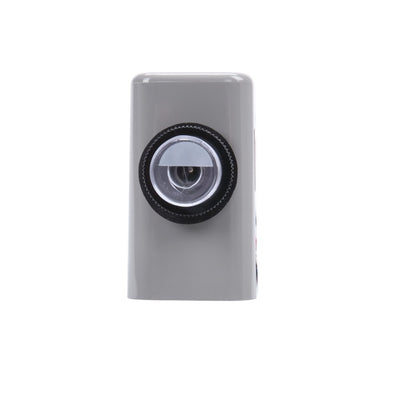
Intermatic 480 V Electronic Photocontrol EK4035S

Intermatic 347 V Electronic Photocontrol EK4227S
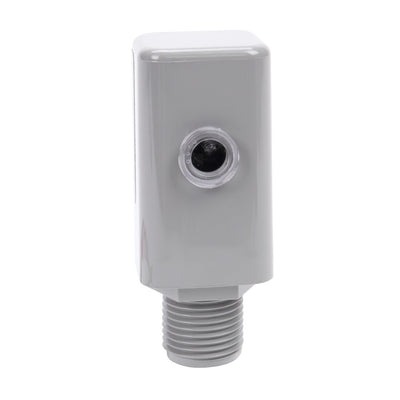
Intermatic 347 V Electronic Photocontrol EK4127S

Intermatic 347 V Electronic Photocontrol EK4027S
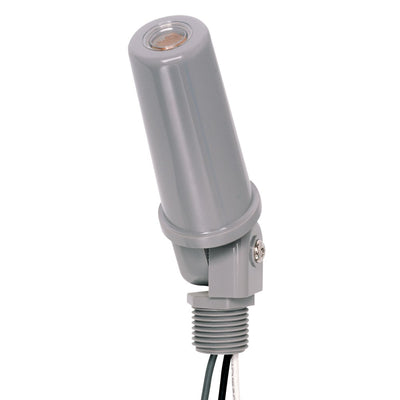
Intermatic 208-277 V Thermal Photocontrol K4253

Intermatic 208-277 V Thermal Photocontrol K4123C

Intermatic 208-277 V Thermal Photocontrol LC4523LA

Intermatic 120-277 V Thermal Photocontrol LC4536LAC

Intermatic 120-277 V Electronic Photocontrol EK4336S

Intermatic 120-277 V Thermal Photocontrol LC4536C

Intermatic 208-277 V Thermal Photocontrol K4023C
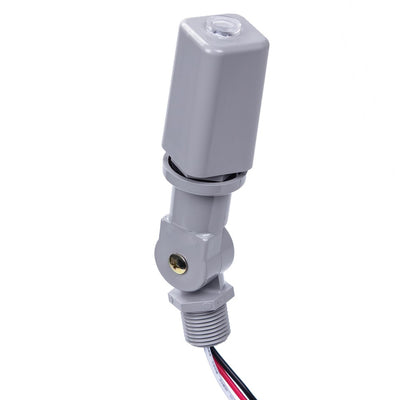
Intermatic 120-277 V Electronic Photocontrol EK4736S

Intermatic 120-277 V Electronic Photocontrol EK4236S

Intermatic 208-277 V Metal Thermal Photocontrol K4423M
About Photocells
How to Choose Photocells for Dusk-to-Dawn Lighting
Photocells make outdoor lighting respond to daylight automatically, but choosing the correct control takes more than matching the words "dusk to dawn." A sensor must work with the fixture, the electrical circuit, and the conditions at its mounting location. A replacement for a small wall-mounted light has different requirements from a control serving several pole lights. Use the following checks to narrow the options before comparing individual products.
Quick Selection Guide
- Small fixture with a sensor knockout: Check button or stem-mounted photocontrols.
- Pole light with a locking receptacle: Match the photocontrol to the existing socket.
- Restricted daylight exposure: Consider a swivel-mounted sensor that can be repositioned.
- Multiple LED fixtures: Verify switching capacity, LED compatibility, and driver inrush current.
Thermal vs. Electronic Photocontrols: Which Should You Choose?
Thermal photocontrols generally use a light-sensitive element and a mechanical switching assembly. Their inherent response delay helps prevent momentary light changes from repeatedly operating the switch. They can be a practical choice for accessible fixtures where simple dusk-to-dawn operation is sufficient.
Electronic photocontrols use electronic light sensing and may incorporate relays, more precise switching thresholds, and protective circuitry. Some models include zero-crossing technology to reduce switching stress. Electronic does not automatically mean contactless, however, and neither technology guarantees compatibility with every LED driver.
For a sensor mounted 20 feet above a service drive, pay particular attention to switching-cycle ratings, operating temperature, and the specified failure mode. A difficult-to-access control deserves closer scrutiny because replacement involves more labor. For either technology, verify the manufacturer's LED load rating before selecting a model.
Photocell Mounting Types: Button, Stem, Swivel, and Locking
The existing fixture often determines which mounting configuration you need. A control with the wrong connection cannot simply be substituted because it has the correct voltage.
- Button mount: A compact sensor mounted through a suitable opening, often with much of its body inside the enclosure.
- Fixed stem mount: A threaded control installed through a compatible enclosure or fixture opening.
- Stem and swivel mount: An adjustable mounting arrangement that helps position the sensor toward available daylight.
- Locking type: A plug-in photocontrol that engages a compatible receptacle, commonly found on roadway and pole-mounted area lighting.
For example, an 18-foot parking lot pole with an ANSI C136.10 locking receptacle requires the appropriate locking interface, not a wired button sensor. Check the receptacle, mounting dimensions, and electrical requirements together. If the fixture itself also needs replacement, review LED area lights and confirm which models provide the required photocontrol connection.
Photocell Voltage and LED Load Ratings: Avoid Costly Mismatches
Start with the actual supply voltage. Photocontrol listings may specify 120V, 208–277V, 120–277V, 347V, or 480V operation. Those ranges are not interchangeable. A control designed only for 120V should not be connected to a 277V lighting circuit, even when its physical mounting fits.
Next, examine the load rating. Manufacturers may publish different capacities for incandescent lamps, HID ballasts, and electronic or LED loads. A wattage rating for one load type does not automatically apply to another.
Consider ten 100W LED fixtures switching on together. Their combined running load is 1,000W, but that figure alone does not account for the driver's startup current. If the installation exceeds the photocontrol's permitted switching duty, a properly selected contactor may be needed to handle the lighting load while the photocell operates its control circuit.
Have a qualified electrician verify the voltage, wiring arrangement, switching ratings, and circuit protection before installation.
Outdoor Photocell Installation: Placement, Weather, and False Switching
A photocell needs a useful view of ambient daylight without being directly influenced by the lights it controls. Poor placement can make an otherwise functional sensor behave unpredictably.
Picture a wall-mounted light 9 feet above a loading door. If its beam reflects into the photocell after the fixture turns on, the control may switch the light off, detect darkness again, and restart the cycle. Nearby signs or floodlights can cause similar problems.
Position the sensor according to the manufacturer's orientation instructions, away from direct fixture illumination and obstructions that interfere with daylight detection. Also check operating temperature, water exposure, and any enclosure requirements. An outdoor-rated control is not automatically suitable for every washdown or exposed mounting condition.
If the installation needs an additional enclosure, select a compatible weatherproof electrical box with suitable fittings and seals.
Photocells vs. Timers and Motion Sensors: Choosing the Right Control
Each control responds to a different trigger. A photocell follows ambient daylight. A timer follows a programmed schedule, while a motion sensor responds to activity within its detection area.
Suppose a storefront sign should illuminate at dusk but turn off at 11 p.m. A photocell alone won't provide that fixed shutdown time. A compatible control arrangement using lighting timers can provide scheduled operation.
For a service entrance that needs additional illumination only when someone approaches, occupancy and motion sensors may be more appropriate. Some systems combine light-level sensing with motion detection so the motion function operates only after dark.
Plan the switching sequence before combining devices. If your project also requires scheduled dimming or nighttime light reduction, verify the fixture's dimming capability and applicable local energy-code requirements rather than assuming ordinary photocell switching satisfies the complete control strategy.
Photocell-Ready vs. Photocell-Included Outdoor Fixtures
Not every exterior light that mentions a photocell includes an installed sensor. The distinction matters when ordering replacement controls or an entire lighting project.
A photocell-included fixture arrives with the stated control. A photocell-ready fixture provides a compatible mounting provision but requires a separate sensor. Other fixtures need switching handled externally at the circuit.
On a 24-fixture replacement project, overlooking that distinction could mean ordering 24 unnecessary controls or arriving without sensors needed to complete the installation.
Record the exact fixture model and its control provisions before ordering. When selecting replacement luminaires, check the photocell configuration on individual LED wall packs and LED flood lights. Don't assume the same configuration applies across every model.
Ordering Replacement Photocells or Controls for a Lighting Project
For a multi-fixture installation, organize the control requirements by circuit and fixture type before placing the order. A site with 40 exterior lighting points may need several control configurations rather than one universal replacement.
Have these details ready:
- Existing photocontrol model or a clear photograph
- Fixture model, mounting format, and receptacle type
- Supply voltage and connected lighting load
- LED driver compatibility and switching requirements
- Installation environment and required quantity
Lumera Electric provides a trade account application for eligible business buyers. For larger orders or projects requiring several control configurations, request a project quote with your fixture schedule and electrical requirements.
Photocell FAQs
What is the difference between a button photocell and a twist-lock photocell?
A button photocell mounts through a suitable opening and typically connects using wire leads. A twist-lock photocell plugs into a compatible receptacle and locks into place. They are not direct replacements for one another. Match the existing fixture's mounting arrangement, socket or opening dimensions, and electrical requirements before ordering.
Can photocells be used with LED lights?
Yes, photocells can control LED lighting when the selected model is rated for the connected LED load and supply voltage. Check the manufacturer's compatibility and switching specifications rather than assuming an incandescent rating also applies to LED drivers. If the retrofit includes replacing the driver, review the relevant LED driver specifications separately.
Why do dusk-to-dawn lights keep turning on and off?
Repeated cycling can occur when light from the controlled fixture reaches the photocell. The sensor turns the light off, detects darkness, and switches it on again. Other causes include an unsuitable control, wiring problems, or a failing component. Check the sensor's exposure to surrounding light before arranging electrical troubleshooting.
Can one photocell control multiple outdoor lights?
Yes, one photocell can control multiple fixtures when the electrical design and the control's load rating permit it. The combined operating load and LED driver inrush must be considered. Larger installations may require a contactor instead of switching the full lighting load through the photocell. A qualified electrician should determine the correct arrangement.
Do photocells dim LED lights automatically?
Basic dusk-to-dawn photocells switch lighting on and off; they do not provide adjustable dimming. Dimming requires a compatible fixture or driver and a control system that supports the required method. Projects needing scheduled reduction, daylight harvesting, or connected control should evaluate appropriate lighting control systems rather than relying on a standard on/off photocell.
Do outdoor LED fixtures already include photocells?
Some do, but others require a separately purchased sensor or external circuit control. The product description should establish whether the photocell is included, the fixture is photocell-ready, or no integrated mounting provision is available. This distinction also applies when comparing exterior fixtures such as LED canopy lights.