


Ventilation Fans
Ventilation fans remove stale, humid, or unwanted air and support controlled airflow in bathrooms, laundry areas, and other residential or light commercial spaces. Choose ceiling or wall exhaust fans for direct room ventilation, inline duct fans for remote-blower or longer-duct applications, and energy recovery ventilators when balanced fresh-air exchange is required. Start with the ventilation strategy, then compare required CFM, duct layout, sound level, controls, and installation location before selecting the equipment.


Showing 1–20 of 145 results

Panasonic FV-10VE2H Intelli-Balance 100 Energy Recovery Ventilator (ERV)

Panasonic FV-10VE2 Intelli-Balance 100 Energy Recovery Ventilator (ERV)

Panasonic FV-10VEC2H Intelli-Balance 100 Energy Recovery Ventilator (ERV)

Panasonic FV-10VEC2 Intelli-Balance 100 Energy Recovery Ventilator (ERV)

Panasonic FV-10VEC2RH Intelli-Balance 100 Energy Recovery Ventilator (ERV)

Panasonic FV-10VEC2R Intelli-Balance 100 Energy Recovery Ventilator (ERV)
Panasonic FV-0510VSCB1 WhisperGreen Select Ventilation Fan
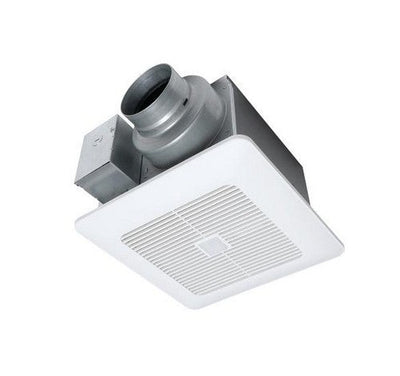
Panasonic FV-0511VQC1 WhisperGreen Select Ventilation Fan
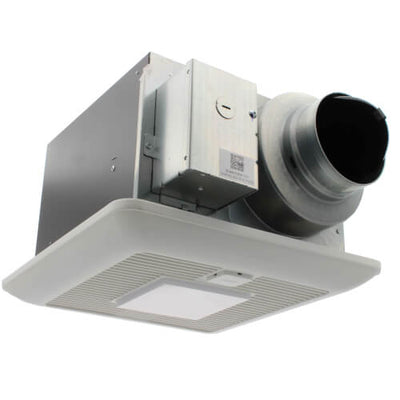
Panasonic FV-0511VKSL2 WhisperGreen Select Ventilation Fan
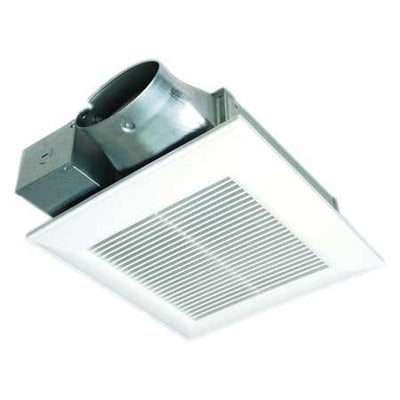
Panasonic WhisperValue 50/80/100 CFM DC Pick-A-Flow Fan FV-0510VS1
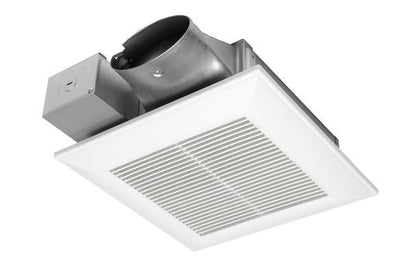
Panasonic WhisperValue 50/80/100 CFM DC Fan with Condensation Sensor FV-0510VSC1
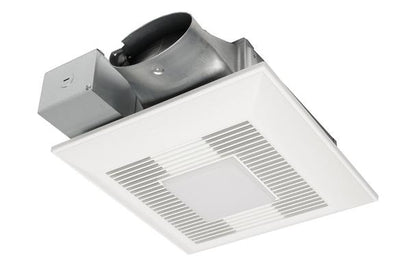
Panasonic FV-0510VSL1 Whisper Value 50/80/100 CFM DC Fan with LED Light

Panasonic FV-0510VSCL1 Whisper Value 50/80/100 CFM DC Fan with Condensation Sensor & LED Light
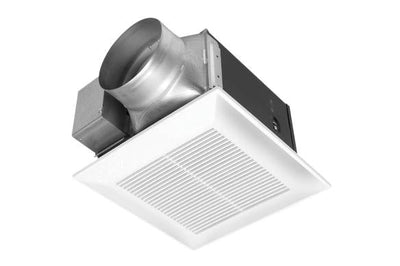
Panasonic Whisper Ceiling Only-ECM Motor with Pick-A Flow 190 CFM Fan FV-20VQ3
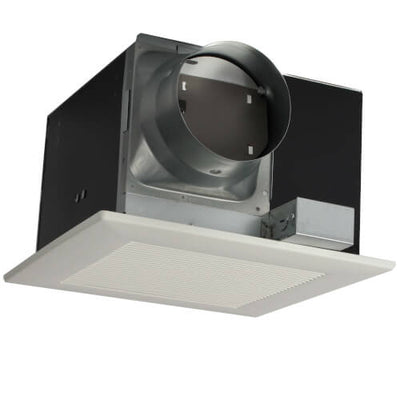
Panasonic WhisperCeiling 290 CFM Ceiling Mounted Fan FV-30VQ3
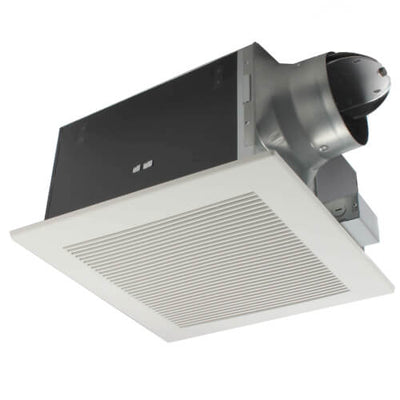
Panasonic WhisperCeiling 390 CFM Ceiling Mounted Fan FV-40VQ4

Panasonic FV-0511VQCL1 WhisperSense DC Multi-Speed Bath Fan, Energy Star Pick-A-Flow 50, 80, or 110 CFM Ventilation, LED Light & Humidity/Motion Sensor

Panasonic FV-0511VQL1 WhisperCeiling DC - ECM Motor with Pick-A Flow Fan with Led Light 50-80-110 CFM

Panasonic FV-1115VQL1 WhisperCeiling DC with LED light, Pick-A-Flow 110, 130 or 150 CFM Ceiling, Large Room, ENERGY STAR Bath Exhaust Fan

Panasonic FV-WCCS1-W WhisperControl Condensation Sensor Plus White Switch With On / Off Function
About Ventilation Fans
How to Choose Ventilation Fans for Bathrooms, Ductwork, and Whole-Home Airflow
Choosing a ventilation fan starts with the job the system needs to perform. A bathroom exhaust fan removes moisture and odors from one room, an inline fan moves air through a duct system, and an energy recovery ventilator exchanges indoor and outdoor air as part of a balanced ventilation design. These products are not interchangeable just because their specifications include a CFM rating. Before ordering, identify the required airflow, duct route, mounting location, noise expectations, electrical supply, and control method.
Choose the Ventilation System Before Comparing Models
If the goal is to remove humid air from a shower room, start with a local exhaust fan. If the fan motor must be located away from the room or the duct arrangement calls for a different mounting method, an inline design may be appropriate. For planned fresh-air supply and exhaust in a tightly built home or multifamily project, compare energy recovery ventilators (ERVs). An ERV uses separate supply and exhaust air paths and transfers some heat and moisture between those air streams, but its suitability depends on the ventilation design, local climate, and selected equipment.
A bathroom exhaust fan does not provide the same balanced supply-and-exhaust function as an ERV. Likewise, an ERV does not automatically replace the need for dedicated local exhaust where required by the building design or applicable code. Define the purpose first so that the product category matches the project.
Size Airflow Using CFM and the Actual Duct System
CFM, or cubic feet per minute, measures airflow. The appropriate rating depends on the space, operating schedule, and ventilation requirements. For a bathroom, the room size and fixture use help establish the needed exhaust rate; for an entire dwelling, the required outdoor-air ventilation rate is calculated differently. Follow the project specifications and locally applicable requirements instead of applying one room-size formula to every application.
Also check the fan's performance against the resistance of the installed duct system. A product advertised at a particular CFM may deliver less air when connected to long duct runs, restrictive fittings, or poorly sized termination caps. Compare airflow at the relevant static pressure where manufacturer data is available. The highest free-air CFM number is not necessarily the best guide to installed performance.
Inline Duct Fans for Remote or Duct-Mounted Applications
Some projects call for a fan located within the duct rather than directly in a bathroom ceiling. Remote mounting can help with layout or sound at the occupied space, provided the whole system is sized and installed correctly. Review inline duct fans for products intended to work within a suitable duct run, then compare duct diameter, airflow at operating pressure, power requirements, allowable orientation, and service access.
An inline fan is not a universal remedy for undersized ductwork. Several elbows, a long run, or a restrictive exterior termination can reduce flow even when the fan has a high nominal CFM rating. Dryer exhaust applications also have specialized lint, temperature, and safety requirements; use only equipment explicitly approved for that application rather than substituting a general ventilation fan.
Bathroom Exhaust Fans: Evaluate Airflow, Noise, and Installation Fit
For shower rooms, toilets, and other spaces needing local moisture or odor removal, compare bathroom and exhaust fans by rated airflow, sones, duct connection, housing dimensions, and approved mounting position. A lower sone value generally indicates a quieter tested fan, but the installed duct and mounting conditions affect how the system sounds in practice.
Replacing an existing ceiling fan requires more than matching the visible grille. Measure the housing opening, available depth above the ceiling, duct diameter, discharge direction, and electrical connection. Some models include integrated lighting, humidity sensing, or selectable airflow; confirm these features on the exact product rather than assuming all versions of the same series include them.
When a Fan-Only Configuration Makes More Sense
If the room already has satisfactory lighting, a dedicated fan-only exhaust unit lets the ventilation equipment be selected independently of the light fixture. This can simplify replacements where a separate ceiling light or vanity light will remain in service. The selection should still start with airflow, noise, housing size, and the duct connection.
A fan-and-light combination may be useful when the ceiling layout has limited space or both functions are intended at one location. Neither configuration is inherently better: choose the one that fits the room layout, maintenance plan, lighting design, and controls. In either case, check whether the selected fan is approved for installation above a tub or shower before specifying that location.
Fan Controls: Speed Adjustment, Timers, and Humidity Response
Ventilation controls can serve different purposes. A timer keeps a compatible fan operating for a specified interval, while a humidity sensor responds to changing moisture conditions. Some fans have integrated controls or selectable airflow settings. A separate speed controller changes motor operation only when the fan manufacturer allows that type of control.
If adjustable fan operation is needed, compare fan speed controls only after identifying the motor type, voltage, load, and supported control method. Many wall-mounted speed controllers are intended for specific AC ceiling fan motors and may not work with electronically commutated (ECM) or DC ventilation motors. A lighting dimmer should not be used as a substitute for a listed motor control. Where automatic shutoff is the main objective, verify an appropriate fan-rated timer rather than assuming a speed controller provides timing.
Duct Diameter, Exterior Termination, and Make-Up Air
Check the fan's specified duct size before finalizing the unit. Reducing a larger fan outlet to a smaller existing duct can increase resistance and noise while reducing delivered airflow. Straight, appropriately sized duct runs with suitable fittings usually support better performance than routes with unnecessary bends or crushed flexible duct. The exterior termination must also be suited to the installation.
Bathroom and other local exhaust should discharge outdoors, not into an attic, crawl space, or wall cavity. In tightly sealed buildings, exhaust ventilation also affects pressure and replacement-air paths. Those considerations can be especially important when combustion appliances or other mechanical systems are present. Follow the project ventilation design rather than selecting an exhaust fan in isolation.
ERV Selection: Airflow Balance, Duct Layout, and Maintenance
An energy recovery ventilator is selected as part of a fresh-air system, not just as another exhaust fan. Compare required supply and exhaust rates, the manufacturer's airflow performance, filter arrangement, service access, and the available duct configuration. Some models support multiple airflow settings or dedicated wall controls, but the supported features depend on the exact series.
For a whole-home or multi-unit installation, plan where the outdoor-air intake and exhaust outlet will be located and how the ducts will reach the occupied spaces. Also check climate-related requirements such as condensation and frost management where applicable. Accessible filters and maintenance clearances should be considered before the equipment location is fixed.
Ventilation Fan Ordering Checklist
- Application: Local bathroom exhaust, remote duct-mounted airflow, or balanced whole-home ventilation.
- Airflow: Required CFM and available performance data at the intended duct-system resistance.
- Noise: Published sound rating and how mounting and ductwork may affect installed noise.
- Ductwork: Diameter, length, bends, termination, and room for the specified connections.
- Housing and access: Ceiling or wall opening, depth, mounting orientation, and service clearance.
- Electrical fit: Supply voltage, motor type, and supported control method.
- Features: Integrated light, humidity sensing, timer, selectable airflow, or other model-specific options.
- Installation rating: Approved location and any requirements for a tub, shower, or other special environment.
- Package contents: Grille, controls, sensors, dampers, and other required parts included or sold separately.
For multi-room or multifamily projects, organize fan selections by location, required airflow, duct size, electrical controls, and exact model number. A qualified installer should confirm the ventilation design and complete the electrical and duct connections according to the equipment instructions and applicable requirements.
Ventilation Fans FAQs
What is the difference between an exhaust fan and an energy recovery ventilator?
An exhaust fan removes air from a particular space, such as a bathroom. An ERV is part of a system that brings in outdoor air and exhausts indoor air while exchanging some heat and moisture between the air streams. Their roles, duct requirements, and controls differ. Local exhaust may still be needed even when an ERV serves the broader building.
How many CFM should a ventilation fan have?
The required airflow depends on the room or building, how the fan will run, and applicable ventilation standards. A small bathroom and a whole-home balanced ventilation system cannot be sized with the same rule. Confirm the project requirement, then check whether the selected fan can deliver that airflow through the planned duct system.
Will a higher-CFM fan fix a long or restrictive duct run?
Not necessarily. Long runs, small ducts, excessive elbows, and restrictive terminals can reduce airflow and increase sound. Check fan performance at the system's expected static pressure and correct duct restrictions where needed. An inline fan should be specified for its intended application, not used as an automatic substitute for proper duct design.
Are ventilation fans with lower sones always better?
Lower sones generally indicate quieter tested operation, but a sound rating should be evaluated alongside delivered airflow and the conditions under which it was measured. Duct restrictions, mounting quality, and vibration can change installed noise. Select a fan that meets both the ventilation and acoustic requirements.
Can I use a regular fan-speed wall switch with a bathroom exhaust fan?
Only when the fan manufacturer approves that particular type of control and the electrical ratings match. Many wall speed controls are made for compatible AC ceiling fans, not every bathroom exhaust motor. For a fan with built-in electronics or a DC/ECM motor, follow its specified control system. A compatible timer may be a better option when automatic shutoff is the main goal.
Can a bathroom ventilation fan exhaust into the attic?
No. Bathroom exhaust should terminate outdoors using a suitable duct and exterior termination, rather than discharging moisture into an attic or another concealed building space. The fan's installation instructions and locally applicable requirements determine the permitted duct arrangement and termination details.