


Lighting
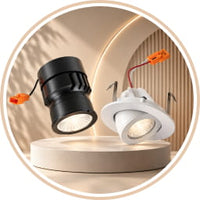
Lighting for commercial buildings, indoor rooms, outdoor sites, and ceiling renovations includes distinct fixture families. Commercial products address offices and industrial work areas; indoor fixtures serve living spaces, while outdoor lights cover entries and open grounds. Recessed and downlight systems offer a built-in ceiling alternative when a suspended or decorative fixture isn't right. Choose by application, mounting conditions, and exposure before browsing products. For multi-location projects, gather the fixture quantities and basic installation details for a quote.




Showing 1–20 of 20094 results

120-H3-CHAN-3 Hybrid 3 Single Color 1m Extrusion

120-H3-CLIPS Hybrid 3 Single Color Mounting Clips, Bag of 10

120-H3-CONKIT Hybrid 3 Single Color Connection Kit

120-H3-ENDS-5 Hybrid 3 Single Color End Cap, Bag of 5

120-H3-JUMP.5 Hybrid 3 Single Color .5ft Linking Cable

120-H3-JUMP3 Hybrid 3 Single Color 3ft Linking Cable

120-H3-RGBW-CHAN-4 Hybrid 3 RGBW 4ft Black Extrusion w/Lens

120-H3-RGBW-CHAN-FEED Hybrid 3 RGBW Black End Cap w/Feed

120-H3-RGBW-CONKIT Hybrid 3 RGBW Power Connection Kit w/Plug

120-H3-RGBW-END Hybrid 3 RGBW End Cap

120-H3-RGBW-JUMP.5 Hybrid 3 RGBW .5ft Linking Cable

120-H3-RGBW-JUMP3 Hybrid 3 RGBW 3ft Linking Cable

120-H3-SCLIPS-22 Hybrid 3 Single Color Saddle Mounting Clips, Bag of 22

120-H3-SPL Hybrid 3 Single Color Splice Connection Kit

12VAC-H3-CHANSH-1M Hybrid 3 12V AC Black Aluminum Sheilded Extrusion 1m

12VAC-H3-CHANSH-ANGL Hybrid 3 12V AC Black Aluminum Angle Sheild

12VAC-H3-CHANSH-SUBCLIP Hybrid 3 Substrate Clip

12VAC-H3-CONKIT Hybrid 3 12V AC Connection Kit
13.1ft Reel Rgb+wide Range Tunable Tape, 1800k-6000k (3 Diodes), Ip54,24v,7w/ft,includes 6 FT Lead & Tail Wires, W/2 Tl-7pwr-hd
1M Aluminum Channel for Neonflex Pro Apex W/internal Gear
About Lighting
How to Choose Lighting for a Building: Fixture Families, Ratings, and Fit
Lighting for a building project involves more than choosing an LED fixture with enough watts. A suspended office ceiling, an exposed loading area, and an existing fluorescent fitting each require a different purchasing approach. At this level, the first job is to identify the right product family; then you can check the opening, mounting method, environmental rating, and controls. Use the decisions below to avoid ordering mismatched fixtures, incomplete retrofit components, or equipment that isn't suitable for its location.
Quick Picker: Find the Right Lighting Category for the Job
- 18-foot warehouse aisle: start with commercial lighting fixtures for high-mount planning.
- Six exterior pole positions: map coverage through outdoor lighting.
- 8-foot living room ceiling: explore indoor and residential lighting.
- 6-inch drywall opening: check recessed lights and downlights before cutting.
- 48 existing fluorescent tubes: plan replacements with LED bulbs and tubes.
- 100-foot exit corridor: review exit signs and emergency lighting.
Ceiling and Mounting: Choose a Fixture That Fits the Structure
An office renovation with a 2-by-4-foot lay-in grid is a different installation from an exposed-structure warehouse. A grid fixture must suit the ceiling module and its support requirements. High-mounted fixtures need approved suspension or bracket hardware; recessed products need enough room above the finished surface. Those details often eliminate more options than the product's appearance.
Decision rule: If the existing ceiling is staying, establish its grid size, opening, or suspension points before selecting a fixture family. Don't assume a flat panel and a recessed troffer share the same depth or light distribution. Photograph one representative mounting point and check the manufacturer's installation drawing before making the shortlist.
Dry, Wet, Washdown, and Hazardous Locations: Confirm the Listing
On a covered 30-foot loading dock, wind-driven rain may still reach a fixture. Protected humidity and direct water exposure call for different location ratings; washdown areas can need stronger enclosure protection. A dusty warehouse and a location with combustible vapors also present different hazards. Vapor-tight construction does not automatically make a luminaire suitable for a classified hazardous location.
If cleaning water, heavy contamination, or a classified atmosphere is involved, have the site's requirements established before buying a general-purpose fixture. Check the exact product listing, permitted orientation, and enclosure requirements. An IP designation supplies ingress information but does not replace an applicable US location or hazardous-area approval.
LED Lighting Specs: Lumens, CCT, Voltage, Controls, and DLC
A 20-room office package may look consistent on a fixture schedule and still arrive with incompatible drivers or mismatched color. Compare the specifications that affect installed performance, not only the advertised wattage:
- Delivered lumens: output available for the required coverage.
- CCT and CRI: light appearance and color rendering.
- Input voltage: compatibility with the actual supply.
- Dimming protocol: the driver and control must agree.
- DLC qualification: exact-SKU status when rebate rules require it.
- Location rating: suitability for the intended exposure.
If several zones must dim together, choose compatible drivers and controls rather than assuming all LED fixtures use the same dimmer. Coordinate the circuit design with commercial lighting controls before releasing the fixture order.
Relamping vs. Replacing Fixtures: Avoid a Mismatched Retrofit
Replacing 40 fluorescent lamps is not necessarily the same job as changing 40 complete ceiling fixtures. A lamp retrofit may require a particular tube type, socket, ballast compatibility, or approved ballast-bypass wiring. A recessed conversion instead hinges on the existing housing size, trim clearance, and permitted retrofit method. Flexible linear light uses an entirely different power and mounting arrangement.
If the existing luminaire is serviceable and an approved lamp retrofit is available, match the original markings and wiring method before specifying full fixture replacement. For a 16-foot cove or shelf detail, tape, rope, and ribbon lighting requires its own voltage, driver, and run-length calculations. Keep a sample from each old fitting with the project schedule.
Permanent Fixtures vs. Temporary Work Lights: Match the Project Phase
During a six-week renovation, a 2,000-square-foot unfinished floor may need illumination before the final ceiling exists. Fixed fixtures require permanent supports and appropriate electrical connections. Temporary equipment has different considerations: power source, cord management, movement around the work area, and the location conditions specified by the manufacturer.
When the work area moves repeatedly, select suitable portable and work lights rather than treating the finished building fixtures as temporary equipment. For permanent installation, add manufacturer-compatible lighting accessories to the bill of materials only where required. Confirm support and electrical safety with qualified installation personnel.
Exit and Emergency Lighting: Keep the Life-Safety Plan Separate
A 120-foot interior corridor may look adequately lit during normal operation but still need a separately designed emergency system. Exit identification, emergency illumination, and routine room lighting have different purposes. Battery-backed equipment isn't automatically appropriate for every required egress location, and an ordinary LED fixture doesn't become emergency-rated merely because an optional battery is advertised.
If the approved plans require emergency operation, schedule the listed equipment, power method, testing provisions, and mounting positions separately from normal fixtures. The authority having jurisdiction and project designer determine the applicable code criteria. Verify the emergency-lighting drawings before approving a replacement or new-construction order.
Ordering Lighting for Multiple Rooms or Buildings
Group a project schedule by area, fixture family, mounting details, electrical supply, controls, and quantity. Lumera offers trade accounts for business buyers with access to volume and project quotes. Qualifying businesses can also apply separately for Net payment terms. Keep different drivers or environmental ratings on separate schedule lines.
Request a Lighting Project Quote
For mixed fixture packages, request a lighting project quote using the planned zones rather than one total fixture count. Have these details ready:
- Room or site zone, fixture family, and quantity
- Ceiling opening, mounting method, or pole height
- Required light level, voltage, CCT, and dimming method
- Dry, damp, wet, washdown, or classified-area requirements
Include existing model numbers when the job involves a retrofit.
Lighting FAQs
What is the difference between recessed downlights and ceiling-mounted fixtures?
Recessed downlights sit within a compatible ceiling opening, while surface-mounted fixtures attach below the finished surface. Recessed installation needs the correct aperture, housing or canless system, and available ceiling space. Surface mounting avoids that recessed opening but still requires an approved box and support. Compare ceiling light fixtures when the ceiling cannot accommodate the intended recessed assembly.
Can LED tubes replace fluorescent lamps without rewiring the fixture?
Some LED tubes work with compatible existing ballasts; others require ballast bypass or a different wiring arrangement. The tube's operating type, base, length, and the fixture's condition determine the permitted retrofit. Check the specific lamp instructions and any required labeling before purchasing LED replacement tubes. Have a qualified electrician perform wiring changes.
Are vapor-tight lights the same as hazardous-location lights?
No. Vapor-tight describes an enclosure approach intended to limit moisture and contaminant entry, but it does not establish approval for flammable gases, vapors, or combustible dust. Classified locations require equipment specifically evaluated for the applicable classification and installation method. Use the site's hazardous-area documentation and the precise fixture listing to select the product; don't substitute based on appearance.
Does a DLC-listed LED fixture automatically qualify for a utility rebate?
No. DLC qualification can be a prerequisite for certain commercial lighting incentives, but eligibility also depends on the specific utility program, product category, installation, and current qualified-products listing. A fixture's brand or marketing description does not confirm rebate approval. Check the precise model number with the program administrator before including an incentive in the project budget.
Do emergency exit signs and battery-backup lights serve the same purpose?
No. Exit signs identify the designated exit route, while emergency luminaires provide illumination during an interruption to normal power. Some listed combinations perform both functions, but not every battery-backed fixture meets the requirements for a particular egress application. Review emergency light fixtures against the approved life-safety plans before selecting the power and mounting configuration.