


ELV / 0-10V Dimmers
ELV and 0-10V dimmers at Lumera include Lutron reverse-phase controls for compatible electronic transformers and LED drivers, alongside 0-10V slide, rocker, and occupancy-sensor dimmers for fixtures with dedicated control inputs. The two methods are not interchangeable: ELV modifies the line-voltage waveform, while 0-10V uses separate control conductors. Choose by driver specification, circuit voltage, switching layout, and neutral requirements before selecting a finish. For multi-zone projects, document fixture and dimmer model numbers when requesting a quote.
Showing 41–45 of 45 results

Lutron Diva Dimmer Switch 8 A, Biscuit (DVSCSTV-BI)

Lutron Maestro Dimmer Switch 600 W, Midnight (MSCELV-600M-MN)

Lutron Maestro Dimmer Switch 600 W, Hot (MSCELV-600M-HT)
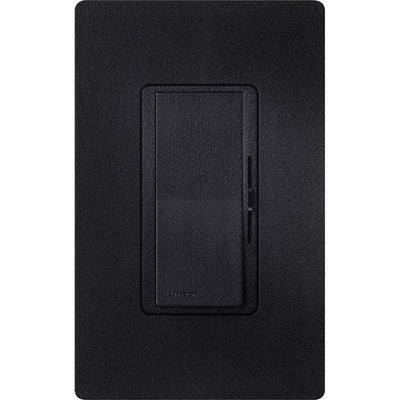
Lutron Diva Dimmer Switch 8 A, Midnight (DVSCSTV-MN)
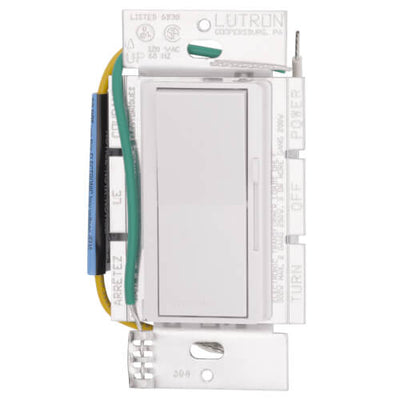
Lutron Diva Dimmer Switch 300 W, White (DVELV-300PH-WH)
About ELV / 0-10V Dimmers
How to Choose ELV & 0-10V Dimmers for LED Drivers and Fixtures
ELV and 0-10V dimmers solve different control problems, even when the wall devices share a decorator face. A 120V reception pendant with an electronic transformer may need reverse-phase dimming; twelve 277V office troffers may require a separate analog control pair. For contractors and project buyers, choosing the wrong method is more consequential than selecting the wrong finish. Use the driver label, line-voltage requirements, switching layout, and low-end behavior to select a suitable dimmer and related equipment.
Quick Picker: Match the Dimmer to the Lighting System
- Four 12V pendants with a reverse-phase driver: review a Lutron Nova T ELV dimmer.
- Twelve 2x4 ceiling fixtures with 0-10V inputs: coordinate LED troffer fixtures and controls.
- 277V stockroom with a 0-10V control requirement: inspect the Morris 82852 dimmer ratings.
- Shared office needing motion-triggered dimming: compare occupancy sensor controls and compatible drivers.
- Twenty feet of 24V cove lighting: check LED tape light control requirements.
- Conference suite needing app-controlled scenes: consider smart and wireless dimmers instead.
ELV vs. 0-10V Dimming: Follow the Driver's Control Input
An architect's schedule might specify eight accent heads as "reverse phase" and ten office fixtures as "0-10V." They cannot share a conventional dimmer merely because both use LEDs. ELV, or trailing-edge control, modifies the AC waveform feeding a compatible electronic transformer or driver. A 0-10V controller instead sends an analog command through a separate control pair while the driver receives normal power. These are different electrical interfaces, not alternative labels for one device.
Decision rule: if the driver calls for forward-phase or TRIAC control, start with standard LED dimmers, not an assumed ELV replacement. Write the permitted method beside each fixture model on the material schedule.
ELV Dimmers: Check the Neutral and Actual Driver Load
Six 12V accent fixtures on a 120V electronic transformer can use reverse-phase control only when the transformer and fixtures allow it. Lutron's NTELV-300 family, for example, is a 120V ELV control that requires a neutral connection at the wallbox. Older switch loops may not contain an accessible neutral, and LED driver behavior varies even with similar wattage ratings. The dimmer's maximum wattage is not a substitute for the manufacturer's compatibility requirements.
If the chosen control needs a neutral that isn't present, revise the device selection or the wiring plan; never use the equipment-grounding conductor as a neutral. Confirm the driver's dimming specification, the dimmer's actual load range, and any multi-gang derating before ordering.
0-10V Control Wiring: Polarity, Wire Colors, and Signal Capacity
On an eight-fixture 277V office run, the supply circuit and the 0-10V control pair perform different jobs. The analog signal is polarity-sensitive, and the driver's current-source or current-sink behavior must work with the selected control. The controller also has a maximum supported signal current across the connected drivers. Modern control leads are commonly violet and pink; violet and gray still appear on older equipment. Color alone does not establish a correct termination.
If the fixture specifies 0-10V, select a compatible controller and coordinate the LED drivers and power supplies on the same schedule. Routing and separation of control and power conductors must follow product listings and applicable electrical-code requirements.
Dim-to-Off vs. Minimum Output: Plan the Switching Method
Fourteen fixtures in a meeting room may dim smoothly to their lowest setting and still remain visibly lit. A zero-volt command does not guarantee complete shutoff: the driver's specified low-end response determines the result. Some wall controllers include a line-voltage switch or relay, while others require separate switching equipment. The printed "10V" on a control refers to its signaling method, not necessarily the line voltage it accepts.
If the room requires full darkness, choose a verified dim-to-off driver and control combination or a correctly rated switched-off arrangement. Check both the control-current capacity and the separate line-voltage switching rating; fixture watts alone won't tell you how many drivers the analog output can handle.
Single-Pole vs. 3-Way ELV and 0-10V Dimmers: Check Both Wallboxes
At either end of a 40-foot corridor, users may need to switch the same lights. That does not mean two identical ELV or 0-10V dimmers belong in both boxes. Certain controls work with a conventional 3-way switch; others require a manufacturer-approved companion or a dedicated control system. Line voltage, neutral availability, and the control wiring all affect the device selection.
If the circuit has two control locations, draw the complete approved arrangement before buying both devices. Then measure wallbox depth, check any mounting and derating instructions, and coordinate matching wall plates and switch plates only after the electrical model is settled.
Low-End Trim and Commissioning: Prevent Flicker and Dropout
During a twelve-fixture showroom relight, instability may appear only when the lights approach their lowest output. For a phase-controlled ELV installation, an untested driver pairing or unsuitable minimum load can produce flicker or audible noise. With 0-10V, the driver's dimming curve, signal polarity, and source/sink compatibility can affect the same test. A slider that moves smoothly is no guarantee that the connected fixtures respond correctly.
If the lights drop out earlier than specified, review the manufacturer pairing data and approved trim settings before changing hardware. A qualified installer should check high, low, and off behavior in each zone and document the result for commissioning.
Ordering ELV and 0-10V Dimmers for Multiple Zones
For a 36-room package, group the schedule by control method, exact fixture or driver model, input voltage, connected load, neutral availability, switching locations, and finish. Lumera offers trade account options for business purchasing; eligible buyers can submit a separate credit application. List relays, companion devices, and other required accessories separately rather than assuming they come with every dimmer.
Request an ELV or 0-10V Dimmer Project Quote
For mixed lighting-control projects, request a dimmer project quote using the actual driver and circuit schedule. Have these details ready:
- Fixture and driver model numbers with their dimming protocols
- Input voltage, load ratings, and 0-10V signal specifications
- Single-pole or multi-location arrangement and neutral availability
- Control style, finish, companion devices, and total quantities
Get the full compatibility and switching requirements approved before replacing specified models with alternatives.
ELV and 0-10V Dimmer FAQs
Can I use an ELV dimmer on a 0-10V LED fixture?
No, unless the fixture's driver separately supports reverse-phase input dimming. An ELV dimmer changes the line-voltage waveform; a 0-10V dimmer sends a separate analog control signal. They are not interchangeable merely because both can dim LEDs. Check the driver's listed control methods and the dimmer compatibility chart guide before purchasing a replacement.
Does a 0-10V dimmer turn the lights completely off?
Not necessarily. Some 0-10V drivers respond to the lowest control signal by holding minimum light output instead of switching off. Others support dim-to-off, or the installation includes a separate line-voltage relay or switch. If complete shutoff is required, verify that feature across the entire device combination. Larger systems may use commercial lighting controls for coordinated switching.
Do ELV dimmers need a neutral wire?
Many ELV dimmers require a neutral, but the rule is model-specific. For example, Lutron's NTELV-300 product instructions identify a neutral connection. An older switch box may lack one, and a white conductor is not always a neutral. Check the selected dimmer's wiring diagram and Lumera's dimmer wiring guide before planning the retrofit.
What are the violet and pink wires on a 0-10V driver?
They are typically the positive and negative leads for the analog dimming-control circuit, not the fixture's line-voltage supply. Older equipment may use violet and gray instead of violet and pink. Correct polarity and approved conductor routing matter more than matching color by appearance. If the conductors need splices, select suitable wire connectors and splices for their actual wire type and listing.
How many LED fixtures can one 0-10V dimmer control?
The limit depends on the control's supported signal current, the connected drivers' source/sink requirements, and any separate relay or switching rating. It isn't determined by adding fixture wattage alone. Check the driver's specified control current, multiply it by the number of drivers, and compare that result with the controller's published capacity. Verify the complete circuit with the electrical designer.
Can I use two ELV or 0-10V dimmers in a 3-way circuit?
Only if the manufacturer explicitly supports that arrangement. Many multi-location layouts use one primary dimmer with a standard 3-way switch or a dedicated companion rather than two independent dimmers. An advertised single-pole/3-way rating does not guarantee that two identical devices can share the load. Match both control points to the same approved wiring diagram before ordering.