


Security Lighting
LED security lights provide outdoor illumination for entries, garages, service doors, walkways, and other areas where automatic response matters. Choose among motion-activated, dusk-to-dawn, and combination-control fixtures based on how the area should behave after dark, then compare sensor coverage, light output, and mounting location. The fixture also needs to suit the exposure and electrical installation. For multi-fixture projects, confirm the control strategy and mounting conditions before requesting project pricing.
Showing 1–20 of 39 results

Lighting Spot 26 20W 1900lm Round LED Security Light LSH-SSL-20W

Westgate 30W 2,800LM 3000K/4000K/5000K LED Security Light White SL-30W-MCT-WH-P

Westgate 20W 1,900LM 3000K/4000K/5000K LED Security Light White SL-20W-MCT-WH-P

Westgate 30W 2,800LM 3000K/4000K/5000K LED Security Light White SL-30W-MCT-WH-D

Westgate 30W 2,800LM 3000K/4000K/5000K LED Security Light Dark Bronze SL-30W-MCT-BZ-D

Westgate 20W 1,900LM 3000K/4000K/5000K LED Security Light Dark Bronze SL-20W-MCT-BZ-P

Westgate 20W 1,900LM 3000K/4000K/5000K LED Security Light Dark Bronze SL-20W-MCT-BZ-D

Westgate 20W 1,900LM 3000K/4000K/5000K LED Security Light White SL-20W-MCT-WH-D

Lighting Spot 26 20W 1900lm 3CCT selectable Round Black LED Security Light LSH-SSL-20W-3CCT-BLK

Westgate 30W 2,800LM 3000K/4000K/5000K LED Security Light Dark Bronze SL-30W-MCT-BZ-P

Westgate 20W (10W per head) 3,400LM 5000K LED Security Light Dark Bronze SL-28W-50K-BZ-D
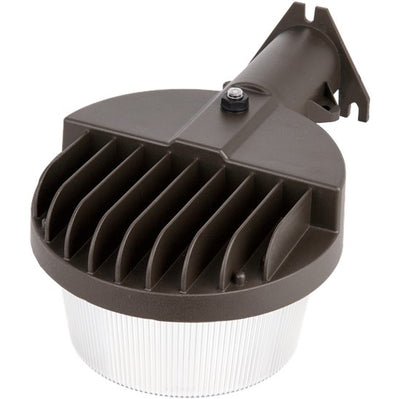
Westgate 20W 2,400LM 5000K/3000k LED Barn Light LR-ECO-20W-30K-P

Lighting Spot 26 20W 1900lm 3CCT selectable Round Bronze LED Security Light LSH-SSL-20W-3CCT-BRZ

Westgate 3W 380LM Max 4000K Solar LED Wall Light SOLW-TSP-MS-40K

Lighting Spot 26 20W 1900lm 5000K White Motion Sensor LSH-SSL-20W-5K-CAMERA

Westgate 2W 385LM 4000K Solar LED Wall Light SOLW-BSP-MS-40K
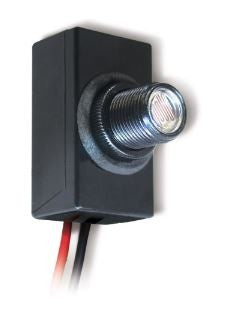
Westgate 20W (10W per head) Security Light Accessory SL-PC

Lighting Spot 26 20W 1900lm 3000K Square White LED Security Light LSH-SSL-SQ-20W-30K-WHT

Westgate 10W 950LM 3000K/4000K/5000K LED Security Light Bronze SL-10W-MCT-BZ-P

MW Lighting MBN-48/64/80W-3CCT 48/64/80W Selectable Barn Light 3-CCT Selectable
About Security Lighting
How to Choose LED Security Lights for the Area You Need to Cover
LED security lights work best when the control behavior, sensor coverage, and light distribution match the actual approach to the building. Start by deciding when the fixture should operate: only after motion, automatically from dusk to dawn, or with a combination of both functions. Then look at where people or vehicles enter the detection zone, how much area the heads need to illuminate, mounting conditions, and outdoor exposure. A fixture with more output won’t fix poor sensor placement or an unsuitable beam direction.
- Need continuous light along a building perimeter? Start with LED wall packs.
- Need a decorative fixture at a visible entrance? Compare outdoor wall lights.
- Need lower-level lighting along paths or planting areas? Review landscape lighting.
Choose Motion, Dusk-to-Dawn, or Scheduled Control First
Control mode determines how the security light behaves every night. Motion activation suits locations where the main goal is a response to activity, while dusk-to-dawn operation keeps lighting active through the dark period. Some installations need scheduled control instead, especially when operating hours are predictable.
Consider a service entrance used only a few times between 6 p.m. and midnight. Motion response may make more sense than continuous full-output operation. Decision rule: decide the required operating behavior before comparing lumens or color temperature. If the fixture itself does not provide the needed control method, separate photocell and sensor controls or lighting timers may be more appropriate.
Match Motion-Sensor Coverage to the Actual Approach
For motion-sensing security lights, sensor placement can matter as much as fixture output. Walls, vehicles, landscaping, corners, and mounting orientation can affect what the sensor sees. A fixture positioned over a garage door may need a different detection pattern from one watching a narrow side passage.
Picture a 30-ft walkway approaching a side door. If the sensor covers only the final few feet near the wall, the light reacts too late to serve the full approach. Decision rule: choose and position the sensor around the path of movement you need to detect, then verify published coverage and adjustment options for the specific model. Larger sites that need independent detection can use separate occupancy and motion sensors.
Compare Light Output With Beam Direction and Coverage
Lumens tell you how much visible light a fixture produces, but they don’t tell you where that light lands. Adjustable multi-head fixtures can divide light across more than one direction, while a tightly aimed source may concentrate most of its output on a smaller target.
For a 25-ft-wide driveway, one intense beam aimed at the center can still leave the edges poorly covered. Plan the illuminated area first, then compare output. Decision rule: select enough light for usable visibility without relying on a single high-output hotspot to cover every direction. If the project includes several exterior zones, Lumera’s broader outdoor lighting category helps separate security, perimeter, area, and architectural lighting roles.
Verify Mounting Location, Exposure, and Electrical Conditions
Outdoor security lighting has to be suitable for the location where it is installed. Confirm the fixture’s stated location rating, mounting method, supply requirements, and the condition of the existing electrical box before treating a new light as a direct replacement.
A fixture mounted 9 ft above an uncovered side door faces different exposure from one installed beneath a protected overhang. The mounting box and connections also need to suit the outdoor environment. Decision rule: if the installation is exposed to weather, use only equipment specifically identified for those conditions. Where the existing box also needs replacement, Lumera’s weatherproof electrical boxes provide the separate enclosure path. Hardwired fixture installation should be handled according to applicable electrical requirements.
Know When a Security Light Is the Wrong Fixture Type
Security lights are built around local exterior coverage and, commonly, automatic response. They are not the right answer for every outdoor lighting problem. A loading-dock wall that needs steady broad illumination, a sign that needs an aimed beam, and a parking area that needs pole-mounted distribution are three different lighting jobs.
For example, trying to cover a 100-ft parking area from one building-mounted security fixture creates a very different layout problem from lighting a doorway. Decision rule: if the project requirement is continuous area coverage rather than localized automatic response, move to the fixture category designed for that distribution instead of oversizing the security light.
Ordering Security Lights for a Multi-Fixture Project
For projects with several entrances, buildings, or repeated mounting locations, organize the order by control behavior, mounting height, required coverage, voltage, fixture output, and location rating. Buyers sourcing exterior lighting repeatedly can review Lumera Electric’s trade account options before standardizing a fixture across the project.
Request a Security Lighting Quote
For larger quantities, prepare the site requirements before you request a project quote.
Have these details ready:
- Number of fixtures
- Mounting locations and approximate heights
- Motion, dusk-to-dawn, or scheduled operation
- Voltage
- Required illumination area
- Outdoor exposure
- Existing electrical box or mounting conditions
For multi-building work, you can also submit your fixture list so the quantities and control requirements stay tied to each location.
Security Lighting FAQs
What is the difference between a security light and a flood light?
A security light is typically selected around automatic response such as motion detection, while a flood light is primarily selected to aim broad or concentrated light at a target area. If the project needs an adjustable beam on a facade, sign, yard, or work area without motion-based operation as the main requirement, compare Lumera’s LED flood lights.
Is motion sensing better than dusk-to-dawn lighting?
Neither is universally better; they serve different operating needs. Motion sensing turns or raises the light when activity is detected, while dusk-to-dawn control responds to ambient light and operates through the night. If you already have a suitable fixture and only need automatic nighttime switching, a separate photocell may solve the control requirement without changing the fixture.
Can security lights be used for a parking lot?
A localized security light is usually not the right fixture for lighting a large parking area. Parking lots need controlled distribution from mounting positions designed to cover open ground rather than a doorway or short approach. For those projects, compare pole-mounted LED area and parking lot lights and plan the fixture layout around the size and shape of the site.
How high should a motion security light be mounted?
Use the mounting range and sensor instructions provided for the specific fixture rather than one universal height. Mounting too low can restrict useful coverage, while an unnecessarily high position can change both sensor response and beam placement. Measure the wall location, identify the area that must be detected, and confirm that the chosen fixture’s published coverage suits that geometry before installation.
Why does a motion security light keep turning on unexpectedly?
Repeated triggering can come from movement or changing conditions inside the sensor’s detection zone rather than a failed fixture. First check the sensor aim, sensitivity settings, moving vegetation, nearby traffic, equipment exhaust, and other activity around the coverage area. If the model provides adjustable sensitivity or detection direction, correct those settings before assuming the entire security light needs replacement.