


Conduit Fittings & Connectors
Conduit fittings and connectors join raceway sections, terminate conduit at boxes and enclosures, provide pull access, and protect or seal wiring-system entries. The broader category includes EMT fittings, conduit bodies, bushings, cable glands, and related fitting hardware for different raceway tasks. Choose first by wiring method, trade size, and installation environment so every component matches the raceway and its listed application. For project orders, map fittings to each raceway run before standardizing types or quantities.


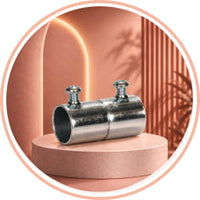


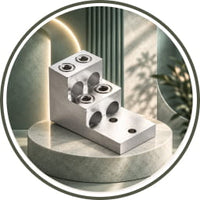
Showing 4141–4158 of 4158 results

Orbit 3-1/2 in Zinc Conduit Bushing CB-350

Orbit 3 in Zinc Conduit Bushing CB-300

Orbit 2-1/2 in Zinc Conduit Bushing CB-250

Orbit 2 in Zinc Conduit Bushing CB-200

Orbit 1-1/2 in Zinc Conduit Bushing CB-150

Orbit 1-1/4 in Zinc Conduit Bushing CB-125

Orbit 1 in Zinc Conduit Bushing CB-100

Orbit Plastic Anti-Short Bushing 3/4 in ASB-75
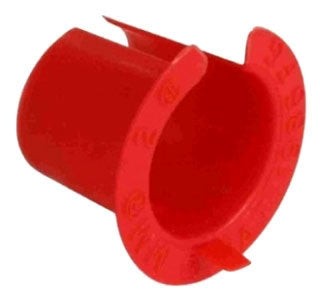
Orbit Plastic Anti-Short Bushing 7/16 in ASB-716
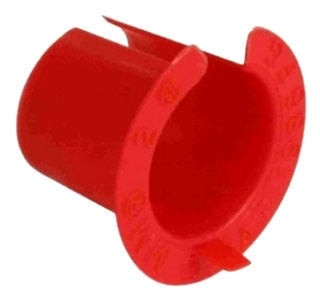
Orbit Plastic Anti-Short Bushing 5/16 in ASB-516

Orbit Plastic Anti-Short Bushing 1/2 in ASB-50
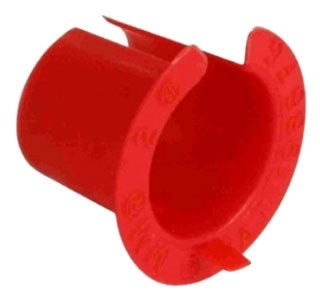
Orbit Plastic Anti-Short Bushing 3/8 in ASB-38

EMCOD EMT600SS-22E Economy Multi-Tap Landscape Transformer 600W 12V-22VAC

EMCOD EMT300SS-22E Economy Multi-Tap Landscape Transformer 300W 12V-22VAC

EMCOD EMT900SS-E Economy Multi-Tap Landscape Transformer 900W 12V-15VAC

EMCOD EMT600SS-E Economy Multi-Tap Landscape Transformer 600W 12V-15VAC

EMCOD EMT300SS-E Economy Multi-Tap Landscape Transformer 300W 12V-15VAC
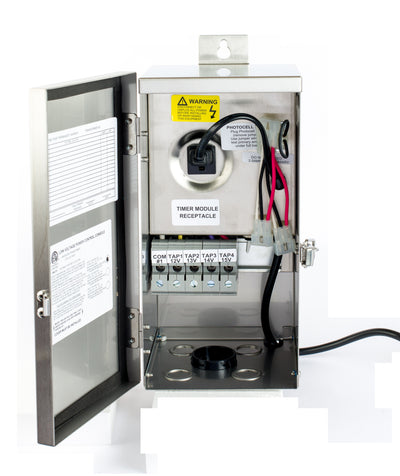
EMCOD EMT150SS-E Economy Multi-Tap Landscape Transformer 150W 12V-15VAC
About Conduit Fittings & Connectors
How to Choose Conduit Fittings & Connectors for the Raceway System
Conduit fittings and connectors should be selected from the raceway they serve, not from appearance alone. Start with the wiring method and trade size, then determine whether the connection terminates a raceway, joins two sections, provides pull access, protects conductors at an entry, or seals a flexible cable. Installation environment matters too. A fitting that works on an indoor dry run should not be assumed suitable for wet, exposed, underground, or corrosive conditions unless its listing supports that application.
- An EMT run needing connectors or couplings points to EMT fittings.
- A bend or pull point needing access calls for conduit bodies and condulets.
- A raceway end needing protection or bonding may require conduit and grounding bushings.
- A flexible cable entering an enclosure needs a suitable cable gland or cord grip.
Match Every Fitting to the Raceway Type and Trade Size
EMT, rigid metal conduit, IMC, PVC, and flexible raceways use different fittings and connection methods. Trade size must also match the raceway exactly; nominal conduit size is a system designation rather than a measurement you should estimate in the field. A fitting that threads onto rigid conduit is not automatically appropriate for unthreaded EMT of the same nominal size.
For a 1-inch EMT run entering a panel, start with fittings specifically identified for 1-inch EMT rather than a generic 1-inch connector. Decision rule: identify the raceway first, then trade size, then fitting function. Lumera’s guide to electrical conduit types can help when the raceway itself has not yet been selected.
Connector vs. Coupling: Choose by What the Raceway Is Joining
A conduit connector terminates the raceway at a box, enclosure, cabinet, or equipment entry. A coupling joins two compatible sections of raceway together. The distinction sounds simple, but it becomes important on material takeoffs because a long conduit run can require several couplings while only using connectors at its endpoints.
If two 10-ft sections of tubing become one continuous 20-ft run, the joint between them takes a coupling; where that run lands at the electrical box, it takes a connector. Once those functions are identified, broader miscellaneous hardware can be coordinated through Lumera’s electrical fittings category.
Connection Method and Environment Have to Be Evaluated Together
Set-screw, compression, threaded, liquid-tight, and other connection methods are not interchangeable labels for quality. The correct fitting depends on the raceway type and the exact product listing for the location. Don't assume that every compression fitting is automatically suitable outdoors, or that a set-screw fitting is permitted anywhere simply because it grips the raceway securely.
For an exposed run entering equipment in a damp area, verify the environmental rating of the exact connector, coupling, sealing components, and enclosure entry. Decision rule: use the product listing to establish suitability for dry, damp, wet, concrete, or other conditions. Grounding and bonding requirements should also be coordinated through the appropriate grounding hardware.
Use Conduit Bodies When the Run Needs Pull or Directional Access
Conduit bodies provide an accessible opening along the raceway and are commonly used where the route changes direction or where conductor pulling would otherwise be difficult. Body styles such as LB, LL, LR, C, or T describe different opening and routing arrangements. The right style follows the raceway path and access needed after installation.
For a raceway that comes up an exterior wall and turns through the wall into the building, a suitable body can provide access at the direction change instead of relying on a difficult blind pull. If the body will contain splices or taps, confirm that the exact product is identified for that use. Use the dedicated conduit-body category rather than treating an ordinary elbow as equivalent access.
Bushings and Cable Glands Solve Different Entry Problems
A bushing addresses the raceway end: depending on the type, it can provide a smooth conductor throat, reduce an opening, or support a specific bonding function. A cable gland or cord grip works differently. It grips a flexible cable jacket at an enclosure entry and can provide strain relief or environmental sealing when the product is rated for those functions.
If conductors leave a metal raceway through a termination, a bushing may be part of the required assembly. If a flexible equipment cord enters a cabinet, that application points to a cord grip instead. Decision rule: if the entry is a raceway, select raceway hardware; if it is flexible cable requiring grip or sealing, select a cable-entry fitting.
Keep Raceway Fittings Separate From Conductor Connectors
Conduit fittings manage the raceway system; wire connectors manage the conductors inside it. A conduit connector can secure EMT to a junction box, but it does not splice the conductors that enter that box. Those conductors need connectors or terminals identified for their material, size, quantity, and application.
A pull box may therefore need raceway connectors at several knockouts and a completely different set of components for any permitted conductor splices inside. Use Lumera’s wire connectors and compression splices for conductor connections. Keeping the raceway and conductor material lists separate also makes project takeoffs easier to audit before installation.
Ordering Conduit Fittings & Connectors for a Project
For larger raceway projects, organize the fitting schedule by conduit or cable type, trade size, fitting function, connection method, material, installation environment, box or enclosure entry, and quantity. Include bushings, locknuts, sealing components, and bonding hardware where the design requires them instead of treating these as last-minute accessories. Repeat project buyers can also review Lumera Electric’s trade account options.
Request a Conduit Fittings Project Quote
For larger quantities, repeated raceway layouts, or projects using several fitting families, request a project quote after the raceway schedule and trade sizes have been established.
Have these details ready:
- Raceway or cable type
- Trade size
- Connector, coupling, body, bushing, or cable-entry requirement
- Connection method
- Box, enclosure, or equipment entry type
- Dry, damp, wet, underground, or other installation condition
- Material or corrosion requirements
- Grounding or bonding requirements
- Quantity by fitting type and size
For multi-area projects, you can also submit your raceway fitting schedule so each connector, coupling, bushing, and accessory stays matched to the correct conduit and location.
Conduit Fittings & Connectors FAQs
What is the difference between a conduit connector and a coupling?
A connector terminates conduit at a box, enclosure, or equipment opening, while a coupling joins two compatible conduit or tubing sections together. Both must match the raceway type and trade size. For steel electrical metallic tubing, Lumera’s EMT connector and coupling selection provides the specialized fitting family.
What is the difference between set-screw and compression conduit fittings?
Set-screw and compression describe two different ways a fitting grips compatible raceway. Neither connection method should be treated as universally better. The correct choice depends on the raceway, environment, project specification, and the exact fitting’s listing. Lumera’s EMT vs. PVC vs. rigid conduit guide provides additional context on matching fittings to raceway systems.
What is a conduit body used for?
A conduit body provides accessible space along a raceway for conductor pulling and direction changes. Different body configurations suit different routes, such as straight-through, side-turn, or back-entry arrangements. The removable cover provides access that an ordinary bend does not. Choose the body style from the actual raceway path and verify any splice suitability on the specific product.
Is a cable gland the same as a conduit connector?
No. A cable gland or cord grip clamps a flexible cable jacket and may provide strain relief or sealing, while a conduit connector terminates a raceway. Substituting one for the other leaves the entry improperly matched to what passes through it. Use a cable gland only for the cable sizes and enclosure conditions identified by that product.
When do I need a grounding bushing?
A grounding or bonding bushing is used where the electrical design or applicable code requires an additional bonding connection at the raceway entry; it is not automatically required on every conduit termination. The exact requirement depends on the installation. Match the bushing and bonding jumper to the raceway and conductor requirements rather than adding one solely from habit.