


Light Switches
Light switches control lighting and other compatible electrical loads from one or more wall locations. Choose first by circuit function—single-pole, 3-way, 4-way, or double-pole—then match the switch to the load rating and required control features. Mechanical, smart, toggle, rocker, and decorator options serve different installation and user-interface needs. For larger residential or commercial projects, build the switch schedule by circuit and location before standardizing device styles or quantities.


Showing 21–40 of 341 results

Lutron Claro Switch 15 A SC-3PS

Lutron Sunnata Switch 120 V RRST-RS

Lutron Sunnata Switch 6 A ST-6ANS

Lutron Sunnata Switch 6 A ST-RS

Enerlites Commercial Decorator Triple Rocker Switch Single Pole 15A 120V 62755-GD

Enerlites Commercial Decorator Dbl Rocker Switch Single Pole 15A 120/277V 62834-GD

Enerlites Residential Decorator Switch Quiet 15A Single Pole 120-277V 91150-BK

Enerlites Residential Decorator Switch 15A 4W 120-277V 94150-GD

Orbit 15A Double Combination Decorator Switch 2DS15A
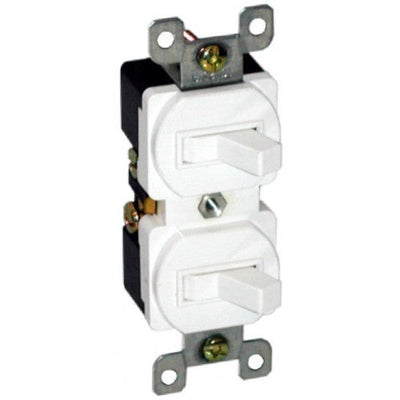
Orbit 15A Single-Pole Stack Toggle Switch 2TS15-I
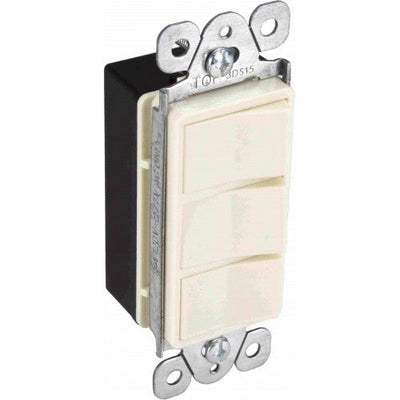
Orbit 15A Triple Combination Decorator Switch 3DS15-A
Leviton 12021-2I Switch
Leviton 54501-2I Switch
Leviton 54524-2GY Switch
Leviton 54521-2GY Switch
Leviton 54523-2GY Switch
Leviton CS420-2E Switch
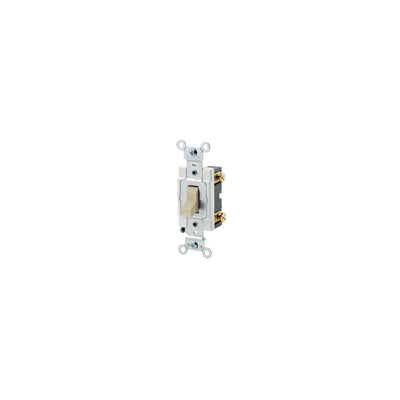
Leviton CSB1-20I Switch
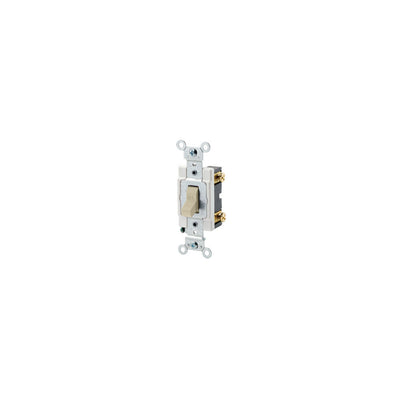
Leviton CSB1-15I Switch
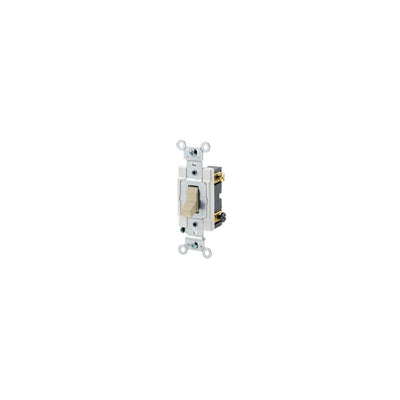
Leviton CSB4-20I Switch
About Light Switches
How to Choose Light Switches for the Circuit, Load, and Control Type
The right light switch starts with the electrical function, not the face style. Determine how many locations need to control the load, identify what the switch will operate, and confirm the voltage and current requirements before comparing toggle, rocker, decorator, smart, or commercial designs. A switch can fit the same wall box as another device and still perform a completely different circuit function, so pole configuration and load compatibility should be settled before finish and appearance.
- Need straightforward mechanical on/off control? Start with standard switches.
- Need app, scheduling, scene, or voice control? Compare smart switches.
- Need adjustable light output instead of simple switching? Review LED dimmers.
- Need automatic operation based on room use? Choose occupancy and motion sensors.
Choose Single-Pole, 3-Way, or 4-Way by the Number of Control Locations
Control location is the fastest way to narrow a basic wall-switch circuit. A single-pole switch controls one load from one location. A 3-way arrangement uses two 3-way switches to control the same load from two locations. When control is required from three or more locations, one or more 4-way switches are installed between the two end 3-way devices.
A hallway with switches at both ends calls for 3-way control; add a third entrance and a 4-way device becomes part of the traveler circuit. Decision rule: count the control locations before choosing switch style or finish. Lumera’s 3-way switch wiring guide explains the common and traveler arrangement in more detail.
Match Voltage, Current Rating, and Load Type
A wall switch must be used within its marked electrical ratings and for a compatible load. Lighting, motors, fans, heaters, and electronic equipment can place different demands on a control, so amperage alone does not establish compatibility. A general lighting switch should not automatically be substituted for a motor-rated device just because both fit a standard wall box.
For example, a 20A commercial switch and a 20A device intended for a different load type may not have the same application rating. Check the exact voltage, current, and load markings before ordering. Where the circuit specifically controls fan speed rather than simple on/off operation, use an appropriately rated fan control.
Standard, Smart, and Commercial Switches Solve Different Problems
Standard mechanical switches provide straightforward local control without apps, wireless communication, or commissioning. Smart switches add connected functions such as schedules, remote access, scenes, or compatible voice control. Commercial switches may also be selected around heavier-use environments, device ratings, or project specifications rather than connected features.
A bedroom circuit that only needs reliable on/off control has a different requirement from a multi-room lighting system that needs scheduling or remote operation. Likewise, a repeated commercial device schedule should be based on the specified device grade and ratings rather than using a residential switch by appearance alone. Lumera’s broader wiring devices section can help coordinate switches with the rest of the device package.
Double-Pole Switches Are Not Simply Higher-Capacity Single-Pole Switches
A double-pole switch operates two circuit conductors together with one switching action. It is used where the equipment and circuit require that function and where the exact device is rated for the load. Its purpose is different from a single-pole switch and also different from a combination device that places two independent controls on one yoke.
If a piece of equipment uses a 240V circuit, do not choose a double-pole device from voltage alone. Confirm the equipment load, switch rating, circuit design, and manufacturer instructions. Decision rule: use double-pole switching only when the electrical design calls for simultaneous switching of both poles and the device is specifically rated for that application.
Toggle, Rocker, and Decorator Describe the User Interface, Not the Wiring Function
Face style tells you how the switch is operated, not what circuit it controls. A traditional toggle, wide rocker, or decorator-style switch can still be single-pole, 3-way, 4-way, or another configuration. That means appearance should come after the circuit function and ratings are confirmed.
In a 3-gang box, for example, all three controls may share the same decorator appearance while serving different circuits. Check the available box space and device arrangement before finalizing the schedule, especially when electronic controls are mixed with mechanical switches. Lumera’s device and outlet boxes provide the rough-in side, while wall plates and switch plates finish the installation by gang count and opening type.
Use a Timer, Sensor, or Dimmer When Simple On/Off Switching Is Not the Real Requirement
A standard switch is not always the most useful control. If lighting should change brightness, turn off automatically, follow a schedule, or react to occupancy, choose a control designed for that behavior rather than adding complexity around a basic switch. The load still has to remain compatible with the selected control.
For an exterior lighting circuit that should operate on a defined schedule, a timer or time switch may be more appropriate than a manual wall switch. For lighting-level control, use a dimmer; for room-based automation, use a sensor. Define the operating behavior first, then select the switch or control architecture that actually delivers it.
Verify the Existing Wiring Before Replacement
Switch replacement involves line voltage, and the conductor arrangement may not be obvious from the device face or insulation colors. Multi-location circuits can include travelers and common conductors, while electronic or smart controls may have neutral-wire requirements that a basic mechanical switch did not have. Multi-gang boxes can also contain more than one circuit.
Turn off the supplying circuit and verify that conductors are de-energized before removing a device. If conductors, grounding, load type, or circuit configuration cannot be positively identified, have a qualified electrician evaluate the installation. Lumera’s electrical switch guide provides additional selection guidance, but exact device instructions and applicable electrical requirements govern the installation.
Ordering Light Switches for Residential or Commercial Projects
For larger device schedules, organize the order by room or circuit, switch function, voltage, current and load rating, device style, finish, gang location, and quantity. Keep 3-way and 4-way devices tied to the circuits they serve instead of combining every switch into one total count. Repeat electrical buyers can also review Lumera Electric’s trade account options.
Request a Light Switch Project Quote
For larger quantities, repeated floor plans, or commercial switch schedules, request a project quote after the device types have been identified.
Have these details ready:
- Single-pole, 3-way, 4-way, or double-pole requirements
- Voltage and current ratings
- Connected load type
- Mechanical, smart, timer, sensor, or other control requirement
- Toggle, rocker, or decorator style
- Required finish or color
- Gang count and wall-plate requirements
- Residential or commercial application
- Required quantity by room or circuit
For multi-room or multi-floor projects, you can also submit your switch schedule so each device remains tied to the correct circuit function, rating, style, and quantity.
Light Switch FAQs
What is the difference between a single-pole and a 3-way light switch?
A single-pole switch controls a load from one location, while a 3-way circuit controls the same load from two locations using two 3-way switches. The terminal arrangement is different even when the devices look similar from the front. Lumera’s 3-way switch guide explains how the common and traveler conductors work.
When do I need a 4-way switch?
Use a 4-way switch when the same light needs control from three or more locations. Two 3-way switches remain at the ends of the circuit, with one or more 4-way switches installed between them. A 4-way device is therefore part of a multi-location system rather than a standalone replacement for a single-pole switch.
What is the difference between a standard switch and a smart switch?
A standard switch provides local mechanical on/off control. A smart switch adds electronic functions such as app access, schedules, scenes, or compatible voice control. If those connected features are part of the project, compare Lumera’s smart switch options; otherwise, a mechanical device is usually the simpler control path.
Can a regular light switch control a ceiling fan?
Only when the switch is specifically rated for the fan or motor load and the intended switching function. A standard lighting dimmer should not be used as a fan-speed control. If variable fan speed is required, choose a purpose-built fan speed control that matches the motor and circuit.
How do I choose a commercial wall switch?
Start with circuit function, voltage, current rating, and the actual load, then confirm any required commercial or specification-grade characteristics for the project. Do not assume a device is suitable for commercial use because it has a heavier-looking toggle or decorator face. Match the marked ratings and project specification before comparing finish or wall-plate style.