


Power & Distribution
Power distribution equipment at Lumera covers the panel side of an electrical job. Circuit breakers run from single-pole branch breakers to three-pole commercial frames, and load centers cover subpanels and equipment circuits. Surge protection adds panel SPDs, low-voltage landscape transformers feed outdoor lighting, and EV charging includes Level 2 chargers and 50A receptacles. Choose by system voltage, the panel family a part must match, and indoor or outdoor use, then request a quote for project quantities.


Sort By:
Showing 1181–1200 of 1376 results

Landscape Transformer
Focus Industries DBS12100M Landscape Transformer

Landscape Transformer
Focus Industries DBR79JB Landscape Transformer
Landscape Transformer
Focus Industries DBR55JB Landscape Transformer

Lighting Transformer
Orbit 900W 12/15V Multi Tap with Timer & Photocell Transformer Stainless Steel TRT900SSTP

Lighting Transformer
Orbit 900W Timer Ready 12/15V Multi Tap Lighting Transformer Black TRT900SS

Lighting Transformer
Orbit 900W 12/15V Multi Tap with Timer & Photocell Transformer Black TRT900BKTP

Lighting Transformer
Orbit 900W Timer Ready 12V Lighting Transformer Black TRT900BK

Lighting Transformer
Orbit 75W 12/15V Multi Tap with Timer & Photocell Transformer Stainless Steel TRT75SSTP

Lighting Transformer
Orbit 75W Timer Ready 12/15V Multi Tap Transformer Stainless Steel TRT75SS

Lighting Transformer
Orbit 75W Timer Ready 12/15V Multi Tap Transformer Black TRT75BK
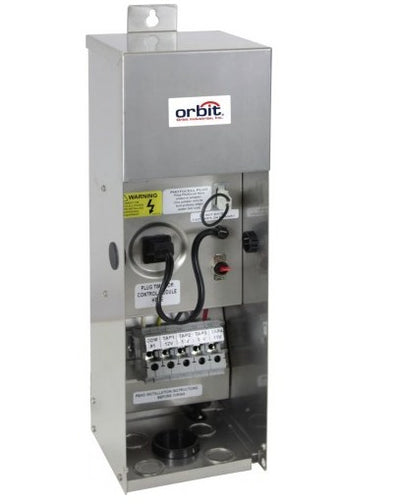
Lighting Transformer
Orbit 150W 12/15V Multi Tap with Timer & Photocell Transformer Stainless Steel TRT150SSTP

Lighting Transformer
Orbit 150W Timer Ready 12/15V Multi Tap Transformer Stainless Steel TRT150SS
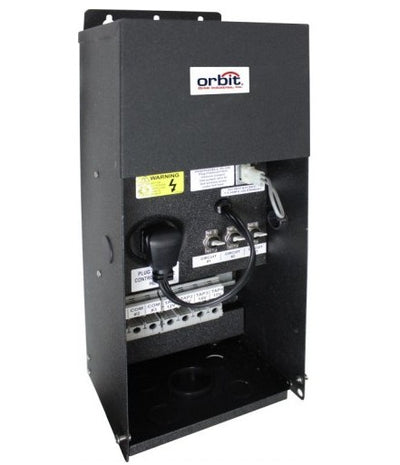
Lighting Transformer
Orbit 150W 12/15V Multi Tap with Timer & Photocell Transformer Black TRT150BKTP

Lighting Transformer
Orbit 150W Timer Ready 12/15V Multi Tap Transformer Black TRT150BK

Lighting Transformer
Orbit 100W 12/15V Multi Tap with Timer & Photocell Transformer Stainless Steel TRT100SSTP

Lighting Transformer
Orbit 100W Timer Ready 12/15V Multi Tap Transformer Stainless Steel TRT100SS

Lighting Transformer
Orbit 100W 12/15V Multi Tap with Timer & Photocell Transformer Black TRT100BKTP

Lighting Transformer
Orbit 100W Timer Ready 12/15V Multi Tap Transformer Black TRT100BK

Lighting Transformer
Orbit Lvt 60 AC 120 12 Class 2 Min 10w, 60W Max Mini Transformer with Enclosur LVT60
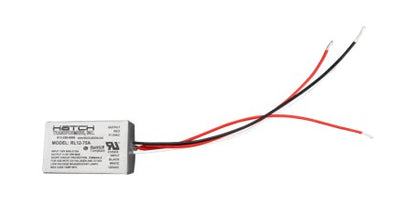
Low Voltage Transformer
ELCO Lighting 75W 12V Low Voltage Transformer LET-75
About Power & Distribution
How to Choose Power Distribution Equipment: Start With the System, Then the Part
Choosing power distribution equipment goes faster when you read the system before the catalog. The panel nameplate, where the part installs and the load you're adding decide which breaker family, panel or charger even applies. This guide is for electrical contractors, maintenance teams and project buyers matching a part to an existing service or building a material list for a new one. Each situation below lands on the subcategory to shop next.
Quick Picker: Match the Job to the Right Subcategory
Swapping a 20A breaker in an existing Siemens or Square D load center: start with panel-matched replacement breakers.
A hot tub 40 ft from the house points you to pool and spa load centers.
A 200A service replacement where the inspector expects surge protection means whole-house surge protectors.
Fourteen LED path lights on a 150 ft cable run call for 12V multi-tap landscape transformers.
A garage Level 2 charger on a dedicated 240V circuit lands on EV chargers and 50A receptacles.
Read the Panel Nameplate First: Voltage and Phase Decide Which Breakers Apply
Breakers here range from 120/240V residential styles to 480Y/277V and 600V commercial frames, such as Square D I-Line PowerPact models. The voltage on a breaker is a limit, not a label. A breaker marked 120/240V carries a slash rating, so it can only protect circuits with no more than 120V to ground. That rules it out of a 480Y/277V warehouse lighting panel, whatever the amp rating says.
Decision rule: read voltage and phase off the nameplate before you compare amps. On a three-phase 208Y/120V or 480Y/277V panelboard, every breaker, single-pole lighting circuits included, must be rated for that system and that frame. Mounting style and GFCI or AFCI protection come next, on the breaker subcategory.
Service, Feeder or Branch: Where the Part Installs Changes the Product
Every part sits at the service, on a feeder or on a branch circuit, and that position changes what you buy. The service is where meter hubs and the panel's surge device go. Feeders bring in subpanels, and with them the main breaker or main lug question.
Take a detached shop 80 ft from the house, fed from a 60A 2-pole breaker. A separate building generally needs its own disconnecting means, so a main-breaker panel is the usual pick. Put the same subpanel inside the house, next to the feeding breaker, and main lugs are often enough. Before the panel goes on the order, size the conductors for that 80 ft run from feeder wire and cable.
Specs to Confirm Before You Order: Voltage, Amps, kAIC, Watts and NEMA Rating
Voltage and phase: sets which product families fit at all.
Amps and poles: sized to the conductor and circuit, not a future load.
Interrupting rating (kAIC): must meet the available fault current at the breaker.
Bus rating and spaces: two separate numbers on a load center; check both.
SPD ratings: surge current per phase, VPR and protection modes at your system voltage.
Transformer watts: chosen from the connected fixture load, plus room to grow.
EV charger amps: 40A, 48A or a 14-50 plug-in fixes the breaker and wire size.
Enclosure rating: NEMA 1 indoors, 3R for rain, 4X for washdown or corrosion.
Low-Voltage Lighting Transformers vs Building Distribution Transformers
The transformers on this page step 120V line power down to 12V or 24V for landscape and low-voltage lighting, along with Intermatic safety transformers for pool and spa lights. They're rated in watts. A dry-type transformer that turns 480V into 208Y/120V for a tenant panel is a different product, sized in kVA from a load calculation, and it isn't part of this category.
Lighting transformers are sized from the fixtures. Ten 4W path lights and four 7W uplights add up to 68W, so a 150W unit leaves room for the next phase without paying for triple the capacity. If the fixture list isn't settled, total the wattage from low-voltage landscape fixtures first.
Hardwired EV Chargers vs NEMA 14-50 Receptacles: Size the Circuit First
The circuit follows the charger, not the other way around. EV charging is a continuous load, so the branch circuit is typically sized at 125 percent of the charger's rating: a 40A Westgate J1772 unit lands on a 50A breaker. A plug-in charger on an Enerlites 14-50 receptacle is held to 40A for the same reason, which is why 48A chargers are normally hardwired. Parking lots get a pedestal and a dual floor-mount unit.
Capacity is the check people skip. A 100A house panel already feeding a range, a dryer and central air often can't take another 50A circuit without a load calculation. Have the electrician run that number first, and house outdoor connections in weatherproof electrical boxes rated for the exposure.
Submeters, Hour Meters and Neutral/Ground Bars Without a Subcategory
A few product types live only on this page. Leviton metering includes mini meters, split-core current transformers and an S7000 three-phase submeter in a NEMA 4X enclosure for tenant billing. Intermatic AC hour meters log equipment runtime, Orbit die-cast meter hubs make a raintight conduit entry on a meter socket, and Morris neutral and ground bars come in copper and aluminum.
Decision rule: a split-core CT has to clear the conductor and cover the circuit. A 200A feeder pairs with a 200A CT whose 1 in. window fits around the cable, and the CT output must match what the meter expects. Quote these with the panel they serve so ratings get checked together.
Before You Order: Record the Site Conditions
Photograph the panel label and note the manufacturer, model, voltage and phase, bus rating and open spaces. Record main breaker or main lug, feeder conductor size and material, run length and whether the location is indoor, outdoor or wet. On commercial work, get the available fault current from the project documents. Breaker replacement, panel installation and EV circuits are line-voltage work for a licensed electrician, and many jurisdictions require a permit and inspection. Line terminals stay energized with the main off. Read Lumera's installation and code disclaimer before work starts.
Ordering Power Distribution Equipment for a Project
Group the order by panel, then by circuit, so each breaker stays tied to the equipment it fits. Orders of $1,000 or more ship free to the 48 contiguous states. A free Lumera trade account adds wholesale pricing, volume and project quotes and a dedicated rep, and approved accounts can apply for Net-15 to Net-60 terms.
Request a Project Quote: What to Have Ready
For panel schedules, multi-unit buildings or maintenance stock, send your panel schedule for project pricing. Have this ready:
Panel manufacturer, model, voltage and phase
Breaker catalog numbers, poles and quantities
Main breaker or main lug, bus rating and spaces
Indoor, outdoor or wet location
Charger, transformer, SPD or meter models and quantities
Power Distribution FAQs
What is the difference between a circuit breaker and a surge protective device?
A circuit breaker opens the circuit when current runs too high from an overload or short circuit, while a surge protective device diverts brief voltage spikes to ground without shutting the circuit off. They guard against different failures, so neither replaces the other. Most services use both: a breaker on every circuit and an SPD at the panel.
What size breaker does a 48A Level 2 EV charger need?
A 48A Level 2 charger typically needs a 60A breaker, because EV charging is treated as a continuous load and the circuit is sized at 125 percent of the charger's rating. The conductors have to be rated for that 60A circuit as well, and the service needs spare capacity. Lumera's Level 2 charger circuit guide walks through the full calculation.
Do neutrals and grounds go on the same bar in a subpanel?
No. In a subpanel, neutrals land on an isolated neutral bar and equipment grounds land on a separate ground bar bonded to the enclosure; the two are joined only at the service equipment. Combining them downstream puts normal current on grounding paths. Match each bar's terminal count, wire range and copper or aluminum rating, and find the rest of the bonding hardware under grounding and bonding products.
What does an electrical submeter do?
A submeter measures the energy used by one tenant, unit or piece of equipment downstream of the utility meter, so an owner can bill or track that usage separately. It reads current through current transformers sized to the conductors and the circuit. Confirm system voltage and phase before ordering, since single-phase and three-phase submeters aren't interchangeable.
Can a landscape transformer step down building voltage for a panel?
No. A landscape transformer converts 120V line power to roughly 12V to 15V for low-voltage lighting and is rated in watts, not the kVA a panel feed requires. Stepping 480V down to 208Y/120V for a panelboard calls for a dry-type distribution transformer sized from a load calculation. Lumera's step-up vs step-down transformer guide explains the difference.