


Emergency Lights
Emergency lights provide backup illumination along required egress paths when normal building power is interrupted. Choose by the coverage and mounting needed for the space, the required emergency runtime and testing method, and the environmental conditions at the installation location. Fixture output and head direction should support the approved life-safety layout rather than being selected from wattage alone. For larger facilities, map every emergency-light location before standardizing fixtures or quantities.
Showing 101–120 of 185 results
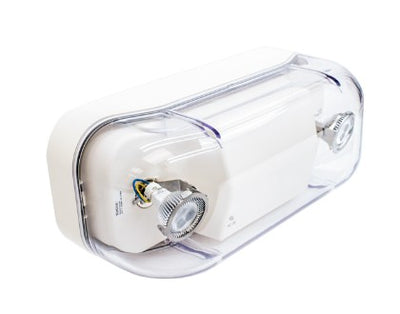
Westgate 54W NEMA 4X Emergency Light ELN4X-6-54W-B

Westgate 2.4W each head 240LM 6000K±500K Emergency Light EL-1D
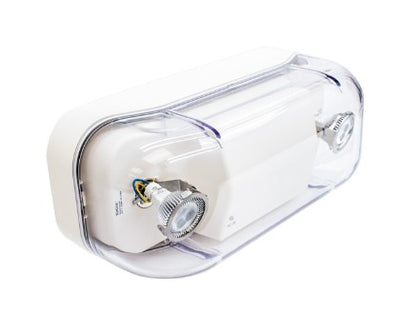
Westgate 15W NEMA 4X Emergency Light ELN4X-12-15W-B
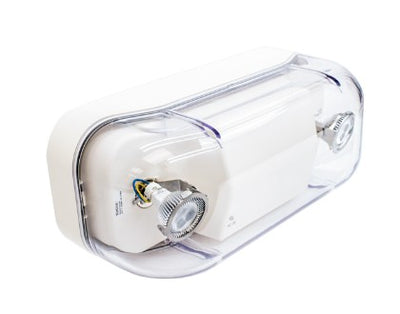
Westgate 15W Emergency Light ELN4X-6-15W-W
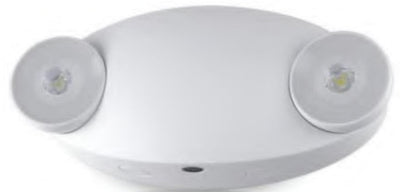
Westgate 1W per head 200LM 6000K Emergency Light EL-M2
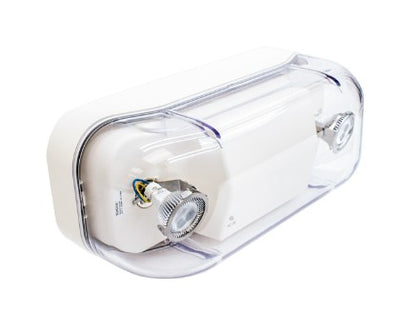
Westgate 36W NEMA 4X Emergency Light ELN4X-12-36W-B

Westgate 15W/20W/30W 3000K/4000K/5000K Emergency Light White LESW-15-30W-MCTP-P-WH-EM
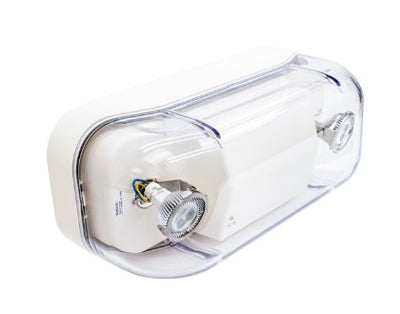
Westgate 36W Emergency Light ELN4X-12-36W-W
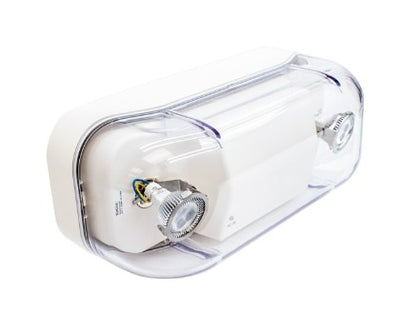
Westgate 36W NEMA 4X Emergency Light ELN4X-6-36W-B
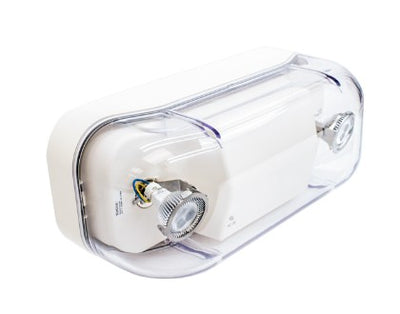
Westgate 54W Emergency Light ELN4X-12-54W-W
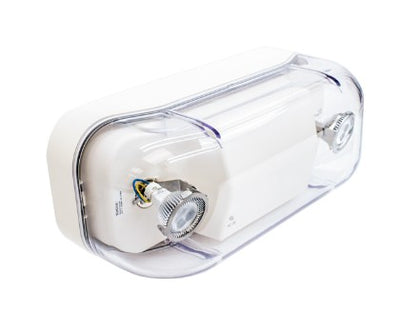
Westgate 36W Emergency Light ELN4X-6-36W-W
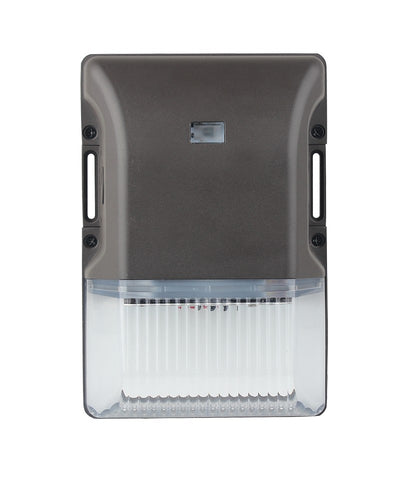
Westgate 15W/20W/30W 3000K/4000K/5000K Emergency Light LESW-15-30W-MCTP-P-EM
Westgate 1W per head Emergency Light EL-RH1-WP
Westgate 1W per head Emergency Light EL-RH2-WP
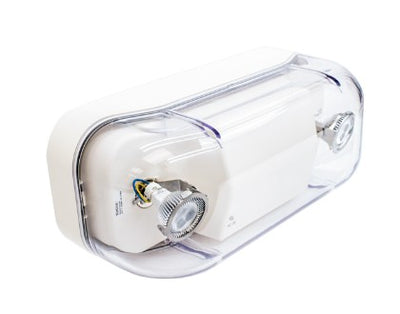
Westgate 15W NEMA 4X Emergency Light ELN4X-6-15W-B
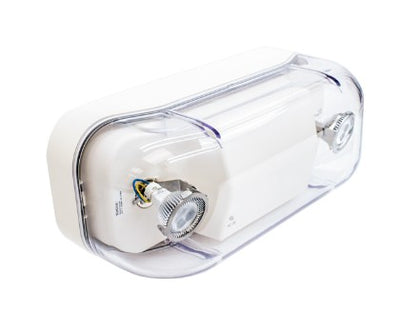
Westgate 54W Emergency Light ELN4X-6-54W-W

Westgate 15W 1,950LM/2025LM/1950LM 3500K/4000K/5000K Emergency Light Bronze DELW-15W-MCT-BR

Westgate 1W per head 200LM 6000K LED Emergency Light Black EL-M2-BK
Westgate Emergency Remote Head EL-RH1
Westgate EL-RH2 Dual-Head 1W LED Emergency Remote Head White
About Emergency Lights
How to Choose Emergency Lights for Egress and Backup Illumination
Emergency lights keep required egress areas illuminated when normal building lighting is unavailable. Start with the approved life-safety or egress plan, then determine where backup light is needed, how each fixture will mount and aim, what emergency runtime and testing features are required, and whether the location is dry, damp, wet, or otherwise demanding. Emergency-light selection is code-driven, so fixture placement and performance should follow the project documents and requirements of the authority having jurisdiction.
- Need illuminated exit identification as well as egress lighting? Coordinate with LED and specialty exit signs.
- Planning emergency fixtures within a larger lighting package? Review commercial lighting fixtures.
- Installing in a damp or exposed location? Match the connection point with weatherproof electrical boxes.
Lay Out Emergency Lighting From the Egress Path, Not the Fixture Count
Emergency-light placement should follow the path occupants actually use to reach an exit. Corridors, stair approaches, changes in direction, doors, and other portions of the required route can create different coverage needs. Simply spacing identical fixtures at regular intervals does not prove that the egress path will be adequately illuminated.
For a 60-ft corridor with a turn near the exit, the corner may change the useful coverage even if two fixtures seem evenly spaced on the reflected ceiling plan. Decision rule: establish the required egress coverage first, then select fixture locations and aiming from that layout. Exit identification should be coordinated separately through the appropriate exit-sign equipment.
Verify Emergency Runtime, Battery, and Testing Requirements
Battery-backed emergency units need to remain available when normal power fails, so battery operation is part of the specification rather than an accessory feature. Runtime, battery chemistry, charging, manual test functions, and self-test or self-diagnostic features vary by product. The required performance should come from the adopted code, approved drawings, and exact fixture documentation.
In a facility with 40 emergency units, automatic diagnostic features can change the maintenance workload significantly. If the project requires self-testing, specify it before ordering rather than assuming every fixture includes it. Lumera currently lists emergency-light equipment with self-test/self-diagnostic configurations, but those capabilities must be confirmed on the exact model selected.
Match Mounting and Light Direction to the Area That Must Stay Visible
Wall-mounted, ceiling-mounted, recessed, or architectural emergency fixtures can distribute light differently, and adjustable heads only help when they can be aimed toward the required walking surface. Mounting height, nearby walls, corridor geometry, and equipment can all change the useful pattern.
A fixture over a doorway may need to illuminate both the landing and the route approaching it, while another unit at a corridor turn has a different job. If the mounting surface requires a separate rough-in point or accessible connection, coordinate it with suitable junction boxes and enclosures. Select the emergency fixture only after its mounting position and coverage role are known.
Choose the Location Rating for the Actual Environment
A dry indoor corridor, parking structure, covered exterior exit, refrigerated area, and washdown space do not create the same environmental demands. Moisture, low temperature, dust, and corrosive conditions can affect the housing, electronics, and battery. A fixture intended for a normal indoor space should not be assumed suitable elsewhere because it physically fits.
For an emergency unit installed near an exterior loading area, verify the exact wet- or damp-location rating and any temperature limitations before purchase. Where additional equipment housing is required, NEMA enclosures can address separate electrical equipment needs, while outdoor box hardware should be matched to the wiring method and location.
Coordinate the Emergency Circuit and Installation Before Closeout
Emergency lighting is part of a life-safety system, so its normal power source, charging connection, branch-circuit arrangement, and testing access need to be established deliberately. A battery unit cannot charge or sense loss of normal power correctly if it is connected contrary to the fixture instructions or project design.
On a renovation, confirm the existing circuit before removing old emergency equipment rather than assuming the replacement wires exactly the same way. Upstream electrical protection should be coordinated with the actual circuit through appropriate circuit-breaker equipment. Hardwired emergency fixtures should be installed and commissioned by qualified electrical personnel following the product instructions and applicable project requirements.
Ordering Emergency Lights for Larger Facilities
For offices, schools, healthcare spaces, multi-unit buildings, warehouses, or other larger facilities, organize the fixture schedule by location, mounting method, coverage requirement, input voltage, emergency runtime, testing method, environmental rating, and quantity. Keeping every unit tied to its egress-plan location makes replacements, testing, and inspection easier. Repeat project buyers can also review Lumera Electric’s trade account options.
Request an Emergency Lighting Project Quote
For larger quantities or projects with several emergency-light configurations, request a project quote after the egress and fixture schedule has been reviewed.
Have these details ready:
- Fixture quantity and location
- Required mounting method
- Egress area each fixture must illuminate
- Input voltage
- Required emergency runtime
- Manual or self-testing requirements
- Indoor, damp, wet, cold, or other environmental conditions
- Existing or new-construction installation
- Related exit-sign requirements
For building-wide replacements or new projects, you can also submit the emergency fixture schedule so each unit remains matched to its location, mounting condition, environment, and testing requirement.
Emergency Light FAQs
What is the difference between an emergency light and an exit sign?
An emergency light illuminates the egress path during loss of normal power, while an exit sign identifies the exit or direction of travel. The functions are related but not interchangeable. Where both are required at the same point, a combination unit may be appropriate; otherwise coordinate the emergency fixtures with Lumera’s exit-sign selection.
How long should emergency lights stay on during a power outage?
The required emergency operating duration is determined by the adopted life-safety or building requirements for the project. Do not assume every product or jurisdiction should be specified from a generic runtime value. Check the approved plans, local requirements, and exact fixture documentation, then select a battery-backed unit whose rated emergency operation meets that requirement.
Do emergency lights need to be tested?
Yes. Emergency lighting needs periodic functional verification so battery, charging, lamps or LEDs, and transfer operation remain dependable. The exact testing frequency and procedure depend on the applicable requirements and equipment. Some models provide self-test or self-diagnostic functions, which can simplify maintenance on larger facilities but should be verified on the exact fixture before ordering.
Can emergency lights be installed outdoors?
Yes, but only when the exact fixture is rated for the environmental conditions at that location. Moisture and temperature can affect both the electronics and battery. For exposed installations, verify the emergency fixture’s location rating and coordinate its connection with suitable weatherproof electrical boxes.
How many emergency lights does a building need?
There is no reliable fixture count based only on floor area. Quantity and placement depend on the required egress routes, building layout, fixture distribution, mounting positions, and applicable life-safety design. Start with the approved exit path, then develop the emergency-lighting layout and coordinate it with the rest of the commercial lighting plan.