


Weatherproof Covers
Weatherproof covers in this collection include flip-lid models for duplex and GFCI receptacles, in-use covers that close around a connected cord, and blank or switch covers for other outdoor box openings. One-gang and two-gang designs accommodate different device layouts, while horizontal and vertical versions suit different mounting positions. Choose by exposure, device opening, and plug clearance before selecting a finish. For multi-location repairs, record box configurations and quantities when requesting project pricing.
Showing 61–80 of 175 results

Intermatic Double-Gang 3.625" Clear In-Use Weatherproof Cover WP5240C

Intermatic Double-Gang 2.25" Gray In-Use Weatherproof Cover WP5220G

Intermatic Double-Gang 2.25" White In-Use Weatherproof Cover WP5220W

Intermatic Double-Gang 2.75" Clear In-Use Weatherproof Cover WP5225C

Intermatic Double-Gang White In-Use Weatherproof Cover WP7200W

Intermatic Double-Gang Gray In-Use Weatherproof Cover WP7200G

Intermatic Double-Gang Bronze In-Use Weatherproof Cover WP7200BR
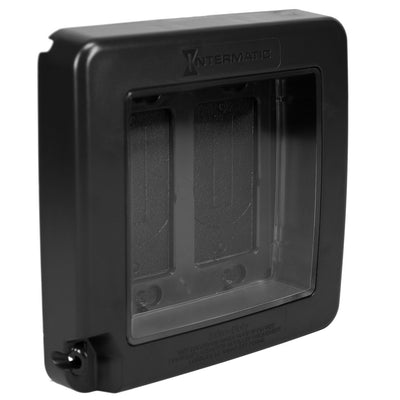
Intermatic Double-Gang Black In-Use Weatherproof Cover WP7200BL

Intermatic Double-Gang 3.125" Clear In-Use Weatherproof Cover WP1030C

Intermatic Double-Gang 3.125" Clear In-Use Weatherproof Cover WP1230C

Intermatic Double-Gang Gray In-Use Weatherproof Cover WP6200G
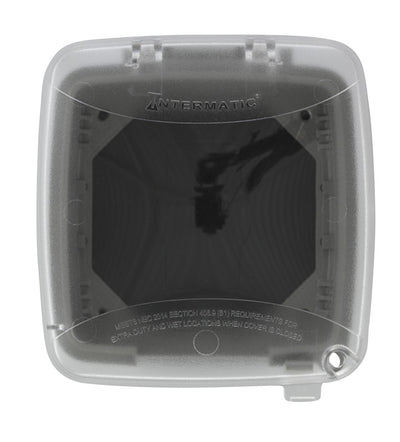
Intermatic Double-Gang 2.25" Clear In-Use Weatherproof Cover WP5221C

Intermatic Double-Gang 2.25" Clear In-Use Weatherproof Cover WP5220C

Intermatic Single-Gang 4.75" Clear In-Use Weatherproof Cover WP1150C

Intermatic Single-Gang Clear In-Use Weatherproof Cover WP7003G

Intermatic Double-Gang 2.25" Clear In-Use Weatherproof Cover WP1020C

Intermatic Double-Gang 2.25" Clear In-Use Weatherproof Cover WP1220C

Intermatic Single-Gang Black In-Use Weatherproof Cover WP7000BL

Intermatic Single-Gang 2.25" Gray In-Use Weatherproof Cover WP5000G

Intermatic Single-Gang 3.625" Clear In-Use Weatherproof Cover WP5110C
About Weatherproof Covers
How to Choose Weatherproof Covers: Wet-Location Protection, Device Fit, and Plug Clearance
Weatherproof covers only protect exterior devices when the cover, receptacle, box, and gasket form a suitable assembly. A porch outlet sheltered from direct rain, a deck receptacle powering string lights, and a vacant two-gang exterior junction call for different closures. This guide addresses the buying decisions that cause incorrect orders: cover style, device cutouts, cord clearance, mounting position, and the integrity of the complete enclosure. Check the location classification and the manufacturer's instructions before selecting a part number.
Quick Picker: Match the Cover to the Outdoor Installation
- 15A deck outlet powering lights: pair a suitable in-use hood with required GFCI protection devices.
- Covered porch, no cord connected: consider a self-closing flip cover where the location permits.
- Two-gang service box with a switch and outlet: match both device cutout shapes.
- One-gang exterior toggle: pair a listed switch hood with compatible standard switches.
- Corroded cast outlet box: inspect replacement weatherproof electrical boxes before choosing a lid.
- New siding leaves a box recessed: check compatible weatherproof extension rings.
In-Use vs. Flip Covers: Apply the Wet-Location Rule
An outlet on a 12-foot uncovered deck remains exposed when patio lights are plugged in, even if nobody handles the connection. For ordinary 15A and 20A, 125V or 250V receptacles in wet locations, NEC 406.9(B)(1) generally requires an enclosure that remains weatherproof with or without the plug inserted. An outlet box hood serving this purpose must be listed and identified as Extra-Duty; separate listed weatherproof assemblies have different identification provisions. A covered porch protected from rain may qualify as damp rather than wet.
Decision rule: if rain can reach a receptacle while a cord is connected, choose an approved in-use assembly, not a conventional flip lid held open by the plug. Verify the actual location and adopted code before selecting it.
Duplex, GFCI, Toggle, or Blank: Match Every Device Opening
A GFCI/decorator receptacle and a standard duplex outlet can each be installed in a one-gang box, but their face openings differ. With two devices, the possibilities multiply. For example, Orbit's 2C-GS combination cover has a GFCI/decorator opening beside a single-receptacle or switch opening, while the 2C-2G version has two GFCI openings. A blank cover is for closing an unused opening, not for operating a receptacle behind it.
If a two-gang location combines unlike devices, choose the matching mixed pattern rather than assuming a universal cover includes every adapter. Verify the box mounting holes, actual face shapes, and the manufacturer's approved horizontal or vertical configuration before ordering.
In-Use Cover Depth and Lid Swing: Leave Room for the Connected Plug
Consider an outdoor transformer plug projecting 3 inches from the face of a receptacle. A bubble cover may appear deep enough in a product photograph yet prevent the cord from bending safely or the lid from latching. Cover depth, cord-exit position, and usable internal clearance are separate dimensions; straight and right-angle plugs don't occupy the same space. NEC 406.9 also addresses the opening clearance for hinged outlet box hoods, so a nearby pipe or wall return can interfere with installation.
If a cord will remain connected, measure the actual plug's projection and cable path before choosing the hood. Check usable depth, exit direction, hinge swing, and the precise mounting orientation, then confirm the closed lid seals correctly without crushing the cord.
Box Flange, Gasket, and Conduit Entries: Seal the Complete Assembly
A cover cannot restore weather protection to a box with a cracked rim or unsealed threaded entry. Suppose new siding adds 3/4 inch behind an existing device location: an otherwise compatible cover may no longer seat correctly on the enclosure. The gasket needs a sound mating surface, and the listed screws must secure the cover without distortion. Confirm whether the cover mounts to the device or the box. Unused hubs also require approved closure methods; select compatible conduit fittings and connectors where additional wiring enters.
If the existing flange is damaged or the listed components do not mate, repair or replace the assembly instead of forcing a gasket to bridge the gap. Have a qualified electrician verify box support and grounding before energizing the circuit.
Horizontal vs. Vertical and Metal vs. Plastic: Suit the Exposed Site
A horizontal lid intended for one box rotation should not be installed sideways unless the product permits it. Orbit, for example, identifies the 1C-GH as a horizontal GFCI cover and the 1C-GV as a vertical version. For a receptacle only 4 feet above a walkway, nearby railings or conduit may restrict the hinge's travel. Materials require a separate check: listed die-cast metal and polycarbonate can both be appropriate, but impact strength, corrosion resistance, and sunlight suitability depend on the actual product.
If the location faces frequent knocks, sprinklers, or coastal exposure, choose a cover whose material and listing suit those conditions. Confirm lid orientation, screw access, and gasket compatibility before selecting a color or finish.
Weather-Resistant Receptacles, GFCI, and Tamper Resistance: Keep Requirements Separate
On a 20A exterior maintenance circuit, even an Extra-Duty in-use cover does not provide ground-fault protection. Nor does the GFCI-shaped opening prove that a GFCI device is installed. Weather-resistant (WR) construction, GFCI protection, and tamper-resistant (TR) shutters address separate requirements under the adopted code. The cover must be appropriate for the exposure, but its listing cannot upgrade an incompatible receptacle.
If you are replacing the entire outlet, select an appropriately rated electrical receptacle and required protective arrangement separately from the hood. Check device access, including TEST and RESET buttons where relevant, and follow the manufacturer's installation instructions for the complete assembly.
Ordering Weatherproof Covers for Multiple Outdoor Locations
For a 28-location apartment retrofit, group covers by gang count, device pattern, lid orientation, in-use requirement, material, and included gaskets or adapters. Lumera offers trade accounts for eligible businesses with volume and project quotes. Approved businesses may separately apply for Net-30 credit terms. Keep different cover openings on separate schedule lines even when their finishes match.
Request a Weatherproof Outlet Cover Project Quote
For repeated exterior outlets and service repairs, request a weatherproof cover quote using your device schedule. Have these details ready:
- Box gang count, manufacturer or dimensions, and mounting orientation
- Device face: duplex, GFCI/decorator, toggle, single, or blank
- Wet or damp exposure, cord-in-use requirement, and plug projection
- Required gaskets, adapters, material, exact part numbers, and quantities
For an unusual box-and-cover combination, send the existing model details to Lumera before ordering substitutes.
Weatherproof Cover FAQs
What is the difference between an in-use cover and a standard weatherproof cover?
An in-use cover keeps the receptacle enclosure weatherproof while a compatible plug remains connected and its cord exits through the designed opening. A standard flip-lid cover protects a suitable device when closed with no cord inserted. In wet locations, common 15A and 20A receptacle installations generally need an in-use-rated assembly under NEC 406.9(B)(1), subject to applicable exceptions.
Can a flip-lid weatherproof cover be used on a covered porch?
Yes, a listed weatherproof-when-closed cover may be suitable at a genuinely damp location protected from beating rain and runoff, provided no other requirement calls for in-use protection. A covered porch is not automatically dry or damp in every position. For example, review a horizontal duplex flip cover against the exposure, device opening, and exact installation instructions.
Does a GFCI-shaped weatherproof cover provide GFCI protection?
No. The GFCI or decorator designation identifies the cover opening, not an electrical protection function. Ground-fault protection comes from the appropriate GFCI receptacle, breaker, or another approved arrangement. Weather-resistant construction and tamper-resistant shutters are separate features as well. Specify the actual wiring devices and code-required protection independently of the cover.
Do all outdoor in-use covers have to say Extra-Duty?
No. For common 15A and 20A receptacles in wet locations, an outlet box hood used for weatherproof protection is generally required to be listed and identified Extra-Duty. The NEC distinguishes other listed wet-location products or assemblies that do not use an outlet box hood. Verify the device's exact listing and the installation conditions rather than inferring compliance from a raised plastic lid.
Will a universal weatherproof cover fit any two-gang outlet box?
No. Universal usually refers to multiple supported device cutouts, not every box flange, gasket, orientation, or face combination. A two-gang GFCI-plus-switch layout needs the correct openings and approved inserts. Review a two-gang universal cover example, then verify its included adapters and compatibility with the existing box before ordering.
How deep should a while-in-use cover be for an outdoor plug?
It must be deep enough for the actual plug to remain connected while the lid closes and the cord exits without being pinched. A bulky transformer, timer, or right-angle adapter can require a different profile from a compact straight plug. Measure the projection and cord bend, then check usable clearance and lid orientation on the manufacturer's dimensional drawing.