


LED Wall Pack Lights
LED wall pack lights provide fixed, wall-mounted exterior illumination for building perimeters, entrances, service areas, and loading zones. This collection includes full-cutoff, non-cutoff, and up/down configurations, with models that may include or accept photocells and selectable output or color settings. Choose first by light distribution, mounting height and target area, and control strategy; then confirm lumen output, voltage, outdoor rating, and the replacement footprint on the exact fixture before ordering.
Showing 41–60 of 327 results

EnVision LED-WPFC-ARC-3P100-TRI-BL-PC – ARCY-Line

EnVision LED-WPUD-SC-3P40-TRI-BL-PC – CIRCLE-Line Up/Down

EnVision LED-WPFC-SC-3P80-TRI-BL-PC – CIRCLE-Line Down

EnVision LED-WPUD-SC-3P80-TRI-BL-PC – CIRCLE-Line Up/Down
Premium Lighting SU-WP-20W-30/40/50K G6 Wall Mount Cylinder SUG6 4 Inch 20W 125lm/W 2500lm
Premium Lighting SU-WP-36W-30/40/50K-G6 Wall Mount Cylinder SUG6 6 Inch 36W 130lm/W 4680lm

EnVision LED-WPFC-ADJ-3P50W-TRI-BL – AFC-Line

EnVision WPFC-ARC-JBOX-BL – Wall Mount Bracket for conduit runs
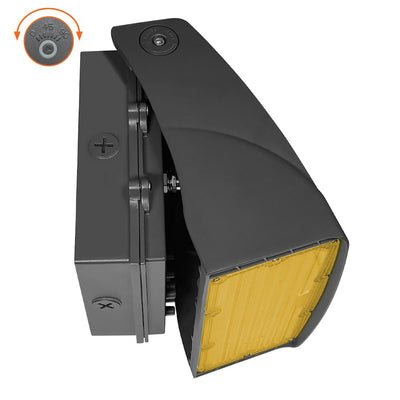
EnVision LED-WPFC-ADJ-3P30W-22K-BL – AFC-Line

EnVision LED-WPFC-ADJ-3P80W-TRI-BL – AFC-Line

EnVision LED-WPFC-ADJ-3P80W-22K-BL – AFC-Line
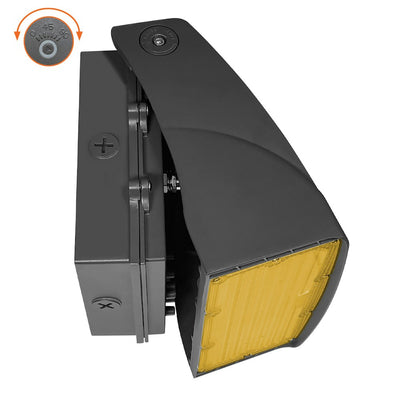
EnVision LED-WPFC-ADJ-3P50W-22K-BL – AFC-Line

EnVision LED-WPFC-ADJ-3P30W-TRI-BL – AFC-Line

EnVision – CIRCLE-Line Down LED-WPFC-SC-3P80-TRI-PC

EnVision – CIRCLE-Line Up/Down LED-WPUD-SC-3P80-TRI-PC

EnVision – ARCY-Line LED-WPFC-ARC-3P100-TRI-PC

EnVision – Flat-FC-Line LED-WPFC-FL-5P120W-22K-PC
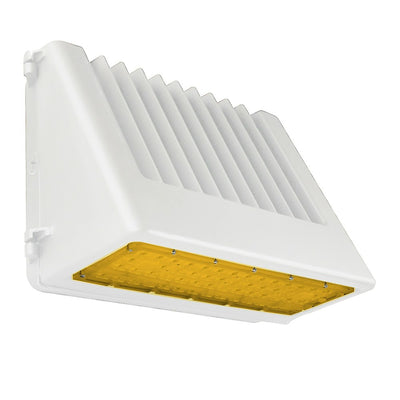
EnVision – FC-Line LED-WPFC-5P80-22K-PC

EnVision – Flat-FC-Line LED-WPFC-FL-5P60W-TRI-PC

EnVision – Flat-FC-Line LED-WPFC-FL-5P120W-TRI-PC
About LED Wall Pack Lights
Choosing LED Wall Pack Lights for Building Exteriors
LED wall pack lights illuminate the ground and work areas beside an exterior wall. They're commonly considered for service entrances, delivery doors, pedestrian approaches, and building perimeters where a fixed wall-mounted fixture makes sense. Before comparing models, identify the area that needs light, the mounting height, and whether you want controlled downward illumination or a wider beam. Then check output, operating voltage, environmental rating, and switching method against the exact product specifications.
A property may need more than one fixture style. If the same project includes parking areas, covered drive-throughs, or landscape features, compare the relevant families under outdoor lighting rather than using wall packs for every location.
Full-Cutoff, Non-Cutoff, and Up/Down Wall Packs
Start with where the light should go. A full-cutoff wall pack is intended to limit light emitted above the horizontal plane and concentrate its useful distribution downward. This can help around neighboring properties or areas where stray light and glare are concerns. Non-cutoff products can distribute light more broadly, but their higher-angle output may not suit a restricted property boundary.
Up/down configurations illuminate portions of the facade as well as the area below, making them a different design decision from a strictly downward-facing fixture. For a wall beside a residential lot, start with the more controlled distribution and review the manufacturer's photometric file. Terms such as "full cutoff" don't guarantee compliance with every local lighting ordinance; those requirements may also address output, shielding, color temperature, and hours of operation.
Determine Output From Lumens, Mounting Height, and Coverage
Wattage describes electrical consumption, not the amount of useful light reaching the ground. Compare rated lumens and beam distribution first, then check wattage as an operating-load specification. Two LED wall packs with similar input wattage may perform differently because of their optics, efficiency, and mounting position.
Consider a fixture placed about 10 feet above a side door versus one mounted 20 feet above a loading dock. The target areas and mounting distances aren't equivalent. If you're replacing an older HID fixture, don't rely on a simple metal-halide-to-LED wattage conversion. Record the existing mounting height and the area that must be illuminated, then use the replacement product's published performance data to determine whether it will provide appropriate coverage.
Photocell, Motion-Sensor, and Timer Control Options
Choose how the light will operate before finalizing the fixture. A dusk-to-dawn system uses a light sensor to respond to ambient daylight; a motion-based system changes operation when activity is detected; a timer follows a programmed schedule. These controls solve different problems, so their compatibility matters as much as the light itself.
Some wall packs have an integrated photocell, while others provide a receptacle or other provision for an optional sensor. If the fixture needs a separate dusk-to-dawn device, compare photocells against the specified voltage, load, and mounting requirements. For activity-based operation, look at occupancy and motion sensors, but confirm outdoor suitability, detection coverage, and electrical compatibility. A sensor intended for an interior wall switch is not automatically appropriate for an exposed wall pack.
Check Input Voltage and Outdoor Installation Conditions
Exterior wall packs may be offered for different building supply voltages. Verify the actual circuit voltage before ordering, especially at commercial buildings with multiple distribution systems. A product listed for 120-277V should not be assumed to accept 347V or 480V unless those values appear in its published input range.
Inspect the existing installation as carefully as the new fixture. Note the wall material, junction-box position, wiring entry, mounting-hole locations, and the outline left by the old housing. A replacement with the right light output can still require extra work if its footprint leaves an opening exposed or the wiring connection doesn't align. Check the specified wet- or damp-location rating for the actual exposure; a fixture that looks weather-resistant is not automatically approved for every exterior installation. Electrical connections and structural mounting should be completed in accordance with the manufacturer's instructions and applicable code by a qualified electrician.
Wall Packs vs. Security Lights and Outdoor Wall Sconces
Use a wall pack when you need a fixed source of functional light beside a building. For an entry that needs to respond mainly when someone approaches, LED security lights may be a more direct shopping path, particularly when sensor behavior and adjustable heads are important. Check whether motion detection is built in or requires another component.
For a front entrance where appearance, fixture projection, and an architectural beam pattern matter more than broad perimeter coverage, compare outdoor wall lights. Wall lanterns and exterior sconces are selected differently from higher-output service-area wall packs. If the target is a sign or a particular section of facade, an aimable flood fixture may make more sense. Large open parking areas generally call for pole-mounted area lighting, and a covered ceiling can point toward canopy fixtures.
Field-Selectable Wattage and Color Temperature
Some wall packs offer selectable power settings, correlated color temperature (CCT), or both. These can simplify a multi-entrance project when similar fixture bodies are needed but different locations require different output or appearance. The available settings are model-specific: don't assume every wall pack has adjustable wattage or color temperature just because other products in the collection do.
For example, a building with 12 exterior mounting points may use one compatible selectable fixture family, provided its setting combinations meet the requirements at every location. Record the selected wattage and CCT at commissioning. That gives maintenance staff a practical reference when replacing a unit or checking why two seemingly identical fixtures look different.
Prepare the Fixture Schedule Before a Larger Order
For a building-wide replacement, create a simple schedule showing the quantity at each elevation, mounting height, desired light distribution, supply voltage, control strategy, and environmental exposure. Include any restrictions on light spill, glare, or operation after business hours. If you're replacing existing fixtures, add photographs and dimensions of the mounting locations.
This information is more useful for product selection and a project quote than ordering by fixture wattage alone. It also reduces the risk of discovering after delivery that a model needs a separate sensor, a different voltage version, or additional mounting work.
LED Wall Pack Lights FAQs
What's the difference between full-cutoff and non-cutoff wall packs?
Full-cutoff wall packs limit upward-directed light and place more emphasis on controlled illumination below the fixture. Non-cutoff designs can send light at higher angles and may produce a wider pattern. Select according to the target area, neighboring properties, and the manufacturer's photometric data. Local exterior-lighting rules still need to be checked for the installation.
Do LED wall pack lights come with photocells?
Some models include a photocell, others are designed to accept an optional one, and some require an external switching arrangement. "Photocell-ready" should not be read as "photocell included." Check the exact product listing and confirm sensor compatibility before ordering, particularly when several fixtures will share a control circuit.
What LED wall pack wattage replaces a metal halide light?
There isn't one wattage conversion that works for every installation. The useful comparison is the LED fixture's lumen output and light distribution at the mounting height, not just its power draw. Check the old lighting requirement and the new model's photometric information; any advertised replacement equivalence should be verified for the specific fixture.
Can I install any wall pack on an exposed exterior wall?
No. Check the exact product's approved location and environmental rating, including its installation orientation and sealing requirements. Fully exposed walls may encounter wind-driven rain, irrigation spray, or other moisture conditions. The mounting surface and electrical entry must also be suitable for the fixture's listed installation method.
Should I use a motion-sensor security light instead of a wall pack?
Choose based on operating behavior and coverage. A conventional wall pack makes sense where consistent perimeter or entrance lighting is required. A sensor-oriented security fixture is worth considering when light should respond to approaching people or vehicles. Not every security fixture is intended for continuous wide-area coverage, and not every wall pack includes motion detection.
Are LED wall packs compatible with 480V electrical systems?
Only models specifically rated for that supply should be connected to a 480V system. A common 120-277V input rating does not include 480V. Confirm the building's circuit voltage and the selected model's published input range, then have a qualified electrician verify the connection and installation requirements.