


Retrofit & Canless Downlights
Retrofit and canless LED downlights serve different ceiling conditions: retrofit modules update compatible recessed cans, while slim canless fixtures install in prepared openings without a traditional housing. This collection also includes disk-style lights and higher-output commercial downlights, which may use different mounting methods. Match the fixture to the existing can or planned cutout, verify ceiling clearance, and check dimming compatibility before choosing a diameter, color temperature, or finish.
Showing 81–100 of 2089 results

ELCO Lighting EL41735H 4" 14W Haze Reflector Insert 1000 lm White Rng

ELCO Lighting EL44227W 4 Square LED Reflector Insert"
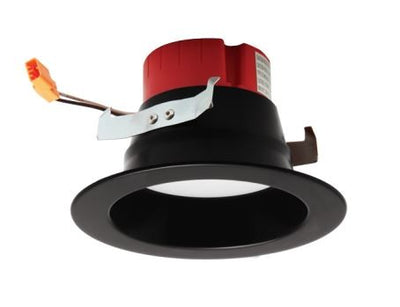
ELCO Lighting EL415CT5BB 4" LED Reflector Insert 850 lm 5Cct

ELCO Lighting EL44130BZ 4``LED Insert Square Baffle 10W 3K Dimmable
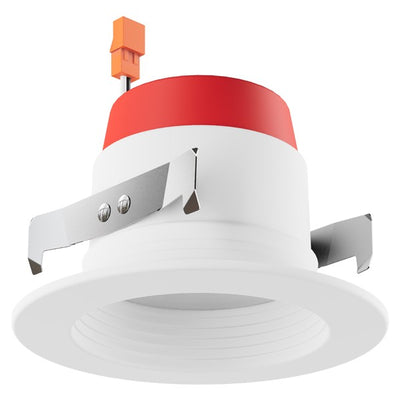
ELCO Lighting EL439CT5W 4" LED Baffle Insert 850 lm 5Cct

ELCO Lighting EL41430B 4``LED Gimbal Insert 780 lm 13W Dim 3K

ELCO Lighting EL31227BZ 3" 580 lm LED Reflector Insert Dim 2700K
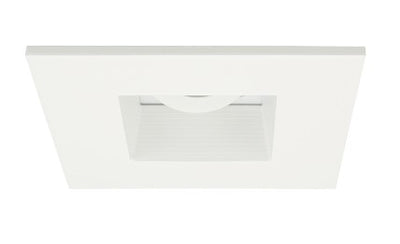
ELCO Lighting EKCL4284W 4" Die-Cast Baffle Square/Square For Koto Canless

ELCO Lighting EL376CT5B 6" LED Adjustable Baffle Gmbl Insert Par30 5Cct
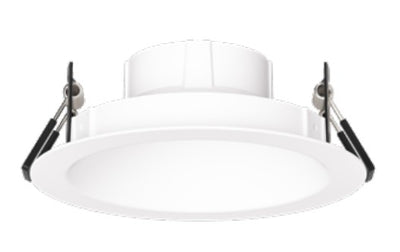
ELCO Lighting EKCL4163W 4" Sleek Round Reflector Koto Canless White

ELCO Lighting EKCL2863BB 2" Sleek Round Reflector Koto Canless Black

ELCO Lighting EKCL2529BB 2-Inch All Black LED Adjustable Module

ELCO Lighting E9LTU20D2 9" LED Retrofit 120/277V 2000 lm Dimm

ELCO Lighting EKCL10RICDX Canless Remodel IC Pwr Pk 950 lm 0-10V/Tri/Elv

ELCO Lighting EKCL120EXT 120" Extension Cable For Koto Canless

ELCO Lighting E6LTU20D2 6" LED Retrofit 2000 lm 120/277V Dimm G2
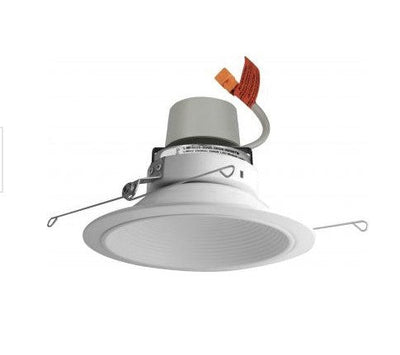
ELCO Lighting E614R0827W 6-Inch LED Baffle Trim Module, 850 lm, 2700K

ELCO Lighting E617R1230W 6-Inch LED Adjustable Module, 1250 lm, 3000K

ELCO Lighting E617R1230C 6-Inch LED Adjustable Module, 1250 lm, 3000K
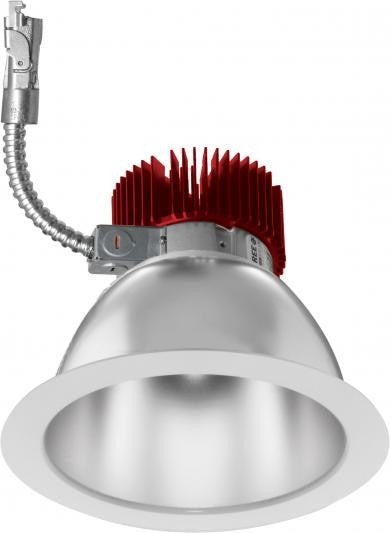
ELCO Lighting E610R1230H-F 6-Inch LED Light Engine with Reflector Trim, 1250 lm, 3000K, 38°
About Retrofit & Canless Downlights
How to Choose Retrofit & Canless LED Downlights That Fit Your Ceiling
The most costly recessed-lighting mistake is ordering by nominal diameter alone. A fixture labeled 6-inch can have a different cutout, trim diameter, driver arrangement, or mounting method from another 6-inch product. Before buying replacements, inspect a representative ceiling location and record what's physically there. That single check helps prevent drywall repairs, incompatible fixtures, and dimming problems after installation.
Quick Downlight Selection Guide
- Existing 6-inch recessed can: Start with a compatible LED retrofit module.
- New opening in finished drywall: Compare slim canless fixtures and their required cutout sizes.
- Concrete ceiling or no usable cavity: Consider surface-mount ceiling fixtures.
- Open framing before drywall: Review new-construction downlight frames.
- Fire-resistance-rated ceiling: Check approved assemblies and suitable fire-rated recessed housings.
LED Retrofit Downlights: Check Existing Housing Compatibility
A retrofit LED module can update an existing recessed fixture without replacing the entire housing, provided the module is approved for that housing and connection method. Many residential retrofit kits use an E26 medium-base adapter, but others require different connectors or a compatible driver arrangement. Don't assume an adapter is included.
Consider a hallway with twelve older 6-inch recessed cans. Before ordering twelve replacement modules, inspect the housing openings, lampholders, retaining springs, and available internal clearance. Different housing generations may not accept the same retrofit kit, even when the visible openings look identical.
If the existing housing is damaged, improperly installed, or incompatible with the selected module, replacing it may be more appropriate than attempting to adapt the retrofit. Compare compatible recessed housings when the existing can cannot be reused safely.
Canless LED Downlights: Cutout Size, Ceiling Depth, and Driver Clearance
Canless installation eliminates the traditional recessed can, but it does not eliminate the need for electrical connections, suitable mounting, and adequate space above the ceiling. Many slim LED downlights use spring clips and a separate driver or junction box. The exact arrangement varies by product.
For a 4-inch downlight being added to a finished drywall ceiling, three dimensions matter: the specified cutout diameter, the supported ceiling thickness, and the clearance required for the fixture and its electrical components. The visible trim diameter is not the same as the required hole size.
Check for joists, ductwork, pipes, or wiring before cutting. If an obstruction prevents the prescribed installation, reposition the light or select a suitable alternative. Follow the manufacturer's requirements for locating, securing, and accessing the driver or junction box. A shallow fixture body alone doesn't guarantee the entire assembly will fit.
Slim Canless vs. Disk Lights vs. Commercial LED Downlights
Similar-looking downlights can have different installation requirements. A slim canless fixture typically mounts into a prepared ceiling cutout, while a disk-style light may be designed for mounting to an electrical box or another approved arrangement. Commercial downlights can use larger optical assemblies, higher lumen outputs, or dedicated mounting hardware.
For example, a 6-inch disk light mounted over a suitable ceiling box isn't necessarily interchangeable with a 6-inch recessed wafer light that requires spring clips and a cutout. The same caution applies to larger 8-inch and 10-inch commercial models. Their size alone doesn't establish whether a housing or frame is needed.
If you need more control over the visible finish or reflector, consider a compatible modular recessed system. Lumera's recessed trims category includes components for supported housing and lighting systems.
LED Downlight Brightness and Color Temperature: Lumens, CCT, and CRI
Choose brightness by delivered lumens and light distribution, not simply fixture diameter or wattage. A smaller commercial downlight can produce more light than a larger slim residential model. In Lumera's current assortment, some 4-inch commercial downlights are listed at 1,200 lumens, while a 6-inch slim model is listed at 900 lumens.
For a corridor with an 8-foot ceiling, fixture spacing, beam distribution, wall reflectance, and glare control all affect the result. Wider light distribution can help produce uniform general illumination, while recessed optics or baffles may reduce direct glare. Review photometric information when consistent lighting is important.
Color temperature also changes the appearance of the room:
- 2700K–3000K: Warm white, commonly selected for living areas and hospitality spaces.
- 3500K: A neutral option for offices, corridors, and multipurpose areas.
- 4000K–5000K: Cooler white appearance for applications that call for it.
Some downlights provide selectable CCT settings, while others have a fixed color temperature. If selecting adjustable output or color, check the exact settings and make them consistent across the installation. Where color appearance is important, compare the stated color rendering index (CRI) as well.
LED Downlight Dimming: TRIAC, ELV, and 0-10V Compatibility
Dimmable does not mean compatible with every dimmer. The LED driver determines which control method the fixture supports. Some retrofit and slim downlights in this collection specify TRIAC or phase-cut dimming, while certain commercial models specify 0-10V control.
Imagine replacing twelve corridor fixtures controlled by an existing wall dimmer. Choosing 0-10V downlights without the necessary control wiring and compatible equipment may require additional electrical work. The fixture's input voltage and driver configuration must also match the circuit.
For residential phase-cut installations, compare appropriate standard LED dimmers against the fixture manufacturer's compatibility information. Projects using electronic low-voltage or 0-10V control should review compatible ELV and 0-10V dimmers.
Before ordering a large quantity, verify the supported dimming range, control wiring, and fixture compatibility. Where practical, testing the specified fixture and dimmer combination can help identify flicker or low-end dimming problems before a complete retrofit.
IC-Rated, Airtight, and Wet-Rated Downlights: What to Verify
Ceiling conditions can introduce requirements that have nothing to do with brightness. An insulated attic ceiling, a bathroom, and a fire-resistance-rated floor assembly may require different fixture approvals.
- IC rating: Identifies equipment suitable for insulation contact under its stated installation conditions. Check both the luminaire and remote driver or junction box where applicable.
- Airtight construction: Helps limit air leakage through the ceiling opening. This is separate from insulation-contact approval.
- Damp-location rating: Addresses moisture exposure without direct water contact.
- Wet-location rating: Applies to fixtures evaluated for the specified exposure to water.
- Fire-resistance rating: Requires an appropriately approved ceiling assembly or installation method. IC rating alone does not preserve a fire-rated separation.
For a top-floor ceiling with insulation directly above the downlights, select a model approved for that contact and installation arrangement. For a fixture installed over a shower, verify the required location rating rather than assuming every sealed-looking downlight is suitable.
When a ceiling separates rated building spaces, confirm that the complete installation preserves the required fire-resistance rating. The applicable building and electrical codes and the authority having jurisdiction determine the requirements.
Installation and Ordering Checklist for LED Downlight Projects
Before ordering fixtures for a renovation, organize the lighting schedule by installation type. A project with twenty-four downlights may need different products for existing cans, new drywall openings, and areas with special location ratings.
Record the following details:
- Existing housing type or new ceiling cutout requirements
- Nominal fixture size and actual opening dimensions
- Available ceiling depth and junction box location
- Fixture quantity, lumen output, CCT, and CRI
- Circuit voltage and dimming or lighting-control method
- Insulation-contact, airtight, moisture, and fire-rating requirements
- Required trim finishes and compatible mounting accessories
Electrical connections and new branch-circuit wiring should be handled by a qualified electrician in accordance with the manufacturer's instructions and applicable codes. Turn off the circuit and verify that it is de-energized before electrical work.
Lumera Electric provides trade account options for eligible business buyers. For projects involving multiple fixture types or large quantities, request a project quote with your lighting schedule and required specifications.
Retrofit & Canless Downlights FAQs
What is the difference between retrofit and canless LED downlights?
A retrofit LED downlight is designed to upgrade a compatible existing recessed housing, while a canless downlight installs without a traditional recessed can. Retrofit modules may reuse an existing lampholder or connection system. Canless models typically use a separate wiring compartment and direct ceiling mounting. Confirm the installation method before ordering, because both types can look similar from below.
Will a 6-inch LED retrofit downlight fit any 6-inch recessed can?
No. A matching nominal size does not guarantee compatibility. Check the housing's actual internal dimensions, socket or connector type, mounting springs, and any manufacturer compatibility restrictions. Some 6-inch retrofit kits are designed for specific housing dimensions or series. If the original can is unsuitable, a compatible replacement housing or another approved lighting system may be necessary.
Can canless LED downlights be installed in an insulated ceiling?
Yes, if the selected fixture and its associated electrical components are approved for insulation contact under the installation conditions. Look for the relevant IC rating on the product documentation. Do not assume that every slim fixture or remote driver box has the same approval. Airtight performance and fire-resistance requirements must be checked separately.
Can retrofit and canless downlights use the same dimmer?
They can if both fixtures support the same dimming method and the selected dimmer is compatible with their LED drivers. However, some models use phase-cut dimming while others require 0-10V control. Check the fixture specifications and dimmer compatibility documentation. An existing residential wall dimmer should not be assumed suitable for a commercial 0-10V fixture.
Are disk lights the same as canless recessed lights?
No. Disk lights and canless recessed lights can have similar low-profile appearances but different mounting arrangements. Certain disk lights attach to a compatible electrical box, while slim canless fixtures usually install into a specified ceiling cutout. Check each product's mounting instructions before ordering. If you are comparing broader installation options, review recessed lighting systems as well.
Can a failed canless LED driver be replaced separately?
Sometimes. Driver replacement depends on whether the manufacturer supports a separate replacement component and whether it matches the fixture's electrical and control requirements. Do not substitute a generic driver based only on wattage. The required output characteristics, connector arrangement, and safety approvals must match. Lumera also offers an LED drivers category for applications requiring compatible power supplies.