


LED High Bay Lights
LED high bay lights in this collection include compact UFO fixtures for open warehouse floors and linear models for racking aisles, production lines, and other tall-ceiling spaces. Each shape distributes light differently, so fixture placement matters as much as brightness. Choose by mounting height, work-area layout, and required light level; then compare each model's beam distribution, voltage, and mounting hardware. Selectable wattage, color temperature, and sensor-ready connections are available only on certain products.
Showing 321–334 of 334 results

Westgate UFO LED High Bay UHX-ALR-A

Westgate UFO LED High Bay UHX-REFL-AR

Westgate UFO LED High Bay UHX-ALR-B

Westgate UFO LED High Bay UHX-SC

Utopia Lighting LDB Linear LED High Bay
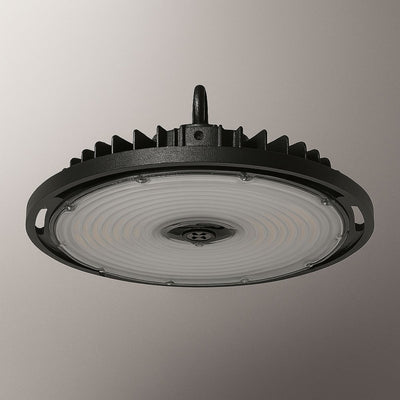
Utopia Lighting RHB-4G Round UFO LED High Bay

Utopia Lighting RHB2-2G Round UFO LED High Bay
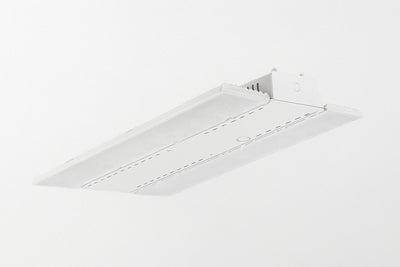
Utopia Lighting LHB-4G LED Linear High Bay
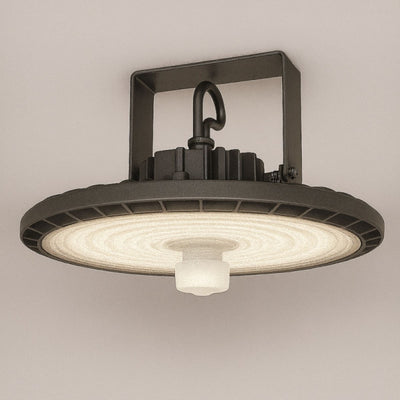
Utopia Lighting RHB-3G Round UFO LED High Bay

Utopia Lighting RHB4 Round UFO LED High Bay

Utopia Lighting RHB5 Round UFO LED High Bay

Utopia Lighting HV LED Enclosed and Gasket LED High Bay

Euri Lighting 100/120/150W selectable LED UFO High Bay 3500K–5000K (EUHB-150W3000sw)

Euri Lighting 200/220/240W selectable LED UFO High Bay 3500K–5000K (EUHB-240W3000sw)
About LED High Bay Lights
How to Choose LED High Bay Lights for Warehouses and Industrial Spaces
LED high bay lights illuminate large indoor spaces where fixtures are mounted well above the work area. Warehouses, manufacturing plants, distribution centers, gymnasiums, and high-ceiling workshops often need different lighting layouts despite similar ceiling heights. The right high bay depends on the work performed below it, the mounting height, and how light must reach floors, equipment, and shelving. Start with the building layout and target illumination, then compare fixture shape, delivered lumens, optical distribution, and electrical compatibility before choosing wattage.
Quick LED High Bay Selection Guide
- Open warehouse or gymnasium: Consider UFO high bays with optics suited to the mounting height.
- Warehouse racking aisles: Compare linear high bays that provide suitable aisle and vertical illumination.
- High-ceiling manufacturing area: Select output and distribution according to the work-plane lighting requirements.
- Lower-ceiling garage or workshop: Review LED strip light fixtures.
- Dusty or wet industrial area: Check suitably rated LED vapor tight lights.
- Classified hazardous area: Choose appropriately certified hazardous-location lighting.
UFO vs. Linear LED High Bay Lights: Match the Building Layout
UFO and linear high bays use different housing shapes and optical arrangements. Neither type is automatically better for every building.
UFO LED high bays use compact round housings and are commonly suspended from a suitable hook or pendant mounting system. Their available optical distributions make them useful for many open-floor layouts, including manufacturing spaces and gymnasiums.
Linear LED high bays use elongated rectangular housings. They are often selected for storage aisles, production lines, and spaces where a longer lighting distribution suits the work below.
For example, a warehouse with tall pallet racks needs enough light on vertical rack faces for workers to identify labels. A suitable linear high bay aligned with the aisles may improve visibility compared with a poorly positioned grid of round fixtures.
However, fixture shape alone does not determine performance. Compare the manufacturer's photometric distribution and installation layout before deciding.
For a more detailed comparison, read Lumera's UFO vs. Linear High Bay Lights guide.
High Bay Mounting Height: Lumens, Footcandles, and Fixture Quantity
High bay lighting is commonly associated with ceilings around 20 feet and higher, although suitable fixtures can also serve some lower mounting applications. There is no universal wattage requirement for a particular ceiling height.
The most useful distinction is between lumens and footcandles. Lumens measure the total light output of a fixture. Footcandles measure the amount of illumination reaching a surface, such as a warehouse floor or assembly table.
A 20-foot warehouse with open storage may require a different lighting design from a 20-foot manufacturing facility where workers inspect detailed components.
To estimate the correct installation, determine:
- Mounting height: The distance between the fixture and the work surface.
- Target illumination: The required footcandles for the actual tasks.
- Fixture output: The delivered lumens at the selected operating setting.
- Light distribution: How the fixture directs light across the space.
- Fixture spacing: The arrangement needed for acceptable uniformity.
For larger installations, use the manufacturer's photometric files in a lighting calculation. Do not determine the total fixture count by dividing floor area by an advertised coverage figure.
High Bay Beam Angle, Aisle Lighting, and Glare Control
Beam distribution affects how much light reaches the work area and how evenly fixtures illuminate the building. Narrower optics can concentrate light over a smaller area, while broader distributions spread light across a larger footprint.
For example, a tall warehouse aisle may need controlled distribution to illuminate the floor and rack faces without wasting excessive light above the storage racks.
Open manufacturing areas may benefit from a broader distribution with appropriate overlap between fixtures. Excessive spacing can create dark zones even when the total installed lumens appear sufficient.
Glare is also important. Workers operating forklifts or looking upward during equipment maintenance should not be exposed to unnecessarily uncomfortable views of high-intensity light sources.
Compare the fixture's available IES photometric data, optical options, and glare characteristics. Reflectors, lenses, and diffusers should be selected only when identified as compatible with the specific model.
High Bay Wattage, Selectable CCT, and Input Voltage
Electrical wattage describes power consumption, while delivered lumens describe light output. LED high bays with identical wattages can produce different lumen outputs because of differences in efficacy and optical design.
Some models provide selectable wattage and color temperature, allowing installers to configure the fixture for the intended application.
For example, Lumera lists the Premium Lighting G1 2-foot linear high bay with five selectable wattage settings from 80W to 165W. Its published maximum output is 24,750 lumens at 165W, and its specified input range is 120–277V.
Another example is the Westgate LLHB4 high bay, which offers 80W, 110W, and 150W settings with selectable 3500K, 4000K, and 5000K color temperatures.
These features are model-specific. Before ordering, verify the exact fixture's delivered lumens, input-voltage range, selectable settings, and dimming requirements.
For facilities using 347V or 480V distribution, select a product specifically rated for the available supply rather than assuming a standard 120–277V fixture is compatible.
LED High Bay Dimming and Occupancy Sensor Compatibility
High bay lighting controls can reduce unnecessary operation in spaces that are used intermittently. Storage aisles, loading areas, and warehouse zones may benefit from occupancy-based switching or dimming.
Many commercial high bays use 0–10V dimming, while selected fixtures support compatible plug-in sensor modules. These systems require the correct driver, sensor interface, and control wiring.
For example, some Premium Lighting high bays use a 3-pin sensor base, while other models specify an AUX connection. The sensor modules should not be treated as interchangeable without confirming the manufacturer's compatibility requirements.
For ceiling-mounted or fixture-integrated detection, compare suitable occupancy and motion sensors.
More complex lighting zones may require dedicated commercial lighting controls to coordinate sensors, dimming levels, and schedules.
Before ordering controls, verify the required detection height, connected load, sensor base, and dimming protocol. A regular phase-cut lighting dimmer cannot automatically replace a 0–10V high bay controller.
High Bay Mounting, Ambient Temperature, and Environmental Ratings
Installation requirements differ between compact UFO fixtures and larger linear high bays. Some round models use single-point hook or pendant mounting, while linear fixtures commonly use chains, cables, or other approved supports.
Confirm that the building structure and mounting hardware can support the complete installed assembly. Accessories may be sold separately, so the fixture listing must be checked for included brackets, hooks, guards, and other hardware.
Operating temperature is another important consideration. An unconditioned warehouse can become significantly warmer near the ceiling than at floor level. Refrigerated facilities introduce the opposite concern.
Check the manufacturer's ambient-temperature limits and environmental rating for the exact product. IP65 or another ingress-protection rating should not be assumed for every high bay.
Some damp or dusty applications can use properly rated high bay fixtures. More demanding washdown environments may require specialized sealed luminaires.
Likewise, ordinary IP-rated high bays are not automatically approved for locations containing flammable vapors or combustible dust. Classified environments require equipment certified for the specific hazardous-location classification.
Replacing Metal Halide and Fluorescent High Bay Fixtures
LED high bays are commonly used to replace metal halide, high-pressure sodium, and fluorescent industrial lighting. However, selecting a replacement by old fixture wattage alone can produce an incorrect lighting result.
For example, replacing a 400W metal halide fixture does not automatically require a particular LED wattage. The previous lamp's output, ballast losses, reflector performance, fixture spacing, and required illumination must all be evaluated.
A complete LED high bay replacement may also require new mounting hardware, electrical connections, controls, or circuit modifications.
When evaluating project costs, compare the installed system rather than the fixture price alone. Consider electrical demand, operating hours, maintenance access, and the intended lighting performance.
For projects involving utility incentives, check the exact model's qualification through the DesignLights Consortium (DLC) Qualified Products List and the current requirements of the applicable utility program. Not every LED high bay is automatically eligible for a rebate.
Ordering LED High Bay Lights for Warehouse and Industrial Projects
For facility-wide replacements, prepare a fixture schedule by lighting zone. A single building may need different high bay optics and outputs for open warehouse floors, racking aisles, and assembly stations.
Include the following details:
- Mounting height and required illumination level
- UFO or linear fixture configuration
- Delivered lumens, wattage, and beam distribution
- Supply voltage and color temperature
- Dimming, occupancy sensors, and control requirements
- Mounting hardware and environmental conditions
- Exact manufacturer part numbers and quantities
Eligible commercial buyers can review Lumera Electric's trade account options for recurring purchasing and project orders.
Request a Quote for LED High Bay Lighting Projects
Planning a warehouse relight, manufacturing facility upgrade, or commercial high bay installation? Request a project quote from Lumera Electric with the fixture schedule, required quantities, and electrical specifications.
Include existing fixture information and photometric requirements when available. Confirm the selected SKU, mounting accessories, controls, and environmental ratings before completing the order. Electrical installation should be performed by qualified personnel following the manufacturer's instructions and locally adopted electrical requirements.
LED High Bay Lights FAQs
What is the difference between UFO and linear LED high bay lights?
UFO high bays use compact round housings and are commonly selected for open warehouse floors, gymnasiums, and similar spaces. Linear high bays use elongated housings and can be better suited to storage aisles and production lines. The correct choice depends on the mounting height, optical distribution, and lighting layout. Neither fixture shape guarantees better performance in every application.
How many lumens do I need for a 20-foot ceiling?
There is no single lumen requirement for every 20-foot ceiling. The required light output depends on the work performed below, floor area, fixture spacing, and target footcandles. Open storage typically has different lighting needs from inspection or precision assembly work. Use photometric data to determine how many fixtures and which lumen package will meet the project requirements.
How far apart should LED high bay lights be installed?
Spacing depends on mounting height, beam distribution, fixture output, and the desired illumination uniformity. A broad-distribution fixture may support a different layout from a narrow-beam model. Racking and other obstructions can also affect the results. For larger installations, calculate fixture positions using manufacturer IES files rather than applying one fixed spacing distance to every building.
Can LED high bay lights replace 400W metal halide fixtures?
Yes, appropriately selected LED high bays can replace many 400W metal halide installations. However, replacement should be based on the required delivered illumination and fixture layout, not a fixed watt-for-watt conversion. Evaluate the existing optics, mounting height, electrical system, and light levels before specifying the LED replacement.
Are all LED high bay lights dimmable or sensor-ready?
No. Some models support 0–10V dimming, while others have fixed-output drivers or different control arrangements. Sensor-ready fixtures may require manufacturer-specific plug-in modules. Verify the exact dimming protocol, sensor interface, electrical ratings, and compatibility before purchasing controls.
Are LED high bay lights eligible for utility rebates?
Some models may qualify for utility incentives, but eligibility depends on the exact product and local program requirements. Many programs reference the DLC Qualified Products List. Verify the manufacturer's specific model and current qualification rather than assuming every LED high bay or every product within a series qualifies automatically.