


Ground Clamps
Ground clamps connect grounding or bonding conductors to ground rods, metal pipe, conduit, rebar, and other approved connection points. The assortment includes rod clamps, pipe-style clamps, direct-burial models, and lay-in or feed-through configurations for different installation needs. Choose by the connection surface, conductor size and material compatibility, and the environment where the clamp will be installed. For service or multi-unit projects, verify each electrode and conductor combination before standardizing clamp types or quantities.
Showing 21–40 of 137 results

Dottie 1/2-1 in Bronze Bare Ground Clamp w/ Brass Screw PL25 (25-Pack)

Dottie 1-1/4 in to 2 in Bronze Armored Ground Clamp w/ Swivel 28SWV (5-Pack)

Dottie 1/2 in to 1 in Bronze Ground Clamp w/ 1/2 in Hub 29H (25-Pack)

Dottie 1/2 in to 1 in Pressure Cast Malleable Bare Ground Clamp 20M (25-Pack)

Dottie 1/2 in to 1 in Bronze Ground Clamp with 3/4 in Hub 30H (25-Pack)

Dottie 1/2 in to 1 in Pressure Cast Brass Plated Bare Ground Clamp 20B (25-Pack)

Dottie 1/2 in to 1 in Bronze Ground Clamp w/ 1/2 in Hub 29BRZ (25-Pack)
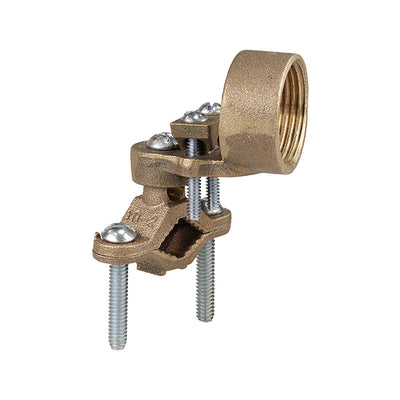
Dottie 2-1/2 in to 4 in Bronze Ground Clamp w/ 3/4 in Hub 281H (5-Pack)

Dottie 1/2 in to 1 in Bronze Armored Ground Clamp w/ Swivel 26SWV (25-Pack)

Dottie 1-1/4 in to 2 in Bronze Ground Clamp w/ 1 in Hub 272H (25-Pack)

Dottie 1-1/4 in to 2 in Bronze Ground Clamp w/ 1/2 in Hub 270H (25-Pack)
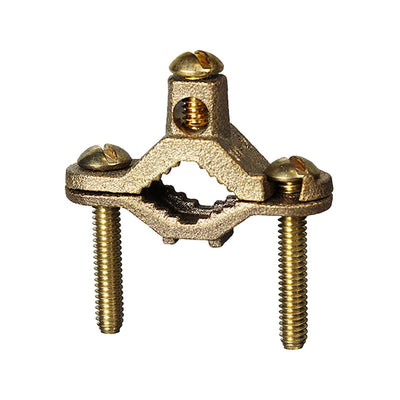
Dottie 3/8-1 in Bronze Bare Ground Clamp Direct Burial DB2538 (25-Pack)

Dottie 1/2-1 in Bronze Bare Ground Clamp Direct Burial DB25 (25-Pack)

Dottie 3/8-1 in Bronze Bare Ground Clamp with Lay in Lug DLI25 (25-Pack)

Dottie 1-1/4-2 in Bronze Bare Ground Clamp with Lay in Lug DLI27 (5-Pack)
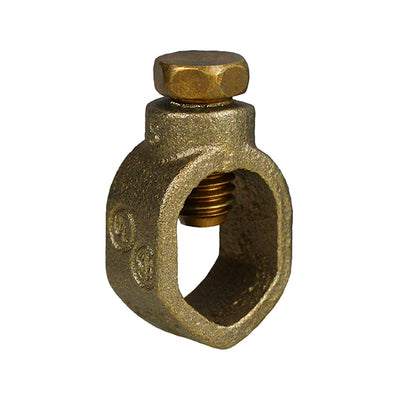
Dottie 1/2 in Ground Rod Clamp GR12 (50-Pack)

Dottie 3/4 in Ground Rod Clamp GR34 (25-Pack)

Dottie 5/8 in Ground Rod Clamp GR58 (50-Pack)

Dottie 1-1/4-2 in Bronze Bare Ground Clamp Direct Burial DB27 (5-Pack)

Dottie Stainless Steel Universal Ground Rod Clamp UGRCS (50-Pack)
About Ground Clamps
How to Choose Ground Clamps for Rods, Pipe, Conduit, and Rebar
Ground clamps are application-specific connectors, so the right choice starts with what the grounding or bonding conductor is attaching to. A ground rod, water pipe, rigid conduit, and reinforcing steel do not automatically use the same clamp. After identifying the connection point, verify the electrode or pipe size, conductor range and material, number of conductors permitted, and the installation environment. The clamp’s listing and manufacturer instructions—not its appearance—determine whether it belongs in the connection.
- A grounding-electrode connection starts with the broader grounding and bonding system.
- A conduit termination needing a bonding point may call for grounding bushings instead.
- A raceway connection should be coordinated with compatible conduit fittings and connectors.
- Splices between grounding conductors require suitable wire connectors or compression splices.
Match the Clamp to the Ground Rod, Pipe, Conduit, or Rebar
The connection surface is the first filter. Ground rod clamps are shaped and sized for driven electrodes, while pipe-style clamps wrap around metallic pipe or compatible conduit. Rebar and concrete-encased electrode connections can require a different clamp geometry again. A clamp that physically tightens around an object is not automatically listed for that grounding or bonding application.
For a 5/8-inch driven ground rod, begin with a clamp identified for that rod size rather than adapting a general pipe clamp. Decision rule: identify the electrode or bonding surface first, then choose only clamps listed for that connection. For the system-level hardware around the connection, use Lumera’s grounding and bonding collection.
Check Both the Electrode Size and Conductor Range
A clamp has to fit two things at once: the object it attaches to and the conductor it terminates. Rod diameter or pipe range tells you whether the body fits the connection point, while the wire range tells you whether the conductor can be secured correctly. Matching only one side can still leave the installation wrong.
A clamp that fits a 3/4-inch rod is not automatically suitable for every grounding-electrode conductor used on that project. Check the marked conductor range and whether the clamp accepts one or multiple conductors. Decision rule: confirm both dimensions before ordering—connection size first, conductor range second.
Match Clamp and Conductor Materials to the Listed Combination
Material compatibility matters in grounding and bonding because the clamp may contact a copper conductor, aluminum conductor, copper pipe, galvanized steel, stainless hardware, or another metallic surface. Dissimilar metals and environmental exposure can create corrosion concerns, so clamp material should not be selected by price or appearance alone.
For a service upgrade using an aluminum grounding conductor on a metallic pipe connection, verify that the exact clamp is identified for that conductor material and surface. If the conductor terminates elsewhere through a compression connection or splice, coordinate that portion through Lumera’s conductor-connector selection.
Direct Burial and Concrete Contact Require the Correct Listing
A clamp installed above grade in an accessible dry location faces different conditions from one buried with a ground rod or encased near concrete. Soil, moisture, concrete, and corrosive environments can affect both the clamp body and the connection over time. A standard grounding clamp should not be assumed suitable for burial merely because it is made from corrosion-resistant metal.
For a rod connection that will finish below grade, verify that the selected clamp is specifically identified for direct-burial use. Decision rule: establish the final environment before choosing the material or style. Lumera’s ground-rod installation guidance also emphasizes using a listed clamp suitable for the conductor and burial condition.
Lay-In, Feed-Through, and Standard Clamp Styles Change Installation Method
Clamp configuration affects how the grounding conductor passes through or terminates. Standard rod clamps typically secure the conductor directly at the electrode. Lay-in styles can allow the conductor to be placed into an open connection path, while feed-through configurations can let a conductor continue through the fitting instead of ending there. Those mechanical differences matter when several grounding connections are being routed through a project.
If a continuous grounding conductor needs to pass a pipe bonding point without being cut, a listed feed-through or lay-in arrangement may suit the layout better than an end-termination style. Select the configuration from the conductor routing shown on the plan rather than modifying a standard clamp in the field.
Know When the Job Needs a Ground Clamp vs. a Grounding Bushing
A ground clamp typically bonds a conductor to a rod, pipe, rebar, or similar surface. A grounding bushing serves a different function at a raceway or enclosure entry by providing a dedicated bonding connection on the conduit termination. They can appear in the same grounding system, but they are not interchangeable.
If the task is bonding metallic conduit where it enters an enclosure, the correct solution may be a conduit or grounding bushing rather than a clamp around the raceway. Coordinate that termination with the appropriate raceway fittings and follow the project’s grounding and bonding requirements.
Ordering Ground Clamps for a Project
For service upgrades, multi-unit work, industrial installations, or repeated grounding details, organize the clamp schedule by connection point, electrode or pipe size, conductor size, conductor material, clamp configuration, environmental condition, and quantity. Keep direct-burial, pipe, rod, and rebar applications separated on the material list rather than treating “ground clamp” as one interchangeable item. Repeat buyers can also review Lumera Electric’s trade account options.
Request a Grounding Hardware Project Quote
For larger quantities or projects using several grounding and bonding connections, request a project quote after the electrode and conductor schedule has been established.
Have these details ready:
- Ground rod, pipe, conduit, rebar, or other connection point
- Rod diameter or pipe size
- Grounding or bonding conductor size
- Copper or aluminum conductor
- Number of conductors per connection
- Standard, lay-in, feed-through, or other required configuration
- Above-grade, direct-burial, concrete, or other environmental condition
- Quantity by clamp type and size
For larger service or facility schedules, you can also submit your grounding hardware list so clamp type, conductor compatibility, installation condition, and quantity stay matched.
Ground Clamp FAQs
What size ground clamp do I need for a ground rod?
Choose a clamp specifically marked for the diameter of the ground rod and verify that its conductor range also matches the grounding electrode conductor. A clamp that fits the wire but not the rod is still incorrect. For more detail on electrode selection and connection requirements, see Lumera’s ground-rod installation guidance before finalizing the clamp.
Can a ground clamp be buried underground?
Only when the exact clamp is identified for direct-burial or the specific below-grade condition involved. Do not assume any bronze, brass, or stainless clamp is automatically approved for burial. Check the product listing and manufacturer information before installation, then coordinate the rest of the electrode connection through the broader grounding hardware category.
Can I put two grounding conductors under one clamp?
Only if the clamp is specifically identified for the number and sizes of conductors being installed. A single-conductor clamp should not be doubled up simply because both wires physically fit beneath the hardware. If the grounding conductors need to be joined elsewhere, use an appropriately listed wire connector or compression splice.
What is the difference between a ground clamp and a grounding bushing?
A ground clamp connects a grounding or bonding conductor to a rod, pipe, rebar, or similar connection point; a grounding bushing provides a bonding connection at a conduit or raceway termination. Use the product that matches the actual connection. Lumera’s conduit and grounding bushings cover the raceway-entry side of that distinction.
Can the same ground clamp be used on copper pipe and galvanized pipe?
Not automatically. The clamp must be identified for the specific pipe material, conductor material, size range, and environment involved. Material compatibility matters because unsuitable metal combinations can contribute to corrosion at the connection. Check the exact product listing instead of selecting one clamp as a universal solution for every metallic pipe.