


Electrical Device & Outlet Boxes
Electrical outlet boxes provide mounting space for switches, receptacles, and compatible ceiling fixtures. This collection includes new-work boxes for open framing, old-work boxes for finished walls, adjustable-depth models for changing wall finishes, and single- through four-gang configurations. Select by installation stage, box-fill volume, and device count, then check cable-entry provisions and required mounting support. For ceiling locations, verify that the box is specifically rated for the intended fixture or fan.
Showing 41–60 of 1166 results

Orbit Midi 2G Wall Plate Dplxgfi OPM826

Orbit Midi 2G Wall Plate Duplex OPM82

Orbit Midi 1G Wall Plate Duplex OPM8

Orbit 2G Screwless Wall Plate OPS262
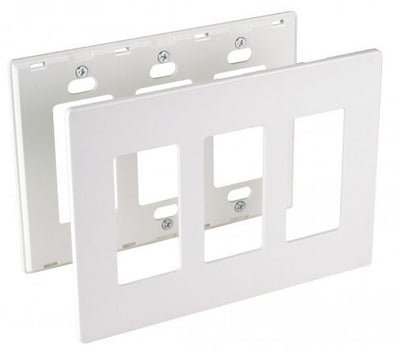
Orbit 3G Wall Plate Switch OPS263
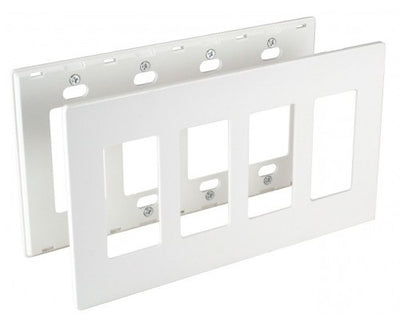
Orbit 4G Wall Plate Switch OPS264
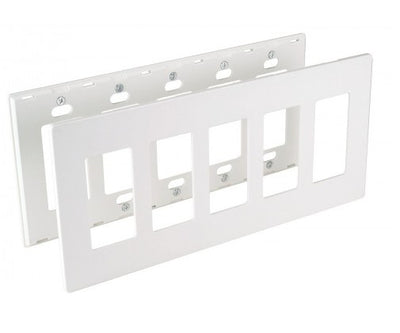
Orbit 5G Wall Plate Switch OPS265

Orbit 1G Screwless Wall Plate OPS26

Westinghouse 0252511 Fixture Mounting Box, 13.4" (12-Pack)

Westinghouse 0200011 Fixture Mounting Box, 16.5" (24-Pack)

Westinghouse 0152500 Fixture Mounting Box, 15.5" (12-Pack)

Westinghouse 0124000 Fixture Mounting Box, 21.5" (4-Pack)

Westinghouse 0110000 Fixture Mounting Box, 15.5" (24-Pack)

Westinghouse 0107000 Fixture Mounting Box, 15.5" (6-Pack)

Westinghouse 0105211 Fixture Mounting Box, 15.5" (24-Pack)

Westinghouse 0105011 Fixture Mounting Box, 15.5" (24-Pack)

Westinghouse 0105000 Fixture Mounting Box, 15.5" (12-Pack)

Westinghouse 0104011 Fixture Mounting Box, 21.5" (12-Pack)

Westinghouse 0102011 Fixture Mounting Box, 15.5" (48-Pack)

Westinghouse 0102000 Fixture Mounting Box, 15.5" (24-Pack)
About Electrical Device & Outlet Boxes
How to Choose Electrical Outlet Boxes for New Work and Remodeling
Choosing electrical outlet boxes starts with the wall condition, wiring arrangement, and device being installed. A box used for one receptacle in open framing has different mounting requirements from a remodel box added behind finished drywall. The internal volume also matters: enough room must be provided for conductors, clamps, splices, and devices under the applicable electrical code. Before ordering, identify the mounting surface, required gang count, and cubic-inch capacity. For ceiling installations, verify the box's approved fixture-support rating separately.
Quick Electrical Box Selection Guide
- Open 2x4 wall framing: Choose a new-work box with the appropriate stud-mounting method.
- Outlet added to finished drywall: Check old-work boxes with suitable clamping mechanisms.
- Kitchen backsplash with tile: Consider an adjustable-depth box for the planned wall finish.
- Multiple switches or outlets: Calculate box fill before selecting a two-, three-, or four-gang model.
- Exposed exterior receptacle: Review appropriately rated weatherproof electrical boxes.
- Outlet installed in a finished floor: Select a compatible system from electrical floor boxes.
New Work vs. Old Work Electrical Boxes: Choose by Wall Construction
The main difference between new-work and old-work boxes is how they attach to the building. New-work boxes are installed while framing is accessible, typically fastening directly to a stud or another approved structural support. Old-work boxes are designed for suitable finished surfaces and use clamps, wings, or another listed mounting mechanism.
Consider an electrician adding a receptacle to a finished drywall wall. Removing the surrounding drywall may be unnecessary when a properly sized old-work box can secure to the existing surface. However, the wall material must be suitable for the box's mounting mechanism, and the finished opening must match the manufacturer's specifications.
For a newly framed wall, a stud-mounted box provides a different installation approach. Position the box to account for the finished surface before drywall is installed.
Lumera's assortment includes MW Lighting MOBR old-work boxes and MOB new-work configurations. Compare the manufacturer's mounting details and listed capacities rather than treating every single-gang box as equivalent.
Selection rule: Use a new-work configuration when framing is accessible and an old-work model when the approved clamping arrangement suits the existing finished wall.
Electrical Box Fill Requirements: Calculate Cubic-Inch Capacity
Gang count describes the number of device positions, but cubic-inch capacity determines how much wiring and equipment the box can accommodate. Two single-gang boxes may look similar from the front while providing substantially different internal volumes.
NEC 314.16 establishes volume requirements for applicable installations involving conductors 6 AWG and smaller. Each counted conductor uses a volume allowance based on its wire size. Devices, internal clamps, grounding conductors, and certain support fittings also contribute to the calculation.
Common conductor allowances include:
- 14 AWG: 2.00 cubic inches per conductor allowance.
- 12 AWG: 2.25 cubic inches per conductor allowance.
- 10 AWG: 2.50 cubic inches per conductor allowance.
For example, consider a box containing two 12/2 NM cables with grounds, one duplex receptacle, and internal cable clamps. Under the applicable NEC box-fill method, the four insulated 12 AWG conductors require 9.00 cubic inches. The receptacle yoke adds 4.50 cubic inches, the internal clamps add 2.25 cubic inches, and the two equipment grounding conductors together add 2.25 cubic inches.
The total required volume is 18.00 cubic inches for that example. If the box contains additional conductors, devices, or fittings, the calculation changes.
For an installation needing more capacity, MW Lighting offers individual single-gang models identified with 20- and 22-cubic-inch capacities. Choose according to the completed calculation and the available mounting space.
Selection rule: Complete the box-fill calculation before selecting the size. Don't assume that a larger gang count or a deeper-looking box automatically provides sufficient capacity.
Single-Gang vs. Multi-Gang Outlet Boxes: Plan for Device Depth
A single-gang box usually accommodates one standard device position. Two-, three-, and four-gang boxes provide additional positions for compatible switches, receptacles, dimmers, and controls.
For example, a kitchen renovation may place a GFCI receptacle and a lighting control in the same two-gang location. The box must accommodate both device yokes, the incoming and outgoing conductors, any required splices, and the installation hardware.
Some devices also occupy more physical space than traditional switches. Deep GFCI receptacles and certain smart switches can leave less working room for conductors behind the devices.
Lumera lists MW Lighting multi-gang options, including specific 32-cubic-inch two-gang, 44-cubic-inch three-gang, and 60-cubic-inch four-gang models. These capacities apply to the identified products, not every box with the same gang count.
When coordinating standard electrical receptacles with lighting controls, confirm the device dimensions, mounting configuration, and conductor requirements before selecting the enclosure.
If the wiring arrangement is crowded, calculate whether a larger-volume box or another approved configuration is needed rather than forcing the devices into the available space.
Adjustable Electrical Boxes for Tile, Drywall, and Finished Walls
Adjustable-depth boxes allow the front position of a compatible device box to be moved within the manufacturer's adjustment range. This is useful when the final wall thickness differs from the original rough-in estimate.
Consider a kitchen backsplash where 1/2-inch drywall will receive ceramic tile and adhesive. A standard box set for unfinished drywall may end up recessed behind the completed tile surface. An adjustable box can allow the installer to position the device opening correctly after accounting for the finish.
Lumera carries MW Lighting MOADJ adjustable models in single- and multi-gang configurations. Before purchasing, verify the adjustment range, mounting method, cubic-inch capacity, and intended wall construction.
NEC 314.20 establishes requirements for box positioning at finished surfaces. In combustible materials, the front edge of the box, ring, or approved extension must generally be flush with or project beyond the finished surface. Different setback allowances apply to noncombustible materials.
Where an existing box requires a suitable extension or finishing component, review compatible electrical box covers and rings.
Selection rule: If the final wall finish adds thickness, verify the permitted box adjustment or extension method before drywall, paneling, or tile work is completed.
Metal vs. Nonmetallic Electrical Boxes: Wiring and Grounding Compatibility
Both metal and nonmetallic boxes can be suitable for electrical device installations when selected for the wiring method and location. The material affects grounding, attachment methods, and compatibility with cable or raceway fittings.
Nonmetallic boxes are frequently used with nonmetallic-sheathed cable in residential construction. Metal boxes are common in exposed installations and wiring systems using metallic raceways or certain armored cables. These are typical applications, not absolute rules for every installation.
A metal outlet box must be bonded as required by the applicable electrical code. When equipment grounding conductors enter a metal box, the grounding and bonding arrangement must preserve the required fault-current path.
For example, an electrician installing EMT conduit to a metal device box must use fittings suitable for the tubing, enclosure, and installation environment. Compatible EMT connectors and couplings provide the required raceway connections.
For cable installations, check the manufacturer's approved cable types, integral clamps, and knockout arrangements.
Do not assume that a nonmetallic box automatically eliminates all grounding requirements. Devices and metal components may still require appropriate grounding or bonding, and metallic wiring methods require careful evaluation of continuity.
Round Ceiling Boxes vs. Fan-Rated Boxes: Check the Supported Load
Round and octagonal outlet boxes are commonly used for ceiling lighting connections, but the box shape alone does not establish its load-support rating.
For example, an 18-cubic-inch round old-work box may be suitable for a particular ceiling luminaire when installed within its listed limitations. The same box should not automatically be used to support a ceiling fan.
Ceiling fans introduce movement and mechanical loading that require an appropriate mounting system. Where the outlet box serves as the fan support, NEC 314.27 requires a box or box system listed and identified for that purpose.
Check the manufacturer's maximum supported weight, attachment method, and structural requirements. Some fan installations use approved brackets or support assemblies that transfer the load directly to building framing.
Selection rule: If the installation supports a ceiling fan, select hardware specifically approved for fan support. Do not substitute an ordinary ceiling-light box based on similar dimensions or mounting holes.
For other ceiling equipment, confirm the fixture's mounting requirements and the approved support arrangement before ordering the box.
Outlet Box Covers, Wall Plates, and Wiring Connections
A correctly selected outlet box still needs the appropriate finishing and electrical connection components. These accessories must match the box, the installed devices, and the wall or ceiling construction.
For a two-gang installation with one duplex receptacle and one decorator switch, the wall plate must provide the appropriate openings. A generic two-toggle plate will not fit that combination.
Compare compatible electrical wall plates by gang count, device configuration, and finish.
The conductors inside the box must also be connected using approved methods. Choose suitable wire connectors and splicing components according to conductor size, material, quantity, and connection requirements.
For installations that primarily serve as splice or conductor-pulling points rather than device locations, consider the separate junction boxes and enclosures category.
The box, devices, connections, and covers should be treated as a complete installation. A compatible wall plate does not correct an undersized box or an unsuitable wiring arrangement.
Ordering Electrical Device and Outlet Boxes for a Project
For a project with multiple receptacle and switching locations, prepare a box schedule by installation condition instead of ordering every location as a standard single-gang box.
Include the following details:
- New-work, old-work, or adjustable-depth installation
- Single-, two-, three-, or four-gang configuration
- Required cubic-inch capacity
- Wall or ceiling construction and mounting method
- Wiring method, cable clamps, and raceway entries
- Fixture or fan-support requirements, if applicable
- Compatible covers, plates, and finishing hardware
- Manufacturer part numbers and quantities
For a 40-location renovation, separating ordinary receptacle boxes from deeper control boxes and specialty ceiling boxes helps prevent installation delays.
Eligible business buyers can review Lumera Electric's trade account options for project purchasing.
For larger orders or projects with several box configurations, request a project quote with your material schedule and required specifications.
Electrical Device & Outlet Boxes FAQs
What is the difference between new-work and old-work electrical boxes?
New-work boxes are normally attached to accessible framing before wall finishes are installed. Old-work boxes are designed for approved finished-wall installations, often using clamps or wings to secure the box through a cutout. Choose by the construction stage and mounting conditions. Confirm that the selected old-work model is suitable for the wall material and intended device.
How many wires can fit in a 20-cubic-inch electrical box?
The answer depends on conductor size and the additional components inside the box. Under NEC 314.16, 12 AWG insulated conductors use 2.25 cubic inches each, while 14 AWG conductors use 2.00 cubic inches each. Devices, grounding conductors, and internal clamps also consume calculated volume. A 20-cubic-inch rating is not a fixed wire-count allowance.
Can an adjustable electrical box be used with tile?
Yes, when the box is approved for the wall construction and its adjustment range accommodates the finished tile assembly. Adjustable models allow the device opening to be positioned after accounting for drywall, adhesive, and tile thickness. Check the manufacturer's mounting and adjustment instructions. The completed installation must also meet applicable requirements for the box's position at the finished surface.
Can I install a GFCI outlet in a regular electrical box?
Yes, a GFCI receptacle can be installed in a suitable device box when the box has sufficient volume and the device is compatible with its mounting arrangement. Many GFCI devices require more physical space than basic duplex receptacles. Check box fill, device depth, conductor routing, and the required protective accessories before choosing the box.
Can a standard round electrical box support a ceiling fan?
Not unless it is specifically listed and identified for the required fan-support application. A standard ceiling-light box may not withstand the loads associated with a ceiling fan. Select an approved fan-rated box or support system and verify its load and mounting requirements. Round shape and matching screw holes alone do not establish suitability.
Can electrical outlet boxes be used outdoors?
Only when the box and complete installation are suitable for the outdoor exposure conditions. Ordinary dry-location indoor boxes should not be substituted for appropriately rated outdoor equipment. Check the box, cover, fittings, and device ratings together. Exterior receptacles may also require GFCI protection and an appropriate in-use cover under the applicable electrical code.