


Outdoor Lighting
Outdoor lighting covers building-mounted, pole-mounted, overhead, and landscape fixtures for entrances, perimeters, parking areas, covered structures, paths, and architectural details. Wall packs, flood lights, area lights, canopy fixtures, decorative wall lights, and landscape lighting each distribute light differently. Choose first by fixture family, installation exposure, and the coverage or beam pattern the space requires. For larger sites, divide the property into lighting zones before standardizing fixtures or quantities.






Showing 3721–3733 of 3733 results

Lighting Spot 26 100W 11000lm 5000K Black LED Flood Light LSH-FL100W-5K

Lighting Spot 26 100W 11000lm 3CCT selectable Black LED Flood Light LSH-FL100W-3CCT

Lighting Spot 26 100W 10000lm 5CCT selectable Black LED Flood Light LSH-NFL100W-A-5CCT

Lighting Spot 26 50W 5000lm 5CCT selectable Black LED Flood Light LSH-NFL50W-A-5CCT

Lighting Spot 26 30W 3000lm 5CCT selectable Black LED Flood Light LSH-NFL30W-A-5CCT

Lighting Spot 26 300W 35000-39000lm 5000K Brown LED Area Light LS2-S-G07-300W-5K
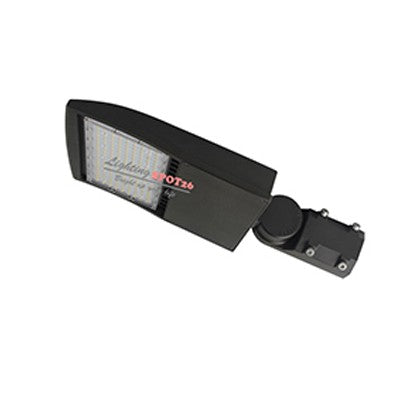
Lighting Spot 26 200W 25000-28000lm 5000K Brown LED Area Light LS2-S-G07-200W-5K

Lighting Spot 26 150W 18800-21000lm 5000K Brown LED Area Light LS2-S-G07-150W-5K

Lighting Spot 26 100W 12500-14000lm 5000K Brown LED Area Light LS2-S-G07-100W-5K

Lighting Spot 26 20W 1900lm 3CCT selectable Round White LED Security Light LSH-SSL-20W-3CCT-WHT

Lighting Spot 26 20W 1900lm 3CCT selectable Round Bronze LED Security Light LSH-SSL-20W-3CCT-BRZ

Lighting Spot 26 20W 1900lm 3CCT selectable Round Black LED Security Light LSH-SSL-20W-3CCT-BLK

Lighting Spot 26 20W 1900lm 3000K Square White LED Security Light LSH-SSL-SQ-20W-30K-WHT
About Outdoor Lighting
How to Choose Outdoor Lighting for Buildings, Parking Areas, and Landscapes
Outdoor lighting should be selected by the surface or zone that needs light, not by wattage alone. Building walls, parking lots, entrances, canopies, pathways, and landscape features each need a different mounting position and distribution pattern. Start with the fixture family, then verify the exposure rating and the way the light needs to reach the ground or target. On larger properties, planning one zone at a time usually produces a more consistent result than choosing every fixture independently.
- A parking lot or open paved area starts with LED area lights.
- A building perimeter calls for LED wall packs.
- A sign, façade, or targeted work area points to LED flood lights.
- A parking deck, drive-through, or covered structure needs LED canopy lights.
- An entrance where appearance matters starts with outdoor wall lights.
- Paths, plantings, and garden features belong in landscape lighting.
Choose the Fixture Family From the Surface You Need to Light
Outdoor fixtures are not interchangeable just because they share similar lumen output. Wall packs throw light from the building edge, area lights distribute it from poles over open ground, flood lights aim at a specific target, and canopy fixtures work from overhead surfaces. Decorative wall lights solve a different problem again by combining useful entrance light with visible architectural form.
For a 150-ft parking edge, a row of building-mounted floods may create glare and uneven coverage where pole-mounted area lighting would distribute light more deliberately. Decision rule: match the fixture family to the mounting surface and target area before comparing output. For motion-triggered perimeter coverage, use security lighting where that operating behavior fits the project.
Wet, Damp, and Covered Locations Need Different Ratings
“Outdoor” does not mean every fixture can take direct rain. A wet-location fixture is intended for exposure to water such as rain or spray, while a damp-location fixture is typically used in protected areas where moisture is present without direct water exposure. The exact product listing controls where the fixture can be installed.
A light mounted under a deep porch roof may face a different exposure than the same fixture on an uncovered exterior wall. If direct weather can reach the installation, select for that condition first. Electrical connections and boxes must also suit the environment, so exposed wiring points may require compatible weatherproof electrical boxes.
Use Distribution and Mounting Height to Plan Coverage
Outdoor lighting performance depends on where the fixture is mounted and how its optics direct light. A higher mounting point can cover more area, but it also changes the output and distribution needed at the ground. For parking lots, optical patterns help place light where it belongs instead of spilling equally in every direction.
A perimeter pole near a property line needs a different distribution than a pole in the center of an open lot. Decision rule: choose the optical pattern from pole position and site geometry before choosing wattage. On larger parking projects, the area-light category provides the specialized pole-mounted options; use a photometric layout when the site requires verified coverage and uniformity.
Balance Useful Light With Glare and Spill Control
More lumens do not automatically make an exterior safer or easier to see. An overly bright façade, parking edge, or loading area can create sharp contrast with the darker space beside it, while poorly aimed fixtures can send light toward drivers, windows, or neighboring properties. Beam pattern, shielding, mounting angle, and fixture location all matter.
For a building sign 25 ft from the mounting point, an adjustable flood can aim light at the sign instead of lighting the entire wall. For low-level architectural uplighting, a dedicated LED well light can keep the source near grade. Choose the fixture that puts light on the target with the least unnecessary spill.
Choose Photocell, Motion, or Scheduled Control From the Operating Pattern
Exterior lighting does not always need to run at full output for the entire night. A photocell responds to ambient daylight for dusk-to-dawn operation, while motion-based control changes operation when activity is detected. Larger sites may also use scheduled controls or more complex building-control strategies. The fixture and control still need to be electrically compatible.
For a storefront that should illuminate every evening regardless of occupancy, automatic dusk-to-dawn control is often more relevant than motion activation. Decision rule: define when the zone needs light before selecting the control. Lumera’s photocell controls are the natural next step for daylight-based switching.
Separate Building Lighting From Landscape and Hardscape Lighting
Landscape systems work much closer to the ground than wall packs or area lights. Path lights guide movement, spot fixtures highlight planting or architecture, and well lights conceal the source at grade for uplighting. These fixtures also introduce different cable, transformer, aiming, burial, and accessory considerations from line-voltage building-mounted lighting.
For a property with a lit façade and landscaped entrance, specify the building perimeter and landscape as separate zones even when they operate on the same nightly schedule. Use landscape lighting accessories for the supporting hardware required by the landscape system rather than adapting building-lighting components to low-level fixtures.
Ordering Outdoor Lighting for a Larger Project
For commercial properties, multi-building sites, hospitality projects, residential developments, or exterior retrofits, organize the lighting schedule by zone, fixture family, mounting height, distribution or beam requirement, lumen output, color temperature, input voltage, location rating, controls, and quantity. Keep each fixture tied to its physical location so similar-looking models with different optics or ratings do not get mixed during installation. Repeat project buyers can also review Lumera Electric’s trade account options.
Request an Outdoor Lighting Project Quote
For larger quantities or exterior packages using several fixture families, request a project quote after the site zones and basic fixture requirements have been established.
Have these details ready:
- Site area or lighting zone
- Fixture family required
- Mounting location and height
- Coverage area or target surface
- Required lumen output or photometric criteria
- Input voltage
- Wet, damp, or protected location
- Photocell, motion, timer, or other control requirement
- Quantity by fixture type and location
For multi-zone sites, you can also submit your exterior fixture schedule so wall, pole, canopy, landscape, and control components remain matched to the correct locations.
Outdoor Lighting FAQs
What is the difference between a wall pack and a flood light?
A wall pack mounts directly to a building and distributes light across the perimeter or ground below, while a flood light aims an adjustable beam at a defined target. Use wall packs for perimeter coverage and flood lighting when signs, façades, yards, or work areas need targeted illumination.
What is the difference between an area light and a flood light?
An area light is designed to distribute light from a pole across parking lots or other open ground, while a flood light throws a directional beam toward a target. A parking lot typically needs controlled pole-mounted distribution rather than several aimed beams. Start with parking and area lights when uniform open-area coverage is the priority.
Do outdoor lights need to be wet-location rated?
Fixtures exposed directly to rain or water need a rating suitable for that exposure; protected exterior locations may permit damp-location equipment when the product and installation allow it. Don't choose from the word “outdoor” alone. Check the exact listing and use weather-suitable electrical hardware where required.
What outdoor lighting is best for an entrance?
Entrances usually need comfortable vertical illumination near the door along with a fixture style that fits the building. Decorative sconces, lanterns, cylinders, and architectural wall lights are better suited to that role than utilitarian perimeter fixtures. Browse exterior wall lights when the fixture itself is part of the entrance design.
Should outdoor lighting use a photocell or motion sensor?
A photocell is the better fit for lighting that should operate automatically from dusk to dawn, while motion control is useful where light should respond to activity. Some sites combine both approaches by limiting motion operation to nighttime. For daylight-based control, start with Lumera’s dusk-to-dawn photocells.